The Iranian military announced today that the body of General Majid Kazemi would be repatriated, following DNA testing and in-depth examination for identification. He was one of four pilots aboard two Su-24 attack aircraft involved in the early March assault on Qatar's Al Udeid airbase. Officials are still working to determine the fate of the remaining three personnel.
According to the Iranian military, two Su-24 attack aircraft departed from Shahid Doran airbase in Shiraz on March 2 in retaliation for a joint US-Israeli operation.
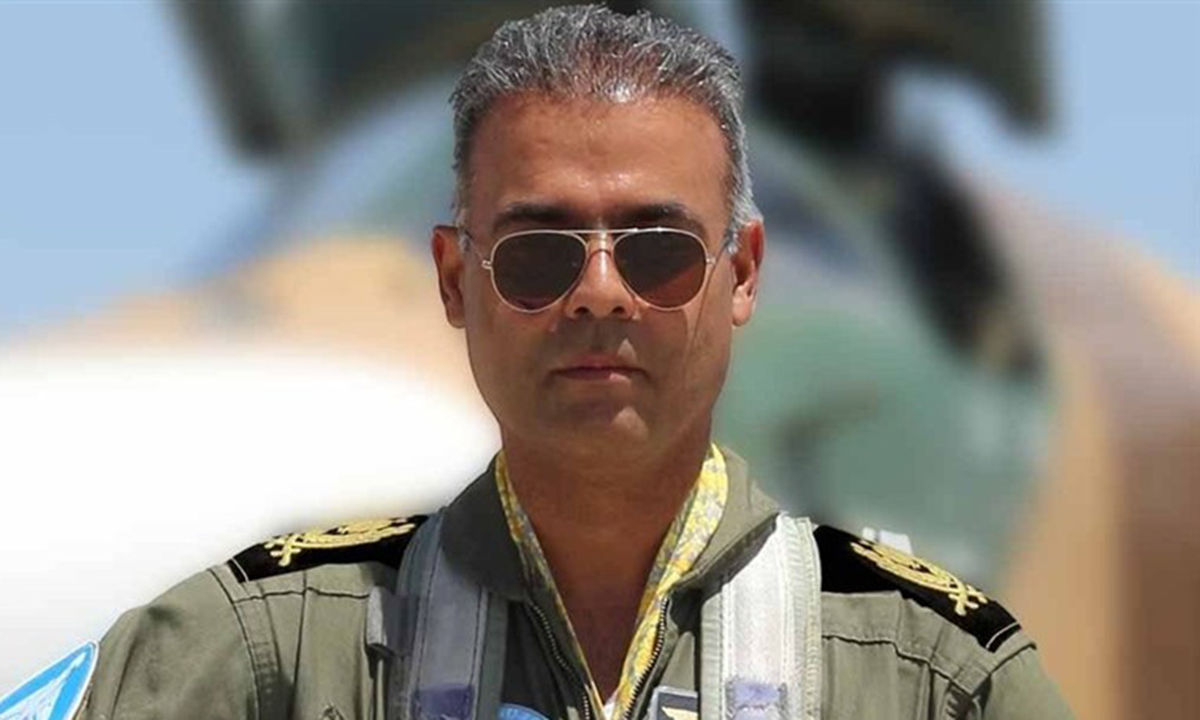 |
Iranian Brigadier General Majid Kazemi in an image posted on July 29. *Tasnim*
The squadron bypassed advanced enemy surveillance systems before bombing Al Udeid airbase, causing extensive damage to the facility. On their return journey, the two attack aircraft were struck by opposing air defense systems in the Persian Gulf. "Since then, we have been working to determine the fate of the pilots," the Iranian military stated.
Qatar's Ministry of Defense announced on March 2 that it had shot down two Iranian Su-24 attack aircraft and intercepted 7 ballistic missiles and 5 unmanned aerial vehicles (UAVs) launched by Iran.
Chairman of the US Joint Chiefs of Staff Dan Caine confirmed the incident at the time, though he did not specify the targets of the Iranian attack aircraft. "Qatari fighter jets shot down two Iranian aircraft for the first time as they were en route to their targets," he stated during a Pentagon press briefing on March 4.
CNN, citing two sources familiar with the matter, reported that Iran's Islamic Revolutionary Guard Corps (IRGC) deployed two Su-24 attack aircraft on the morning of March 2, heading towards Al Udeid airbase and Ras Laffan, a vital natural gas processing facility and a pillar of Qatar's economy.
One of the two sources stated that the Su-24 squadron was approximately two minutes of flight time from its target. The other source indicated that the Iranian attack aircraft were visible to the naked eye and carried "bombs and guided munitions".
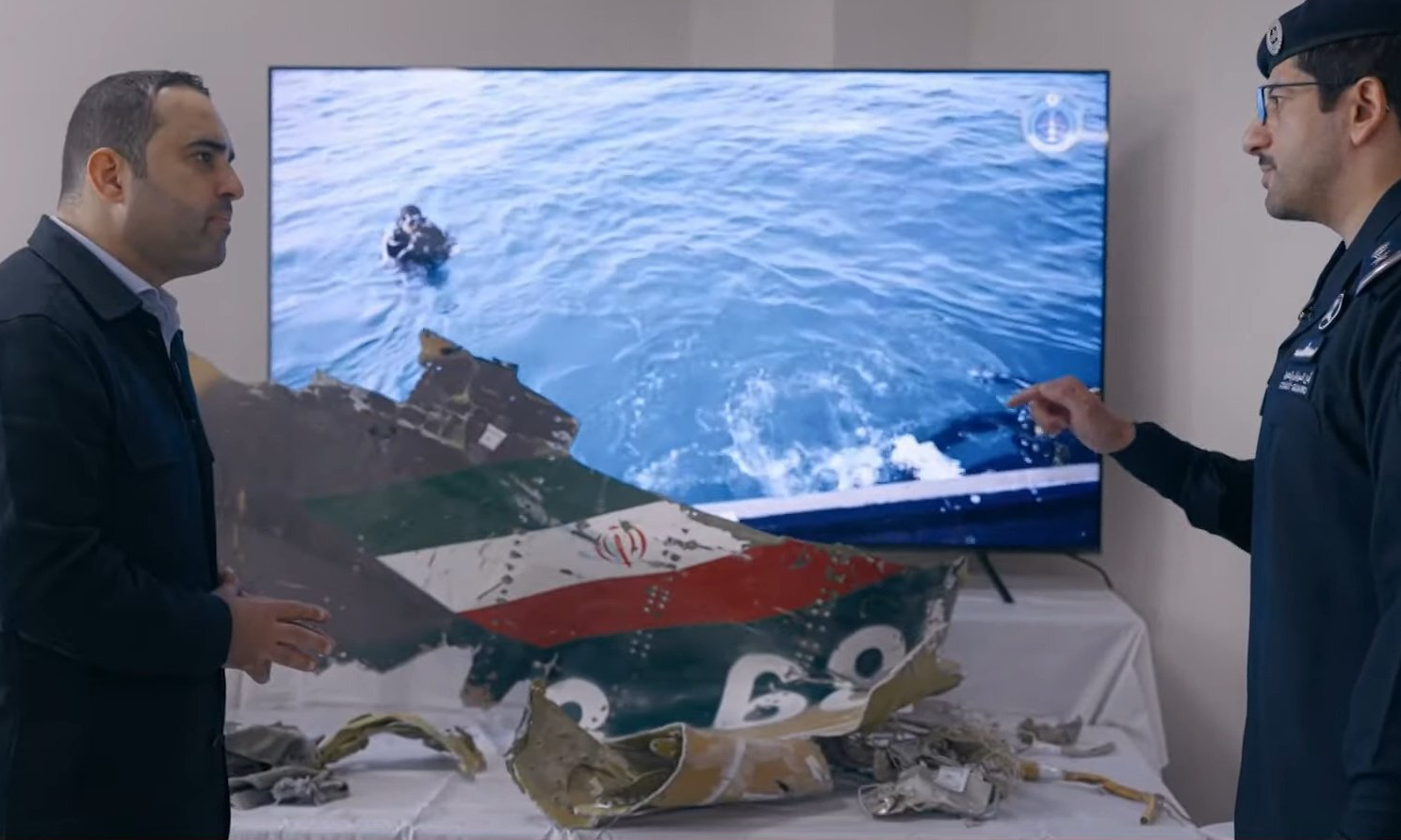 |
Debris believed to be from a downed Iranian attack aircraft, in an image posted in April. *Al Jazeera*
Qatar issued warnings via radio communication, but the aircraft did not respond, subsequently descending to approximately 24 meters to evade air defense radar detection, according to a source.
"Due to time constraints and available evidence, the Iranian Su-24 squadron was classified as a hostile target. Qatar then deployed fighter jets, and an F-15 fighter engaged the two Iranian attack aircraft before shooting them down," the source added.
The two Iranian aircraft crashed into Qatari territorial waters. Majed al-Ansari, spokesman for Qatar's Ministry of Foreign Affairs, stated on March 3 that search efforts for the pilots were underway.
Located in the desert on the outskirts of Doha, Qatar, Al Udeid is the largest US military base in the Middle East. It hosts forward units of US Central Command (CENTCOM), along with air force and special operations forces in the region.
The base is protected by an air defense network comprising US and Qatari Patriot systems. Prior to the missile attack, the US had transferred additional Patriot systems from Japan and South Korea to Qatar to bolster the base's defensive capabilities.
In addition to the Su-24 squadron's attack, Iran also launched numerous missiles and UAVs targeting Al Udeid airbase, causing various damages at the location.
Pham Giang (According to Tasnim, CNN, Al Jazeera)