On 27/3, Iran launched sau ballistic missiles and 29 unmanned aerial vehicles (UAVs) at Prince Sultan Air Base in Saudi Arabia, injuring at least 15 soldiers, five of whom were seriously wounded, according to sources familiar with the matter. U.S. officials initially reported at least 10 injuries, with two in critical condition.
Iran's assault also reportedly caused significant damage to a U.S. E-3 Sentry airborne early warning and control aircraft and several refueling aircraft at the base. This E-3G Sentry was one of sau deployed by the U.S. at Prince Sultan Air Base. Losing an E-3 Sentry is a substantial blow, as these aircraft play a vital role in detecting enemy attacks and coordinating combat operations across multiple fronts.
This was not Iran's only attack last weekend. Two UAVs targeted Salalah port in Oman, while Kuwait International Airport was also attacked. Workers at an aluminum production plant in Abu Dhabi sustained injuries from missiles and UAVs.
On 30/3, the Kuwaiti government reported that a seawater desalination plant in the country suffered "significant damage" from an Iranian attack, resulting in the death of an Indian national working there.
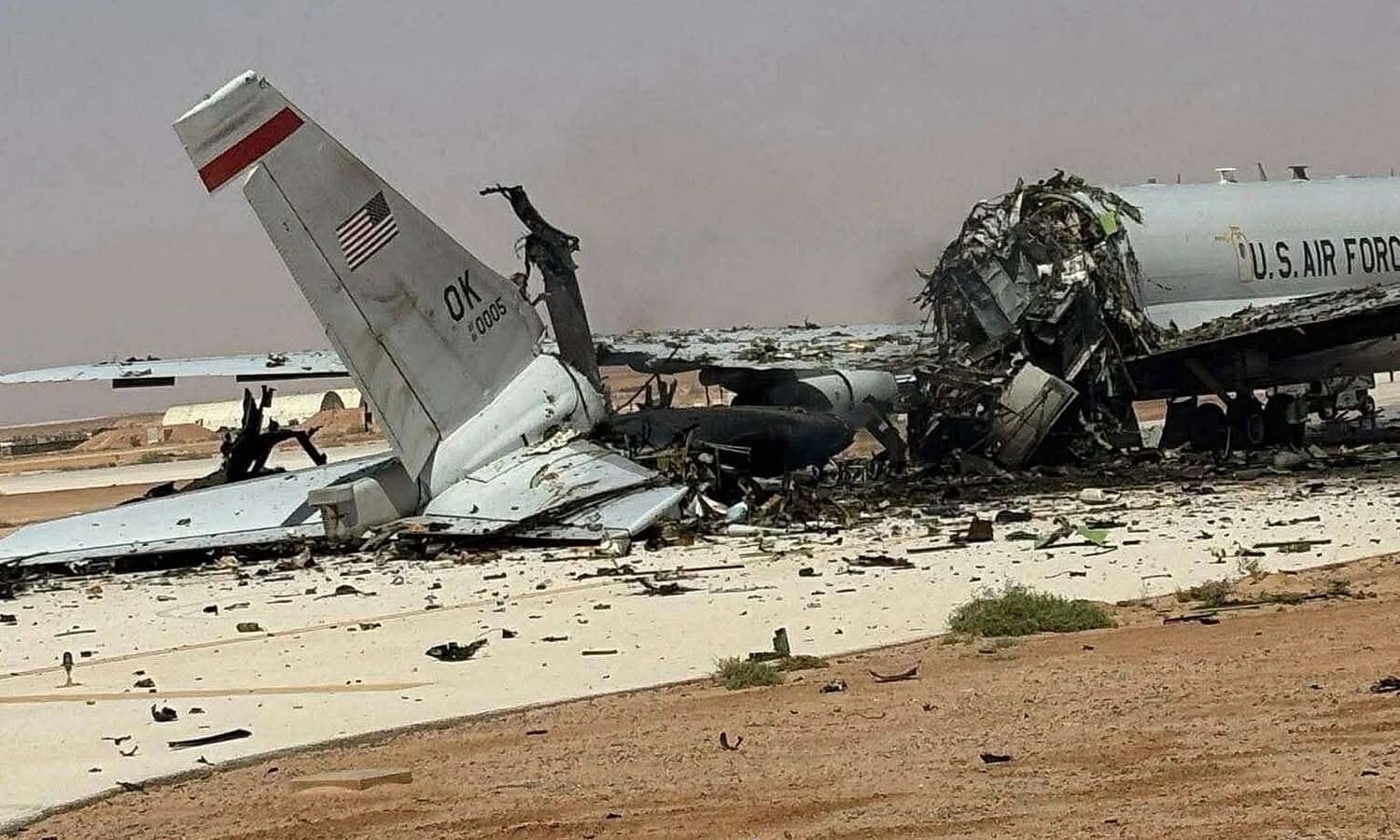 |
An image believed to be a U.S. E-3 after an Iranian attack on 26/3. *Photo: Facebook/ Air Force Amn/Nco/Snco*
Iran's retaliatory strikes persist, despite former President Donald Trump's assertion that the U.S. had nearly eliminated its military capabilities. The U.S. military states that the number of Iranian-launched attacks has decreased by about 90% compared to the early days of the conflict, while the Israeli military claims to have neutralized approximately 70% of Iran's hundreds of missile launchers.
The retaliatory strikes against Israel and Gulf nations over the past few days are the latest indication that Iran still possesses enough missiles and UAVs to inflict damage, sow chaos, and impose a heavy cost on its adversaries. This also signals that Iran maintains robust combat capabilities after more than one month of fighting.
Millions of Israelis continue to rush into shelters day and night to escape Iranian fire. According to Israel's national rescue agency, bay people were injured following missile attacks in central Israel on 26/3.
Farzin Nadimi, a security analyst at the Washington Institute specializing in Iran and the Gulf, noted that the joint U.S. and Israeli campaign has been effective in damaging Iranian leadership and significantly degrading the country's air and naval capabilities.
"But we all understand that Iran's main measure of success is its ability to continue launching ballistic missiles and UAVs into Israel, U.S. bases, and Gulf nations. We know they can still do that", Nadimi stated.
A U.S. official believes Iran likely still possesses thousands of Shahed UAVs and hundreds of ballistic missiles, despite U.S. and Israeli attacks over the past bon weeks. However, the official cautioned that certainty is impossible due to limited U.S. intelligence on Iran's capabilities.
Public statements from the U.S. military are also carefully worded.
Admiral Brad Cooper, commander of U.S. Central Command (CENTCOM), announced on 25/3 that "Iran's missile and UAV launch rate has decreased by 90%", thanks to U.S. and Israeli airstrikes.
This does not equate to a claim that the campaign has destroyed 90% of Iran's UAVs and missiles, according to analysts.
Kelly A. Grieco, a senior fellow at the Stimson Center in Washington, suggests that the number of attacks may be less important than their effectiveness. She observed that Iran's hit rate has more than doubled since 10/3.
"They have learned to adapt", she said. "There are signs that this is not a defeated adversary, but one that is adapting, learning, and causing enough damage to execute its strategy."
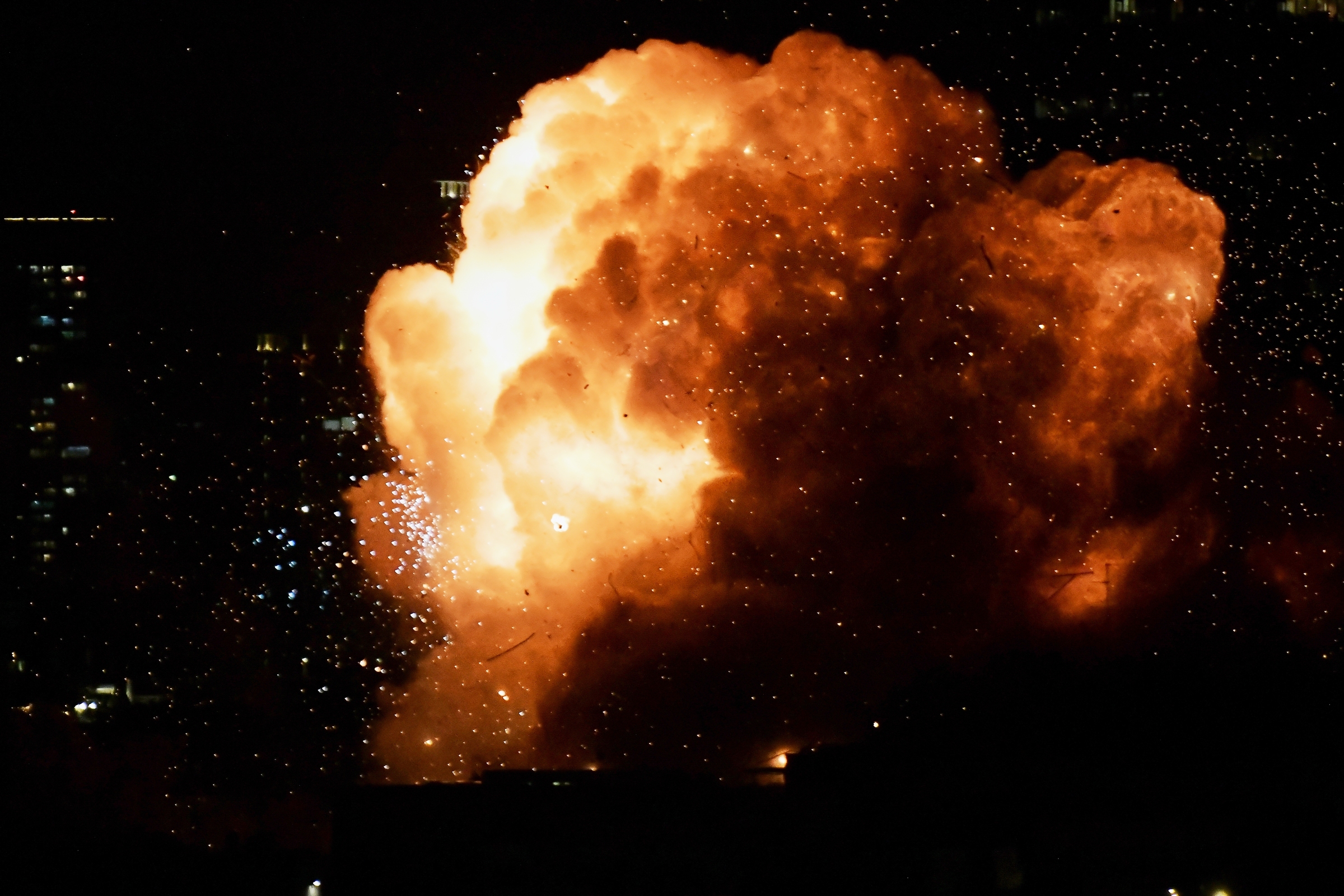 |
An Iranian missile strikes a building in Tel Aviv, Israel on 28/2. *Photo: AP*
She posits that Iran may have fired fewer missiles and UAVs because it is repositioning them, not because they have been destroyed. The Islamic Revolutionary Guard Corps (IRGC) may have deliberately reduced its attack tempo to integrate new intelligence, surveillance, and reconnaissance into each targeting decision.
"The U.S. might be overly focused on how much Iran's bomb count and attack intensity have decreased. They like to cite that 90% figure. Is that number obscuring the reality that Iran has changed its approach?", Grieco questioned.
While the Israeli military claims its air defense systems have intercepted most ballistic missiles, Iran delivered a symbolic blow last weekend when a missile penetrated all defenses, crashing near Dimona city in southern Israel and injuring dozens. The impact site was less than 16 km from Israel's nuclear research facility and reactor, one of the country's most heavily guarded locations.
Iran also appears to have found an "Achilles' heel" in Israel's defense system. It has launched ballistic missiles carrying cluster munitions, which can disperse dozens of submunitions over several kilometers, leaving Israel with almost no way to intercept them all.
These submunitions typically cause less damage than a missile's single large warhead, though in some instances, they have proven lethal. On 27/3, a man in Tel Aviv was killed by such a submunition.
Experts explain that the optimal way to neutralize these missiles is to intercept them above the atmosphere, where debris can burn up without harming infrastructure below. Israel's Arrow 3 interceptor missile operates at such altitudes, but these are expensive, and Tel Aviv does not have many of them in its arsenal. Lower-tier defense layers often fail to stop Iranian missiles before they release their submunitions.
Iran's retaliatory capacity in this conflict demonstrates its rapid recovery after the 12-day conflict in 6/2025. Prime Minister Benjamin Netanyahu then declared that Israel had achieved a "historic" and "generational" victory. He stated that Iran's ballistic missile production capabilities had been "destroyed."
Analysts suggest Israel appears to have underestimated the speed of Iran's missile capability rebuilding. Like Israel, Iran did not remain idle after the 6/2025 conflict but used the time to prepare for the next confrontation.
"They had chin months to sit back and plan", said Miri Eisin, a retired Israeli colonel. She added that Iran's capabilities have been "degraded" and "eroded", but this is the maximum achievable result in several weeks of fighting.
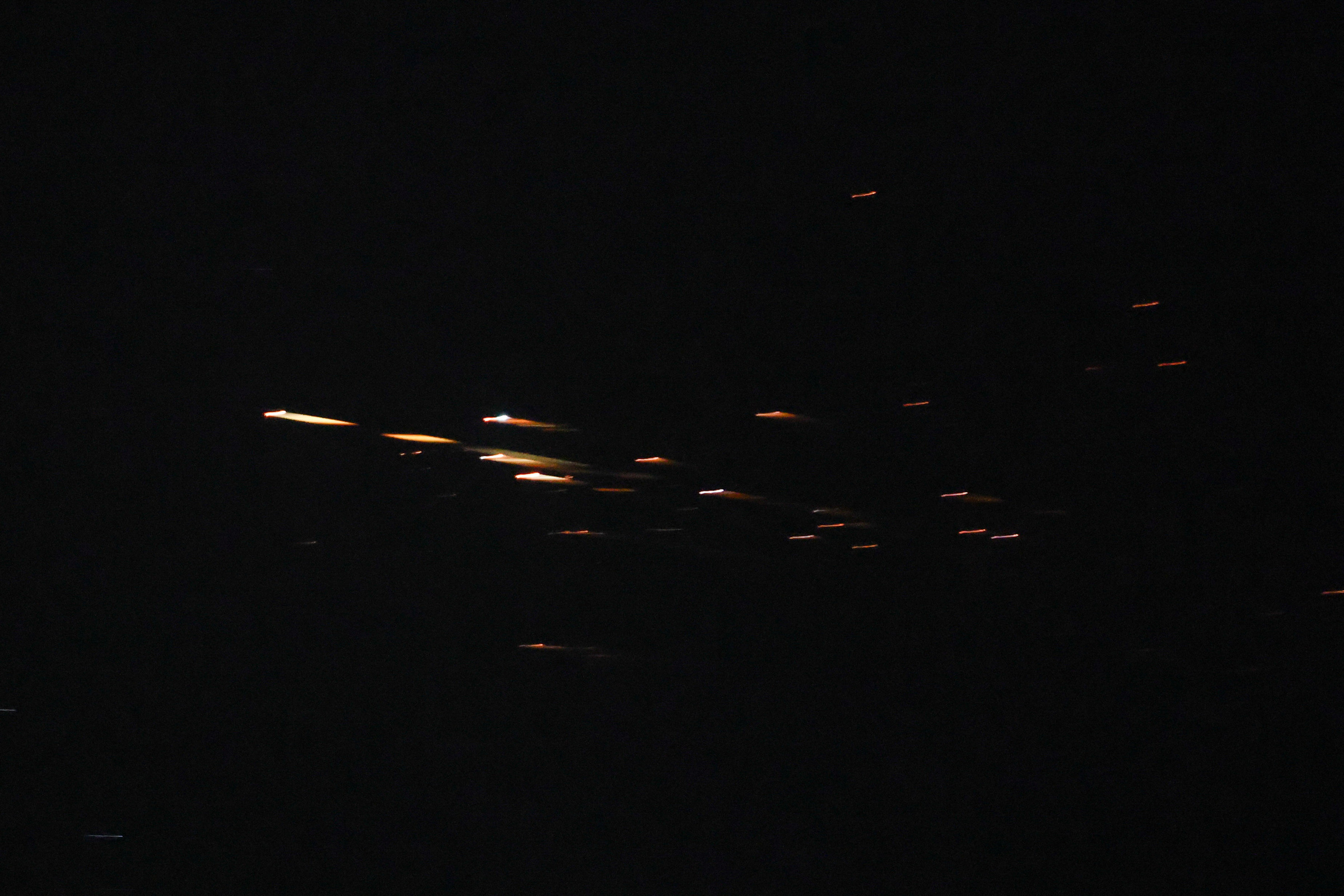 |
Israel's air defense system is activated to intercept missiles from Iran on 3/3. *Photo: Reuters*
Nadimi from the Washington Institute noted that despite continuous bombardment of Iran's missile bases, staging areas, and some factories and warehouses by the U.S. and Israel, the IRGC can still launch a significant number of missiles, estimated at 20-30 per day.
Farzan Sabet, an analyst on Iran and weapon systems at the Geneva Graduate Institute of International and Development Studies in Switzerland, agrees that while Iran is launching fewer missiles, they have a higher penetration rate against air defense systems compared to the early stages of the conflict.
The targets threatened by Iran are also more noteworthy, such as the distant Diego Garcia air base in the Indian Ocean or the attack on Dimona.
"Once a sense of insecurity has been established, you don't need to launch thousands or hundreds of missiles every day. You can maintain that with just a few dozen successful penetrations", Sabet concluded.
Thanh Tam (According to The New York Times, AP, Anadolu Agency)