In the weeks following the eruption of conflict on 28/2, Iran's rial remained stable, partly due to a significant reduction in trade and imports amidst the hostilities. However, the rial began to slide earlier this week, reaching a record low of 1.8 million rials per USD on 29/4.
Experts warn that this depreciation will likely exacerbate inflation in Iran, a nation reliant on imports for many goods, from food and medicine to electronics and raw materials, all of which are affected by the USD exchange rate.
Earlier this year, during protests in Iran, the rial's exchange rate dropped from 1.4 million rials per USD to 1.6 million rials per USD in less than one week.
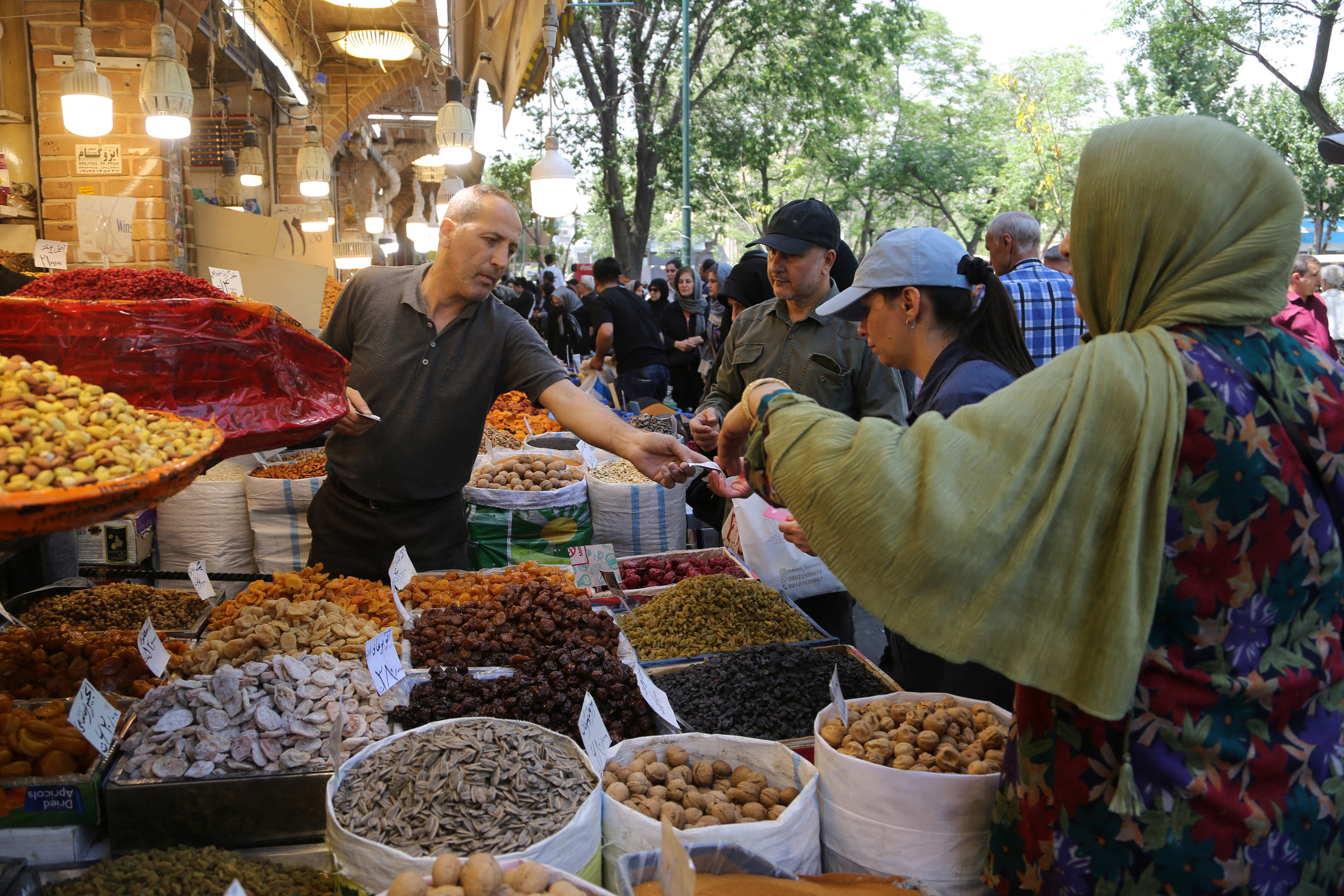 |
Iranians at a stall in Tehran on 28/4. Photo: AFP |
Iranians at a stall in Tehran on 28/4. Photo: AFP
Even before the rial reached its record low, essential goods had already seen price increases. According to AP, over the last two weeks, Iranians have paid higher prices for staples such as milk, cooking oil, and bread.
The Iranian currency's decline occurs as the conflict between Iran and the US-Israel alliance shows no signs of ending. The US and Iran previously negotiated to find a solution to the conflict in Islamabad, Pakistan, on 11/4. However, they failed to reach consensus on key issues, including control of the Strait of Hormuz and whether Iran could continue uranium enrichment.
US President Donald Trump ordered a blockade of Iranian seaports from 13/4 to pressure the country into accepting the terms of an agreement. The US blockade has made Iran unable to export oil to earn foreign currency and has caused significant difficulties in importing goods by sea.
Despite this, Iran declared it would not yield to US pressure, retaliating by tightening control of the Strait of Hormuz. Mr. Trump later extended a ceasefire with Iran until Tehran presents concrete proposals to Washington.
Pakistan Prime Minister Shehbaz Sharif stated on 29/4 that his government is continuing mediation efforts and promoting dialogue to de-escalate tensions between the US and Iran.
Ngoc Anh (According to AP, Times of Israel, CNN)