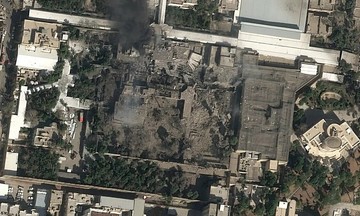
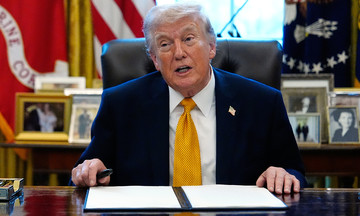
On 16/3, Lieutenant Colonel Nadav Shoshani, an Israeli military spokesperson, stated that Iran was firing fewer missiles at the country compared to what they had faced in regional conflicts over the past two years. He added that he did not see any "urgent issues" with the interceptor missile stock, asserting that Israel had prepared for "greater threats".
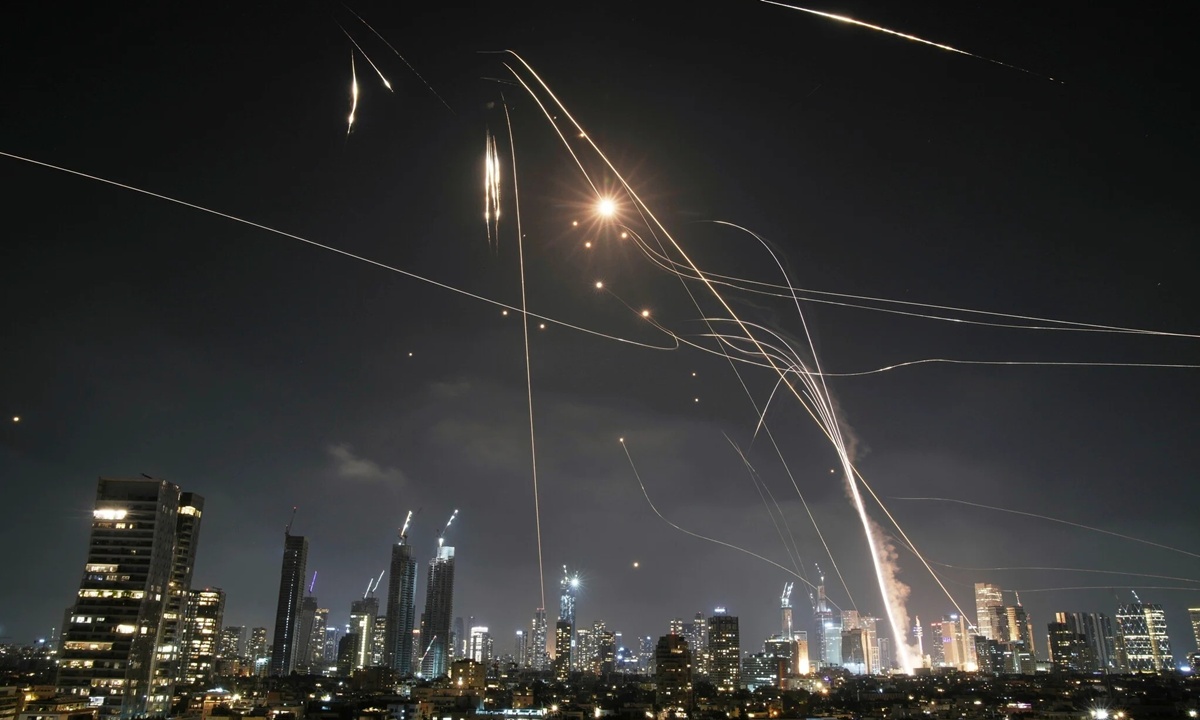 |
US and Israeli air defense systems fired to intercept Iranian missiles over Tel Aviv last June. *AP*. |
These comments followed a Semafor report last weekend, which cited unnamed US officials stating that Tel Aviv had informed Washington of being "critically low on ballistic missile interceptors".
Earlier, on 15/3, the Israeli military issued a statement saying it was closely monitoring the situation, affirming that "as of now, there is no shortage of interceptor missiles". Israeli Foreign Minister Gideon Saar also denied any military shortage of interceptor missiles.
The Israeli Ministry of Defense declined to comment on whether it had requested additional interceptor missiles from the US.
Lieutenant Colonel Shoshani explained that whenever Israel undertakes a large-scale, multi-week operation, "replenishment occurs in real time", through domestic production or foreign procurement.
The US and Israel have conducted joint airstrikes against Iran since 28/2, leading to Iran's retaliation with almost daily ballistic missile launches towards Israel, a distance of over 960 km. According to data from the Institute for National Security Studies at Tel Aviv University, Iran has launched over 300 ballistic missiles at Israel, with about one-half carrying cluster munitions.
Hezbollah, the Iran-backed armed group in Lebanon, has also launched over 1,000 short-range missiles and unmanned aerial vehicles (UAVs) into Israel since 2/3, according to Lieutenant Colonel Shoshani. Earlier this month, Hezbollah launched missiles in support of Iran, prompting intense Israeli airstrikes against Lebanon. Hezbollah then retaliated with continuous missile attacks into Israel.
Israel has neutralized most aerial objects using various interceptor missiles, although some attacks from Iran or Lebanon have still penetrated the country's air defense system.
In addition to defensive measures, the Israeli military has prioritized attacking Iran's launch systems to minimize missile fire. Shoshani stated that approximately 70% of Iranian missile launchers have been neutralized, either destroyed, damaged, or made inaccessible. These are "continuously hunted" by US-Israeli aerial reconnaissance assets.
During a 12-day conflict last June, Iran launched over 500 ballistic missiles into Israel, with Washington assisting Tel Aviv in interception efforts.
Vu Hoang (According to Reuters, AFP, AP)