Italy’s Interior Ministry on 31/7 ordered the closure of its sea and air borders with Spain, effectively suspending the free movement mechanism within the Schengen Area between the two nations.
The proposal was initially put forward by Italian Prime Minister Giorgia Meloni, along with Deputy Prime Ministers Antonio Tajani and Matteo Salvini, on the evening of 30/7. This decision followed the arrival of tens of thousands of migrants in Ceuta, a Spanish enclave located in North Africa.
The Schengen Area allows citizens to travel freely without passports among 29 European countries. However, member states retain the right to temporarily re-impose border controls for reasons of security or public order.
While Italy does not share a land border with Spain, the restrictions impact individuals traveling by air or sea between the two countries.
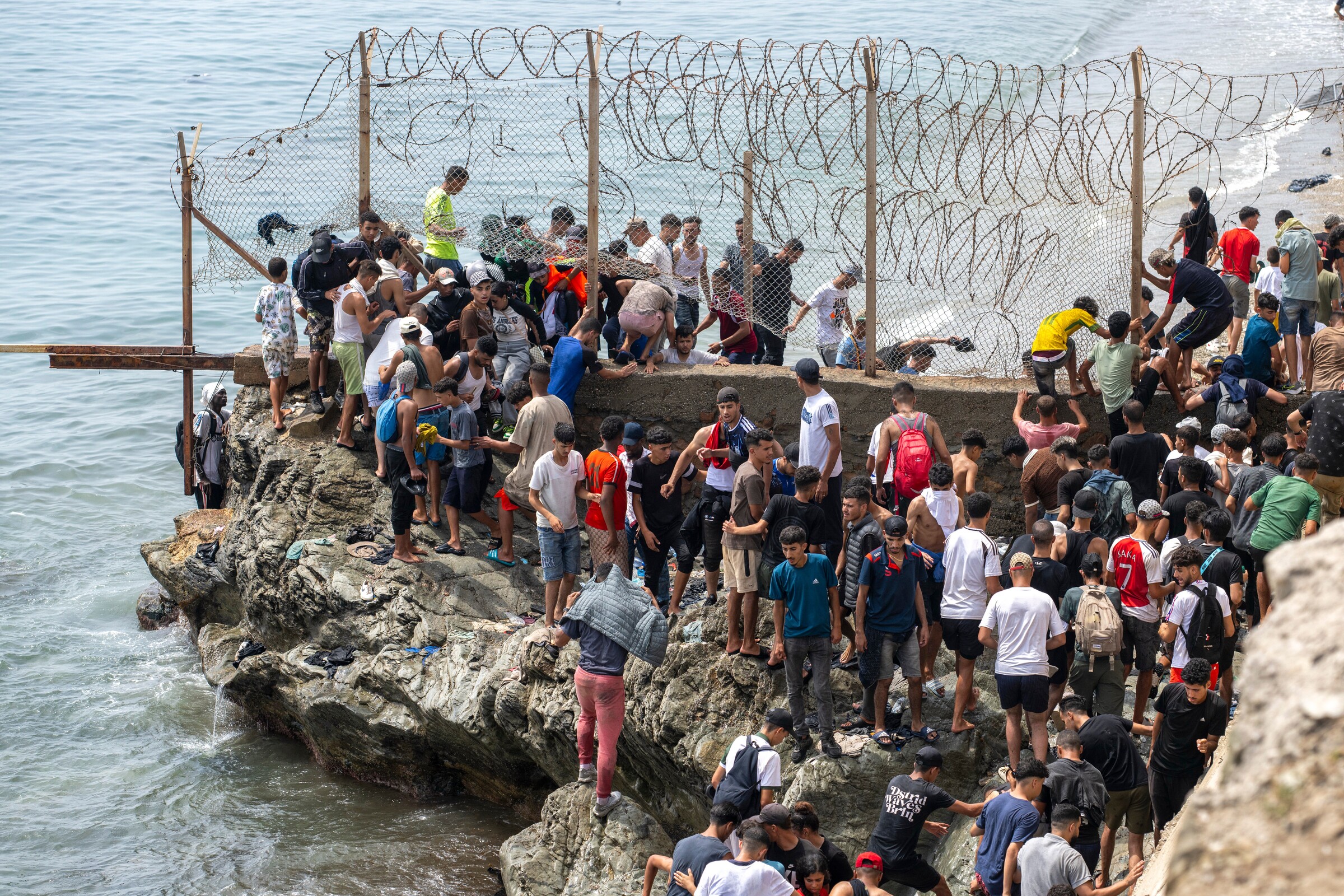 |
Migrants cross a barbed wire fence while attempting to enter Ceuta from Morocco on 31/7. Photo: AP |
The Ceuta government estimates the influx of migrants into the territory to be over 60,000. Ceuta is separated from Morocco by a 10-meter border fence. However, migrants from Morocco can swim around this barrier to reach Tarajal beach in Ceuta.
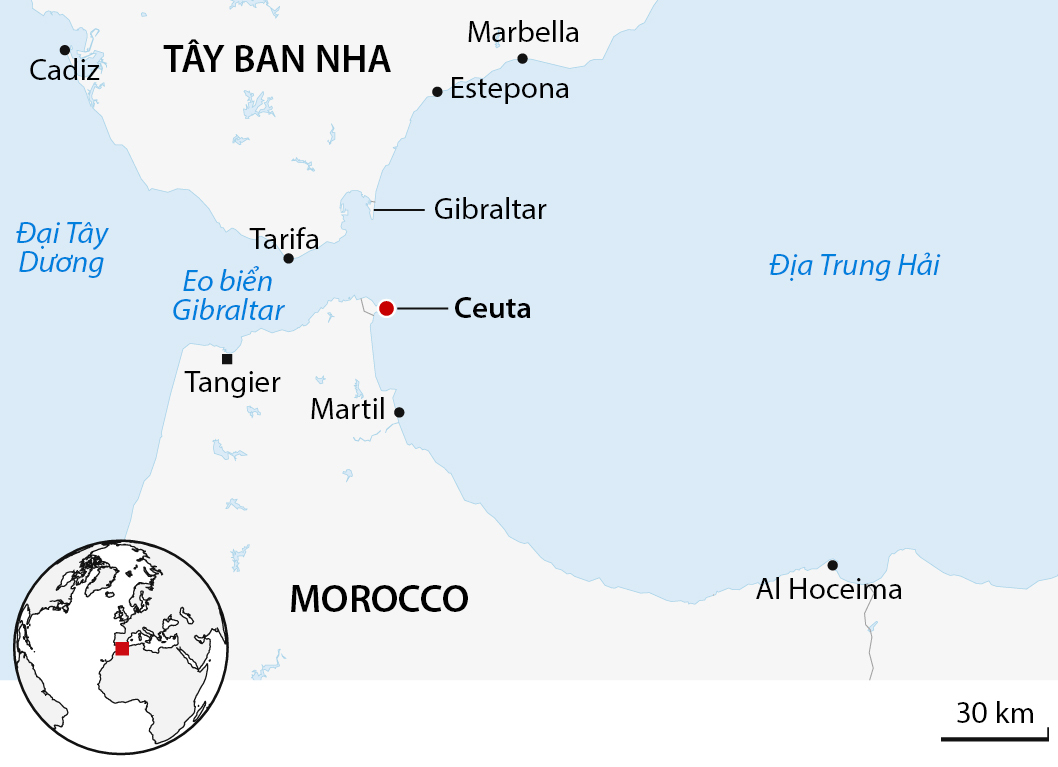 |
The location of Morocco, Spain, and the city of Ceuta. Graphic: Guardian |
Spain’s Interior Ministry reported that approximately 48,300 migrants had returned to Morocco by 6 PM (11 PM Hanoi time) on 31/7. A Spanish government representative in Ceuta stated that 57 bodies were found on the Spanish side of the border, with additional fatalities possibly occurring on the Moroccan side. Sources indicate that some individuals drowned, while others were crushed attempting to climb over the breakwater supporting the border fence.
In a related development, Italy’s Interior Ministry also announced an agreement with France to increase controls along their shared land border. This measure aims to prevent undocumented migrants from crossing into Italy.
Ngoc Anh (According to Reuters, Euro News)