On 4/8, the Japanese government released a 598-page defense white paper, stating that the conflict in Ukraine has provided many lessons on using unmanned aerial vehicles (UAVs) and drones. The document emphasized that "adapting to new methods of warfare is essential."
As nations race to develop military UAVs and drones, Japan prioritizes these weapons for coastal defense, integrating them with long-range missiles. Japanese Defense Minister Shinjiro Koizumi underscored, "Speed is a key factor."
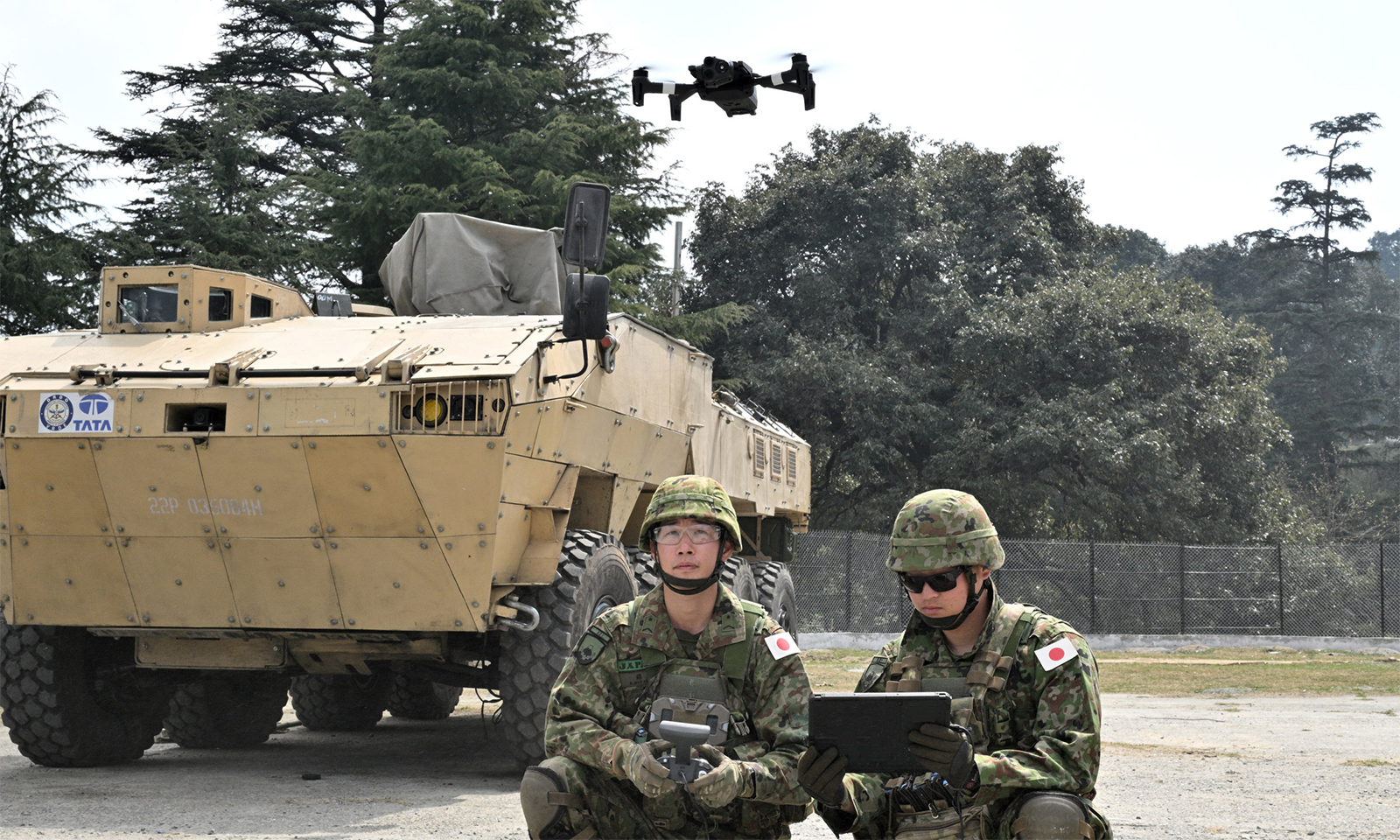 |
Japanese soldiers operate a drone during an exercise in March. Photo: JGSDF |
Unmanned weapons can help the Japan Self-Defense Forces (JSDF) offset declining personnel numbers due to the country's shrinking population. However, many experts view manufacturing domestic UAVs and drones as a challenge for Japan, as imported commercial products from China dominate its market.
The Acquisition, Technology & Logistics Agency (ALTA) of Japan's Ministry of Defense recently selected 4 of 38 companies to participate in a rapid UAV and drone development program. The Japan Maritime Self-Defense Force (JMSDF) will test their equipment this month before making a final selection.
Many Japanese companies are developing military unmanned vehicles. On 31/7, Toshiba Corporation announced plans to develop combat drones with the startup Pro Drone.
Japanese officials consider strengthening weapon production capacity and technology crucial for the nation's military power. The Japanese government is increasing funding for startups and scientific research.
According to experts, Japan's recent lifting of the ban on lethal weapon exports could also help bolster its defense industry.
In the defense white paper, Japan continues to identify China as its "biggest strategic challenge," expressing concern over the increasing presence and operational frequency of Chinese warships in the Pacific.
The document noted, "China continuously increases its defense budget with a lack of transparency, accelerating large-scale nuclear and missile development at a rapid pace."
Japan views military activities by Russia and China around its territory, including bomber patrols and joint naval exercises, as a "serious threat to national security."
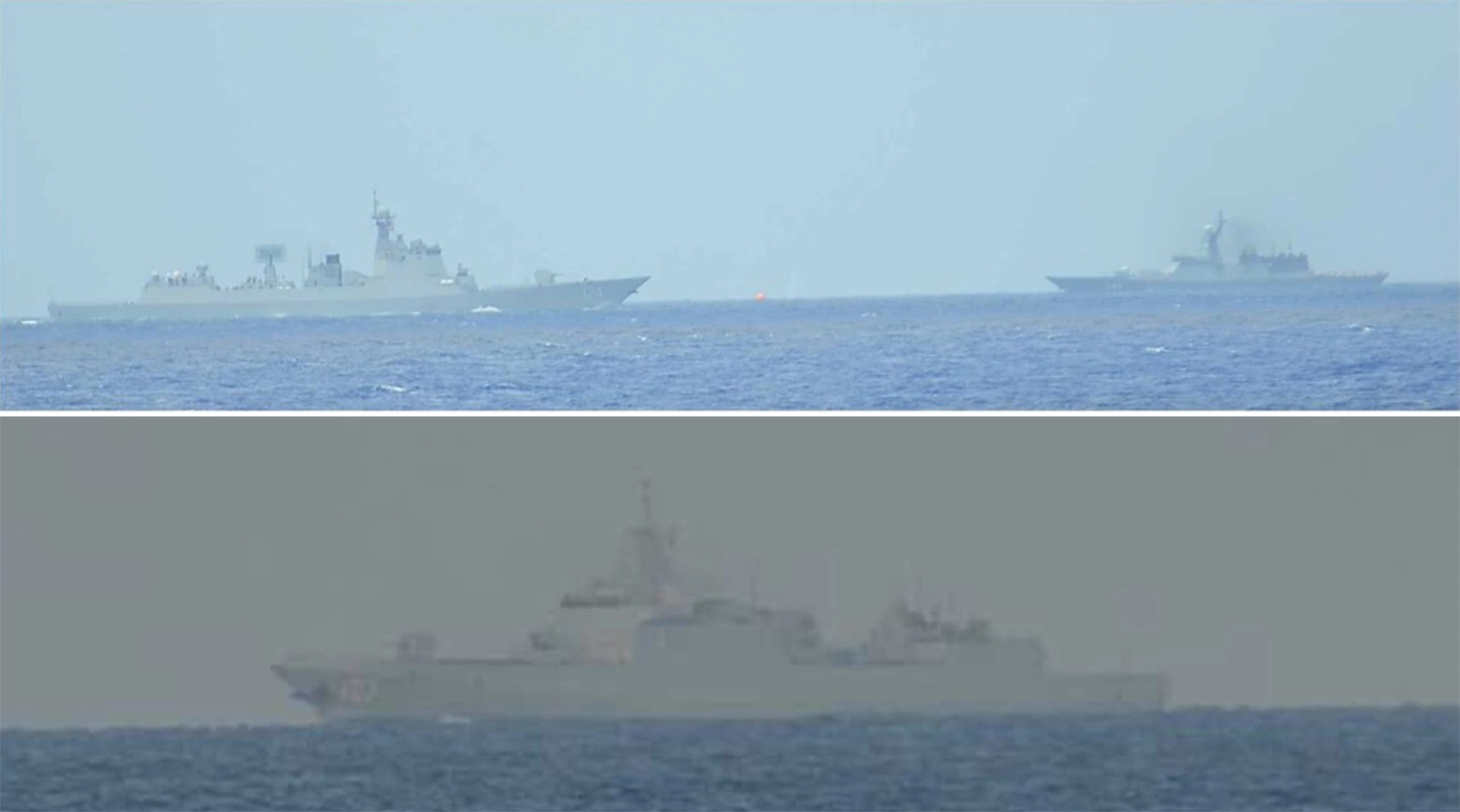 |
Chinese and Russian naval vessels near Okinotori on 19/7. Photo: Japan Ministry of Defense |
Japan's defense white paper assesses North Korea's rapid missile development, including hypersonic missiles, as an "increasingly serious and urgent threat." The country also expressed concern about the growing defense cooperation between Pyongyang and Moscow, as well as North Korea's support for Russia in the Ukraine conflict.
Russia and North Korea have not commented on the information.
On 4/8, China rejected some content in Japan's defense white paper, criticizing the document as "full of false rhetoric." Chinese Defense Ministry spokesperson Chen Xi stated, "This is a typical 'thief crying stop thief' tactic. Japan uses this as an excuse to unleash its armed forces."
By Nguyen Tien (AFP, AP, Reuters)