"The service building at a power generation and desalination plant was attacked during Iran's aggression targeting Kuwait, resulting in the death of an Indian worker and significant property damage," Kuwait's Ministry of Electricity announced on 30/3.
The Kuwaiti government deployed technical and emergency response teams to the site to assess the plant's condition and ensure its continued normal operation. The name of the desalination facility was not disclosed.
Iran has not commented on the accusation, while its media outlets have only cited the statement from Kuwait's Ministry of Electricity regarding the desalination plant strike.
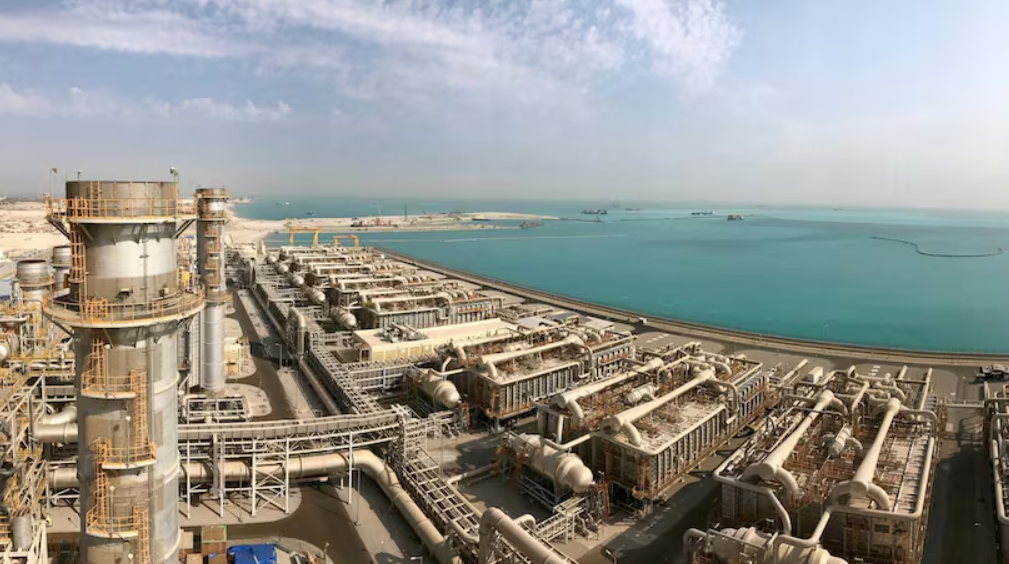 |
Shamal Az-Zour Al-Oula, Kuwait's first combined power and desalination plant, became operational in 8/2020. Photo: National News |
Qatar, another Gulf nation heavily reliant on desalination plants, issued a statement condemning Iran's targeting of military camps, power plants, and desalination facilities in Kuwait.
"Qatar's Ministry of Foreign Affairs emphasized that Iran must cease its unprovoked aggressive actions against its brotherly neighbors. Qatar affirms its solidarity with Kuwait, supporting the country in using all measures to protect its sovereignty and national security," the statement read.
Kuwait has faced repeated attacks since the conflict between the US, Israel, and Iran erupted over a month ago. On the night of 28/3, Kuwait's Ministry of Defense detected 14 missiles and 12 unmanned aerial vehicles (UAVs) entering its airspace. Some weapons targeted military bases in Kuwait, injuring 10 soldiers.
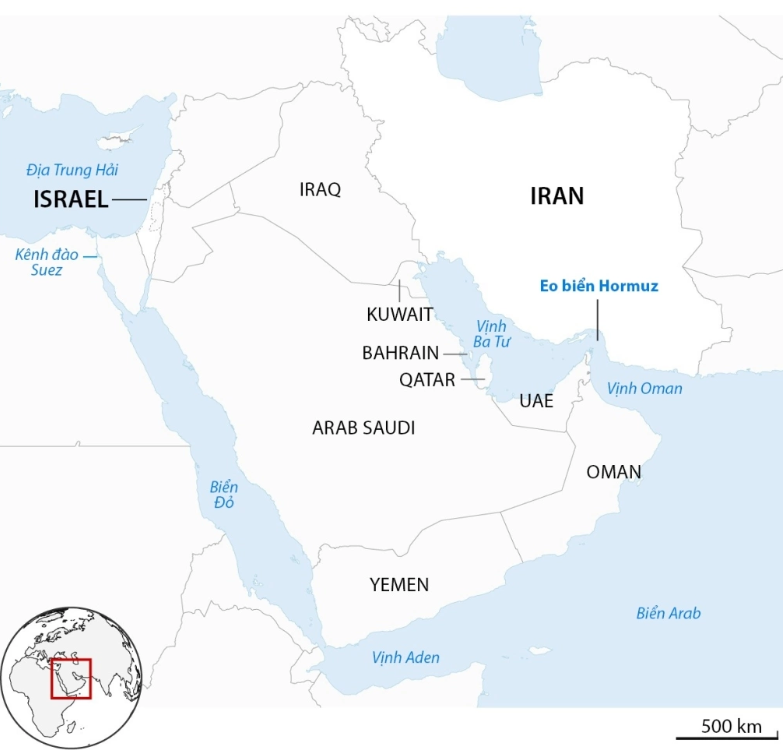 |
Location of Kuwait and Gulf countries. Graphic: Guardian |
Regional tensions continue to escalate after the US and Israel conducted attacks on Iran, causing more than 2,000 deaths, including many senior officials and at least 216 children, according to Iranian figures. Much vital infrastructure was also destroyed.
Iran retaliated with missile and suicide UAV strikes targeting Israel and countries in the region with a US military presence, causing casualties and damage to both military and civilian infrastructure. Iran also tightened control over the Strait of Hormuz, a maritime route transporting about 20% of the world's oil and liquefied natural gas supply, disrupting global energy markets.
US President Donald Trump announced last week a temporary postponement of plans to attack Iranian energy facilities for 10 days, with a deadline of 6/4. Tehran warned it would respond with attacks on energy infrastructure across the Gulf if its national power grid were targeted.
The conflict also highlighted the vulnerability of essential water infrastructure in the Middle East, one of the world's most water-scarce regions.
Desalination plants supply 100% of drinking water for millions of residents in Bahrain and Qatar, 80% of drinking water needs in the UAE, and 50% in Saudi Arabia. These civilian structures are highly susceptible to missile and drone attacks during conflicts.
Thanh Danh (According to AFP, Al Jazeera)