On 29/3, Iran’s Islamic Revolutionary Guard Corps (IRGC) accused US-Israeli forces of launching an airstrike on the University of Science and Technology in Tehran, damaging structures on the campus. The IRGC issued an ultimatum, demanding the US "condemn the attack on the Iranian university before 12h on 30/3 (15h30 Hanoi time)" or face retaliation against American universities in the Middle East. The force also advised faculty, staff, students of US universities in the Middle East, and residents in nearby areas to "stay one km away from university campuses".
The US has not responded to the IRGC's ultimatum. However, the president of the American University of Beirut announced that the university would transition to fully online instruction on 30/3 and 31/3 "as a maximum precaution" against the IRGC's threat.
The Lebanese American University also announced on the same day that it would shift to fully online operations for those two days "as a preventive measure against threats to educational institutions in the region".
Many universities in the region had already moved to online learning since US-Israeli forces launched an attack on Iran on 28/2.
Qatar's Ministry of Education announced on 28/2 that all schools and educational centers nationwide would transition to remote learning until further notice.
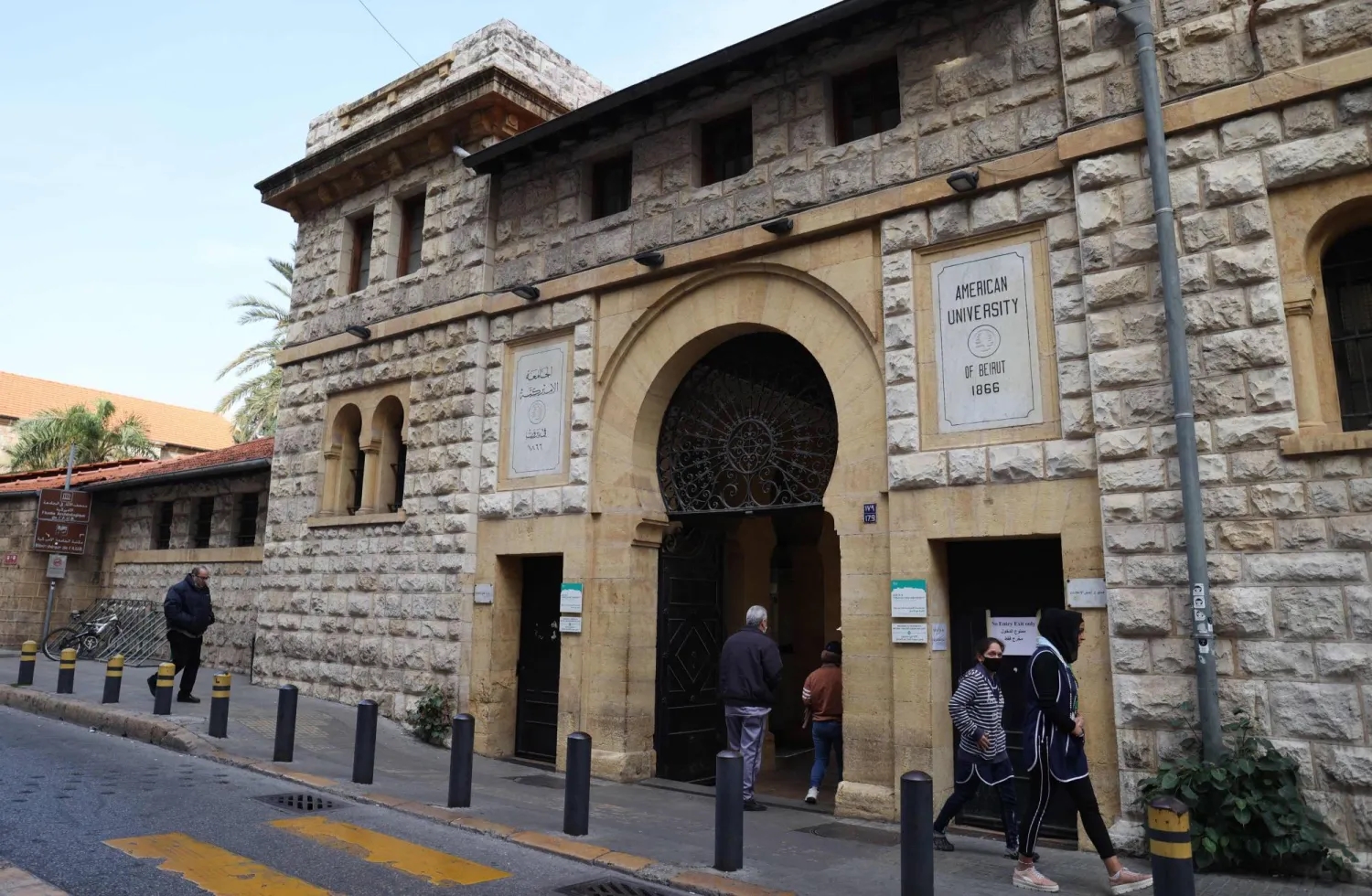 |
People passing by the main gate of the American University of Beirut campus in 1/2022. Photo: AFP |
Georgetown University, Texas A&M University, and Virginia Commonwealth University School of the Arts in Qatar have all announced that they will switch to online teaching until further notice. American universities in Kuwait, Dubai, and Ras Al Khaimah have also had students learning online since the beginning of this month.
The US operates several universities in the Gulf region, including Texas A&M University in Qatar and New York University in the United Arab Emirates (UAE).
Ngoc Anh (According to CNN, AP, AFP)