Venezuela's President Nicolas Maduro, currently detained in a New York prison, has sent a message through his lawyers, stating he is "still fine" and urging his supporters not to be disheartened. His son, legislator Nicolas Maduro Guerra, shared this update on 10/1 in a video released by the ruling PSUV party. "My father's lawyers say he is very resilient," Guerra stated, adding, "He told everyone not to be sad, and that my parents are fine; they are warriors."
This marks the first direct message from Maduro since his detention. His son emphasized his father's unwavering spirit, stating, "He cannot be defeated in any way." Guerra further asserted, "They used excessive force, but still could not make him fall."
On 3/1, the US military conducted a raid, apprehending President Maduro and his wife, Cilia Flores, and transporting them to the United States. They are currently detained at the Metropolitan Detention Center (MDC) in Brooklyn, New York, awaiting trial.
The MDC, which houses approximately 1,300 prisoners, has been previously characterized as "hell on earth" due to its harsh detention conditions and reported violence. Notably, the facility has held high-profile individuals such as Juan Orlando Hernandez, the former president of Honduras, during his trial for smuggling hundreds of tons of cocaine into the United States. Hugo Carvajal, former director of Venezuela's intelligence agency, was also detained there.
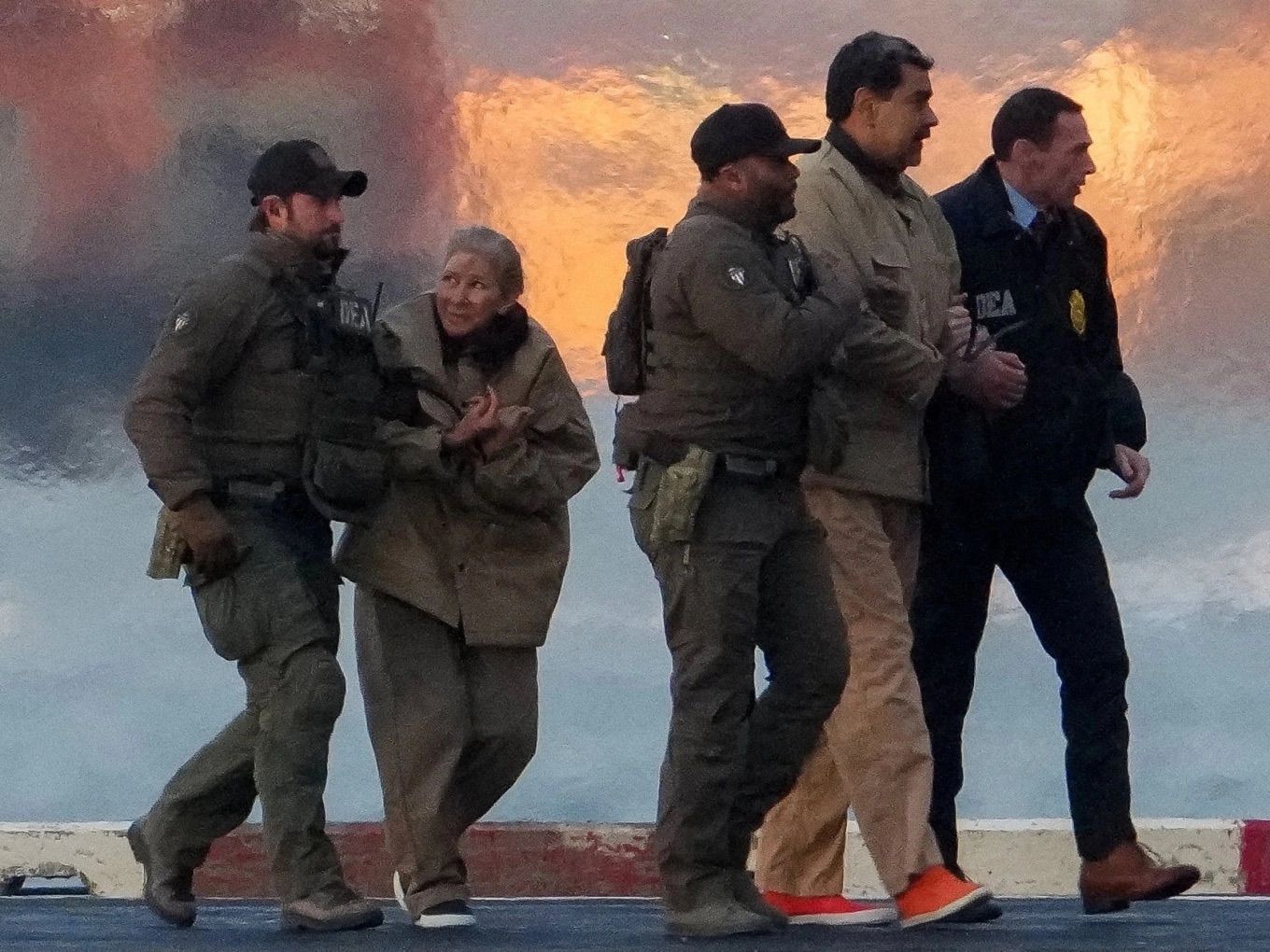 |
President Maduro and his wife are escorted from a helicopter en route to a New York court on 5/1. Photo: Reuters
Last year, the Legal Aid Society criticized the prison's "history of violence, neglect of medical care, and a series of human and civil rights violations." The organization also reported a lack of heating during winter months and "maggot-filled" food.
Describing the conditions, federal prison consultant Sam Mangel stated, "It's really hell. There's almost no ventilation, heating, and air conditioning. Heating is very limited. Each prisoner is only given one wool blanket. They have to lie on a thin mattress of only about 5 cm placed on a metal sheet."
Mangel suggested that President Maduro and his wife might be placed in solitary confinement rather than general population cells. He explained, "He would be in danger if he were with other prisoners. No one knows what those prisoners, including gang members, think of him."
Hugh Hurwitz, who led the US Federal Bureau of Prisons from May 2018 to August 2019, indicated that Maduro and his wife likely do not communicate frequently unless they both schedule lawyer meetings concurrently.
Life for a prisoner in solitary confinement typically involves waking at 6 a.m., daily meetings with lawyers, 5 hours of outdoor exercise per week, and daily medical examinations.
The US Federal Bureau of Prisons recently announced efforts to improve detention conditions at the facility. These include adding guards and medical staff, resolving over 700 pending maintenance requests, and upgrading electrical, water, catering, heating, and air conditioning systems. Federal officials are also working to suppress internal crime within the detention center.
On 5/1, Maduro and his wife appeared in federal court in New York City. The indictment charges Maduro with four counts: drug terrorism conspiracy, cocaine import conspiracy, possession of machine guns and explosive materials, and conspiracy to possess these items. Flores faces accusations of "ordering kidnapping and murder" and accepting bribes. Both have pleaded not guilty to all charges.
The next hearing is scheduled for 17/3. Both the Venezuelan President and his wife reportedly suffer from health issues requiring attention. Flores appeared in court with a bandage on her forehead, believed to be an injury sustained when she hit a bunker door during the US special forces raid.
By Huyen Le (Based on AFP, CNN, La Nacion, Teletica)