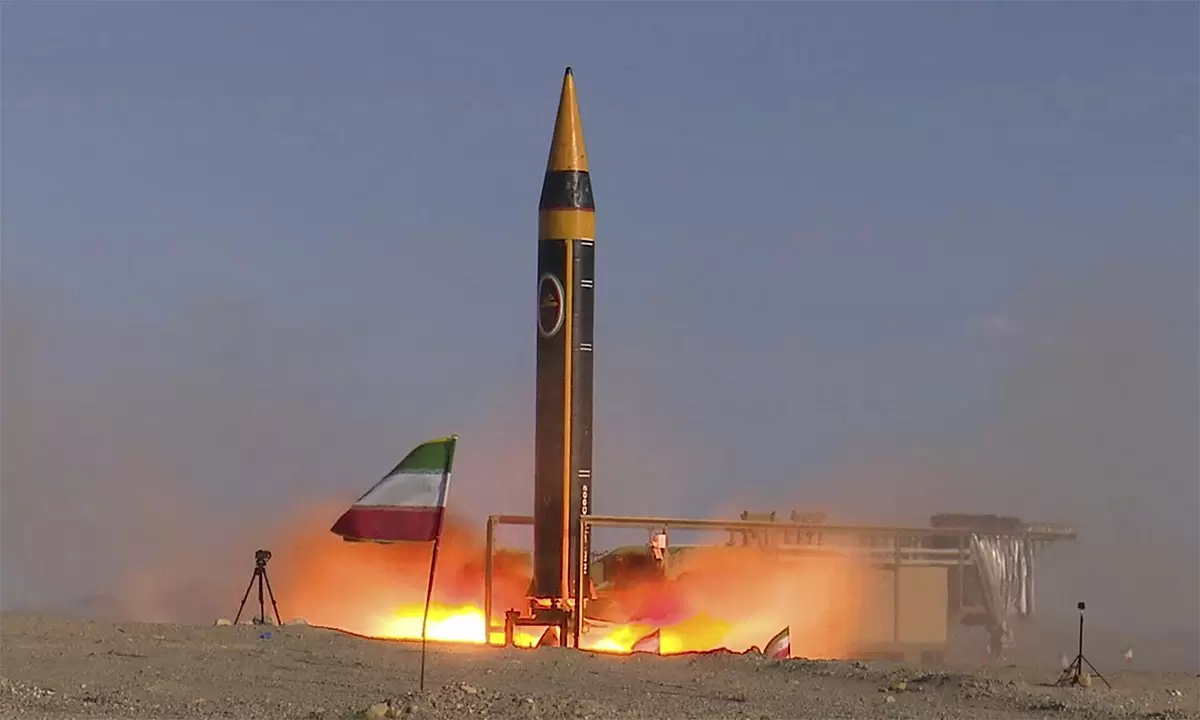
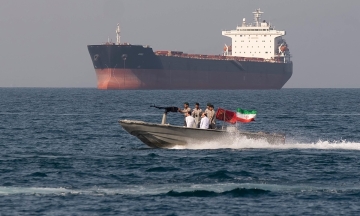
The Islamic Revolutionary Guard Corps (IRGC) recently released a video showing three ballistic missiles, believed to be Fateh-110 variants, launching and soaring into the night sky. The IRGC claimed these were retaliatory strikes against a US base in the Middle East, following US airstrikes on Bandar Abbas, Iran. The force warned that the US would face a "harsh response" if it repeated attacks on Iran.
Iran's Ministry of Foreign Affairs spokesperson, Esmaeil Baqaei, stated that Tehran would "take all necessary measures to protect national sovereignty." He described Washington's attacks as violations of the ceasefire agreement.
US Central Command (CENTCOM), responsible for US military operations in the Middle East, reported that Iran launched a ballistic missile towards Kuwait. Local air defense forces intercepted the projectile. CENTCOM added that Iran's "serious violation of the ceasefire occurred hours after it deployed five suicide unmanned aerial vehicles (UAVs), posing a clear threat in and near the Strait of Hormuz."
CENTCOM affirmed that it shot down all the UAVs and prevented a sixth aircraft from launching from a ground control station in Bandar Abbas. The command stated, "We and our regional partners remain vigilant and cautious as we continue to protect our forces and interests from Iran's unreasonable aggression."
Kuwait's Ministry of Foreign Affairs strongly condemned Iran's missile and UAV attack on the country, asserting it was a "serious escalation."
> US strikes complicate peace talks with Iran
The US military had launched airstrikes early this morning on targets in Bandar Abbas, a port city near the Strait of Hormuz and home to Iran's strategic naval base. Reuters, citing an unnamed US official, stated that the location posed a threat to Washington's forces and maritime operations in the region.
The IRGC later announced its attack targeted a US air base used as the launch point for the strike on Bandar Abbas.
According to Iranian media, the retaliatory target was Ali Al-Salem military airport, a strategically important facility in Kuwait. Located in the center of the country, it lies approximately 60 km from the Iraqi border. Kuwait has invested 800 million to 1,5 billion USD over the years in the base's defense capabilities.
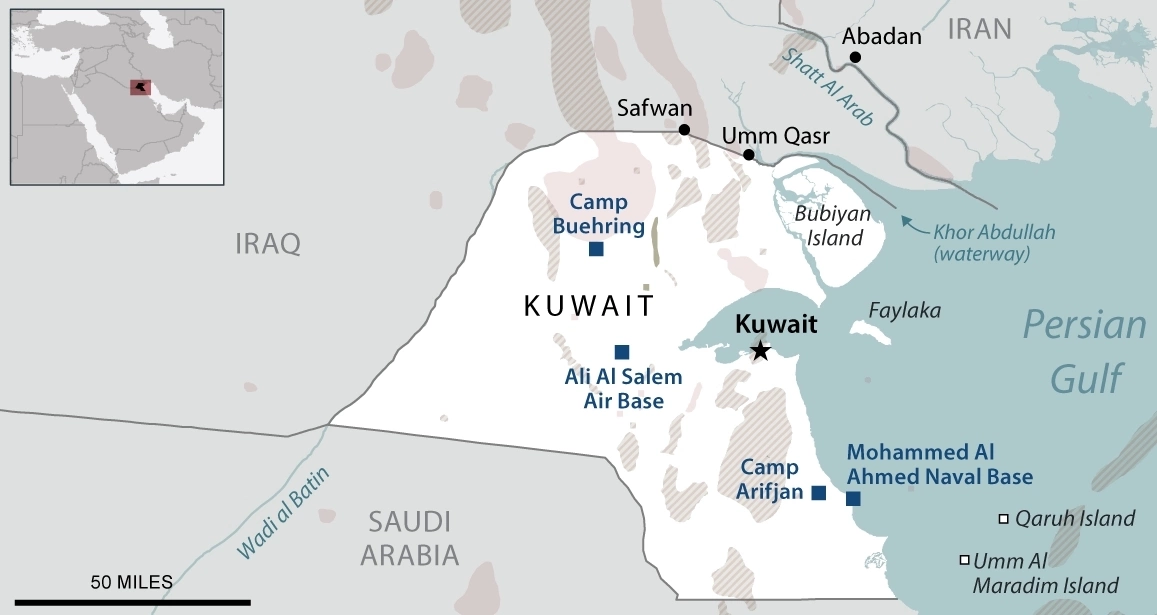 |
Location of Ali Al Salem air base in Kuwait. Graphics: CRS. |
The airport also hosts the US 386th Air Expeditionary Wing, described by Washington as a "key airlift hub and gateway for deploying combat power to allied and coalition forces in the region." Italian forces began stationing at the base in 2019 to participate in missions against the self-proclaimed Islamic State (IS) in Iraq.
Its important role has made Ali Al-Salem base one of the locations that suffered the heaviest damage during six weeks of conflict.
This marks the most serious clash between the US and Iran since the ceasefire agreement took effect on 8/4, impacting dialogue efforts to reach a peace deal.
US and Iranian negotiators are working to finalize a memorandum to reopen the Strait of Hormuz. They also aim to create more time to reach consensus on the fate of Iran's high-enriched uranium stockpiles. US President Donald Trump stated on 27/5 that Iran wanted a deal, but Tehran's proposals were still insufficient.
Pham Giang (According to Tasnim, AFP)