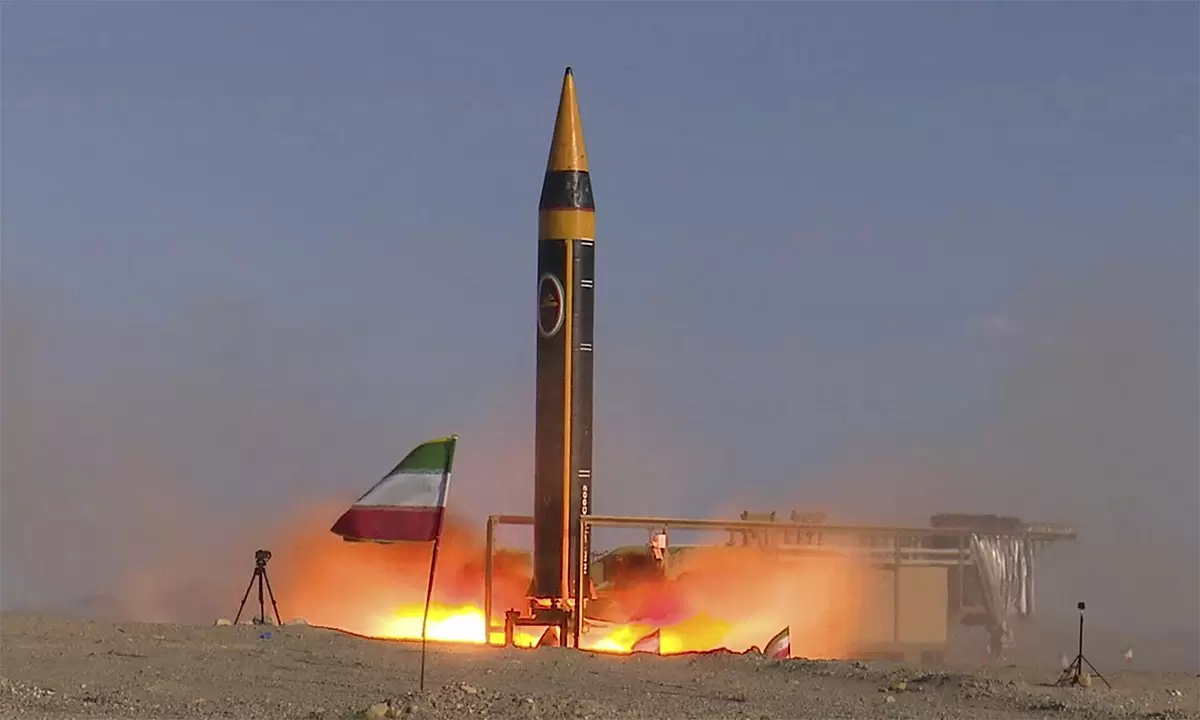
President Volodymyr Zelensky on 28/5 confirmed he sent a "special letter" to President Donald Trump and the US Congress, urging Washington to support transferring more of the most modern PAC-3 missiles for Patriot systems to Kyiv. He called these "vital tools" for Ukraine to counter Russian attacks.
Dmytro Lytvyn, a media advisor to the Ukrainian president, previously stated that Zelensky's "urgent letter" highlighted a serious shortage of air defense equipment in Ukraine.
Amid increasingly scarce missile stockpiles and no immediate solution for replenishment, the domestic Lima electronic warfare (EW) system is considered a solution to help Ukraine counter enemy missiles and unmanned aerial vehicles (UAVs). This system is a product of Cascade Systems, a defense startup.
The manufacturer states that Lima specializes in creating "strong jamming fields" to disrupt the satellite navigation systems of Russian weapons. When satellite signals are blocked, Russian missiles and UAVs continue to fly using inertial navigation systems, but their accuracy is reduced compared to satellite-corrected methods.
"Besides blocking navigation systems, we also use signal spoofing techniques and change coordinates with a deviation of several kilometers, causing missiles to fall into fields instead of hitting their targets," said "Alchemist", commander of Ukraine's Night Watch EW unit and one of Lima's developers.
When a Russian missile or UAV flies into Lima's operational zone, the system emits signals that cause its guidance system to record incorrect coordinates. The developers claim the Lima system once "made Russian missiles think they were in Peru", a country located approximately 12,000 km from Ukraine, causing the projectiles to go off course. However, they did not provide specific evidence.
One of Lima's strengths is its operational range and cost. Unlike tactical jamming devices, this system can cover large territories to protect critical infrastructure.
According to Cascade Systems, each system costs a maximum of approximately 67,000 USD to produce, depending on the version. Protecting a large city requires 30 to 100 devices, equivalent to 2 to 6,7 million USD. This cost is comparable to only one to two of the most modern PAC-3 MSE missiles from the Patriot air defense system.
Alchemist suggests that once Ukrainian forces create sufficiently large "dead zones" with the Lima system, Russian missiles will no longer be able to hit cities in the country.
Cascade Systems admits that Lima struggles against UMPK glide bombs, as Russia primarily uses them to attack areas along the front line, where the Ukrainian military cannot deploy many EW systems to create "dead zones".
The Russian military also continually upgrades its glide bombs and Geran-2 suicide UAVs, equipping them with satellite navigation systems that use Kometa anti-jamming antennas. This measure renders Ukrainian EW systems, including Lima, ineffective.
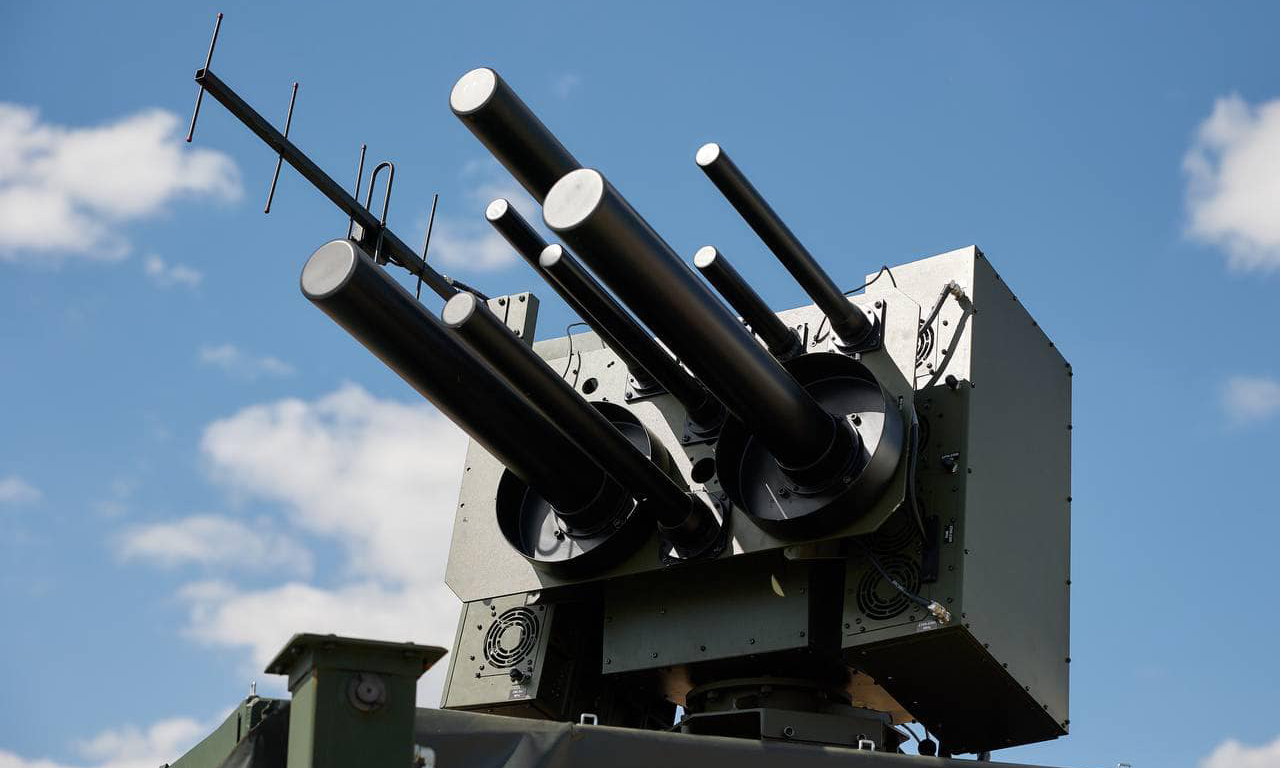 |
A Ukrainian ground drone equipped with an electronic warfare system in august 2023. Photo: Militarnyi |
After three months, engineers developed a new version called Lima Quant, capable of overcoming Russia's upgraded defense mechanisms by combining signal spoofing techniques with high-frequency signals to disrupt Kometa antennas.
This improvement allowed the Lima system to begin deflecting Russian glide bombs. "Even if a glide bomb is deflected by only 20 m, the target's chance of survival significantly increases," Alchemist said.
In response, Russia continues to improve its Kometa antennas, equipping them with more transceiving elements to counter Ukraine's jamming efforts. This leads to an ongoing jamming and anti-jamming arms race between the two warring sides.
"We constantly modify the Lima system based on the characteristics of Russian weapons, analyze successful strikes, and advise the General Staff on deployment locations and methods. The conflict is constantly evolving," Alchemist stated.
The developer noted that the first version of Lima was released in 2022 to counter cruise missiles. However, Cascade Systems spent several more years testing and invested over two million USD of its own funds to overcome skepticism from the government and Ukrainian army commanders.
Maksym Skoretskyy, head of the Ukrainian army's EW department, confirms that the latest Lima version can neutralize Russian long-range weapons, including ballistic missiles.
Cascade Systems has supplied over 400 Lima systems to the Ukrainian military, which began use in july 2024. From october 2025, the system was also deployed for civilian infrastructure protection. The manufacturer claims the Lima system has jammed 20,500 Geran suicide UAVs and deflected dozens of ballistic and cruise missiles over the past 18 months.
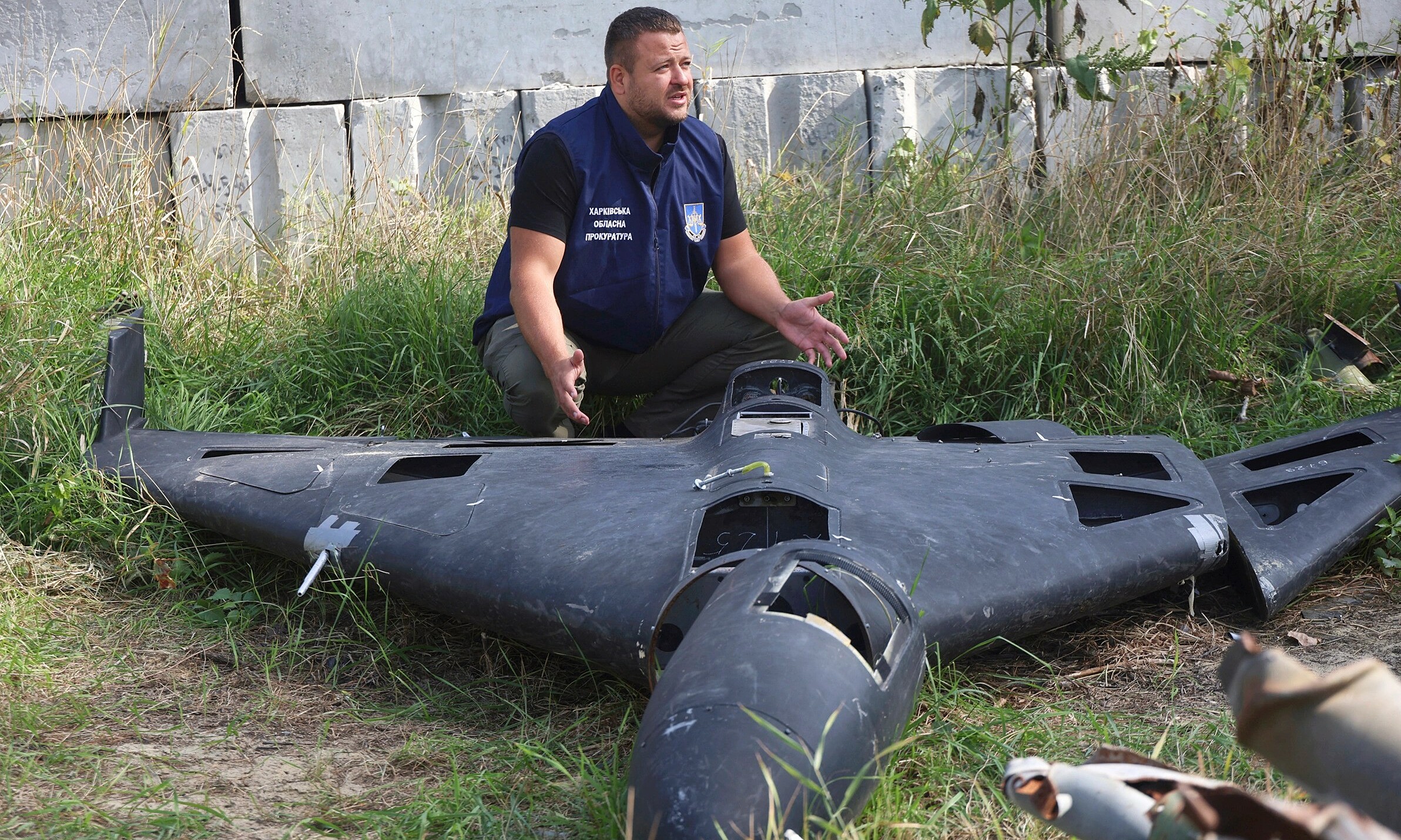 |
Wreckage of a Russian geran-series UAV that fell in kharkov province in september 2025. Photo: AFP |
Complete reliance on EW systems also carries certain risks. Jammed missiles and UAVs will crash intact, potentially causing damage if they hit objects on the ground. In contrast, traditional air defense systems destroy missiles and UAVs in the air. Debris also causes less damage than an intact warhead.
"However, will Russian ballistic missiles hit their intended targets when Lima is activated? I believe that is unlikely," Skoretskyy said.
Pham Giang (According to Politico, Reuters)