During a cabinet meeting at the White House on 27/5, when asked if he would accept a short-term deal allowing Oman and Iran to control the Strait of Hormuz, President Donald Trump rejected the idea with his harshest words, even towards ally Oman.
"No, the strait has to be open for everybody. This is international waters. We'll be watching it, but nobody's going to be controlling it. That's part of a negotiation. They want to control it, but nobody's doing that. Oman will be fine, like everybody else. Otherwise, we'll blow them away. They know that and they'll be okay," Trump stated.
This was a notable statement, unexpectedly made by Trump without prior written preparation, reflecting the US President's "shocking" style in foreign policy, according to CNN commentator Aaron Blake. The reason Trump issued such a strong threat to Oman, a top close ally of the US in the Middle East, is also significant.
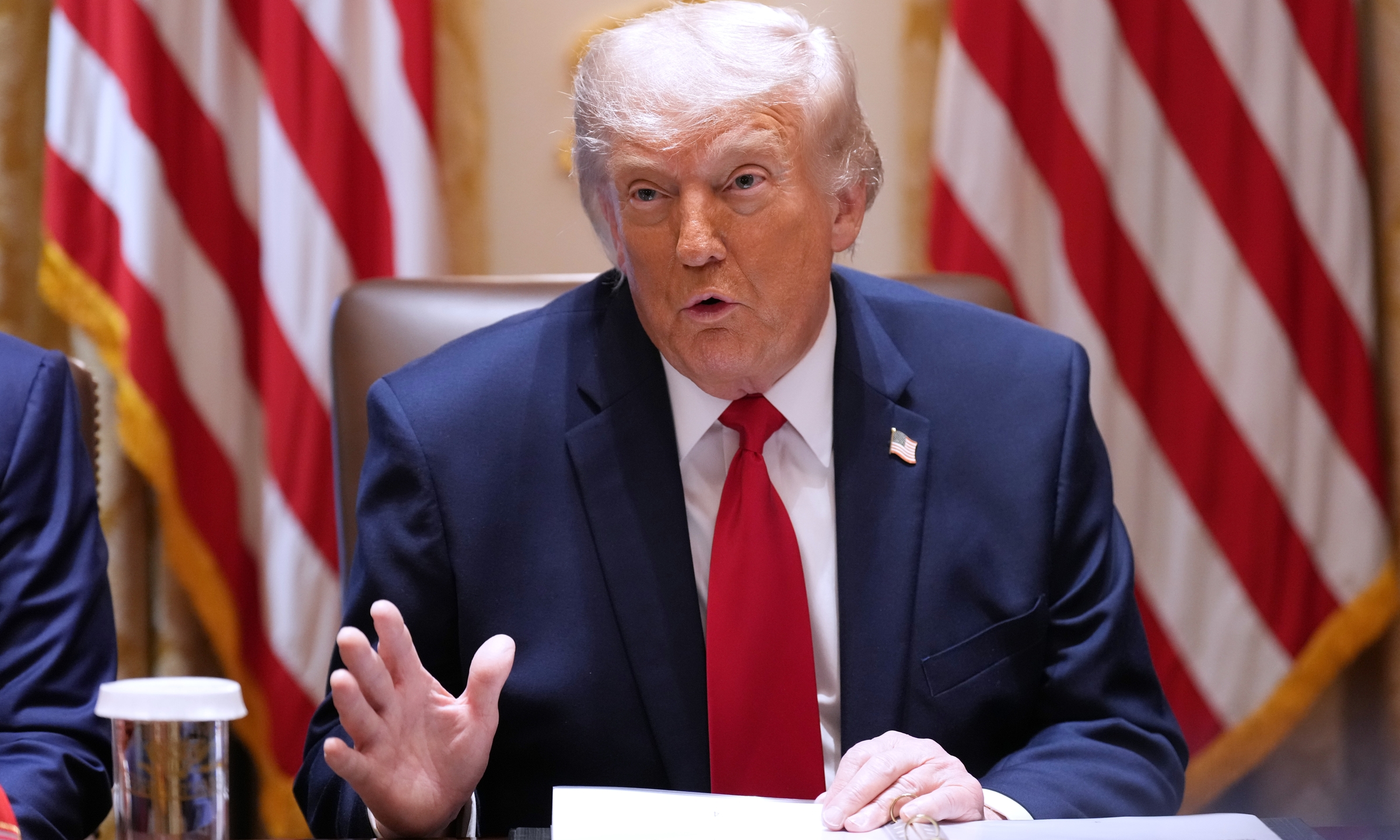 |
President Donald Trump during a cabinet meeting at the White House on 27/5. Photo: AP
The US and Oman have maintained a close alliance for over two centuries, with numerous cooperation treaties spanning security, trade, and technology.
For years, Oman has also served as a quiet mediator in the Gulf. Both the US and Iran trusted Oman to host secret negotiations, convey sensitive messages, and help prevent regional crises from escalating.
Therefore, President Trump's warning targeting Muscat surprised many.
Initially, some believed Trump had erred, intending to refer to Iran, not Oman. However, the US Department of State later reposted the President's statements on X, along with a transcript of the cabinet meeting explicitly mentioning Oman, seemingly reaffirming the message.
Veteran commentator Stephen N.R. from Gulf News noted that President Trump's statements reflect a fierce and escalating confrontation over control of the Strait of Hormuz and the right to determine the situation there after months of clashes and maritime blockades halted trade.
Trump's comments followed Iranian state media reports about a memorandum of understanding (MOU) with the US, in which Tehran reportedly sought co-control with Oman over the Strait of Hormuz. However, the US administration called this information "completely fabricated".
President Trump threatened to "blow away Oman" during a cabinet meeting at the White House on 27/5. Video: Independent
Stephen assessed that the US President's unusually harsh reaction to Muscat was a clear signal that Washington opposes any regional system that would allow Iran to exert influence over the Strait of Hormuz, whether directly or indirectly.
However, Raed Jarrar, advocacy director at the US-based human rights organization DAWN, described the US President's threat of force against an ally as "reckless".
"The United Nations Charter prohibits the threat or use of force against any state, and that prohibition binds the US just as it binds every other nation," he stated.
Oman's Role
Oman holds one of the most strategically sensitive positions in the Gulf. The Gulf of Oman is the main sea route from the Arabian Sea into the Strait of Hormuz, making Muscat a pivotal link for regional maritime security.
However, Oman's importance extends beyond its geography. For decades, Muscat has maintained close ties with both Western powers and Iran, allowing it to act as a neutral intermediary whenever tensions escalate.
Oman previously hosted clandestine talks during past nuclear negotiations between the US and Iran, regularly serving as a discreet diplomatic bridge between Tehran and Washington. This reputation explains why President Trump's statements garnered particular attention across the region.
US Concerns
According to recent reports from Bloomberg News and the New York Times, Iranian officials have discussed options for levying fees on vessels transiting the Strait of Hormuz, in exchange for maritime services, navigation assistance, or traffic regulation.
Iran argues that this mechanism would ensure transparency and is tied to the responsibility of maintaining regional security, rather than being a direct transit fee—a distinction that could be decisive under international maritime law.
Iranian Ambassador to France Mohammad Amin-Nejad stated that Iran and Oman need to "mobilize all resources" to provide security services and coordinate vessel traffic through the strait.
Oman, meanwhile, has never stated it would co-control or coordinate the Strait of Hormuz with Iran. Muscat has also not commented on President Trump's warning.
The distinction between "service fees" and "transit fees" is becoming the focus of a diplomatic battle.
Under international maritime law, including principles from the United Nations Convention on the Law of the Sea, vessels are generally guaranteed the right of transit through international straits without interference.
Legal experts contend that directly charging vessels simply for passing through the Strait of Hormuz would violate international law. However, skillfully designed fees linked to specific maritime services could fall into a legal gray area. Any such system, however, could become a disguised form of pressure on one of the world's most critical energy corridors.
The United Arab Emirates (UAE) has publicly opposed any plans to impose fees on vessels transiting the Strait of Hormuz. Speaking at the United Nations earlier last week, UAE Deputy Permanent Representative Mohamed Abushahab affirmed that international waterways "cannot be held for ransom". The UAE also accused Iran of continuing to threaten maritime security in the strait.
For Gulf nations, concerns extend beyond economic aspects to strategic issues. Regional governments fear that disruptions from conflict in the Strait of Hormuz could evolve into a long-term political mechanism, allowing Iran to increase its influence over navigation, security coordination, or shipping costs.
According to Stephen, President Trump's statements indicate US apprehension that wartime agreements around the Strait of Hormuz could become a permanent regional mechanism, thereby sidelining Washington's direct influence over Gulf maritime security.
The US position remains consistent: Hormuz is an international waterway and must always be open to all nations, without any regional restrictions or political conditions, Stephen stated.
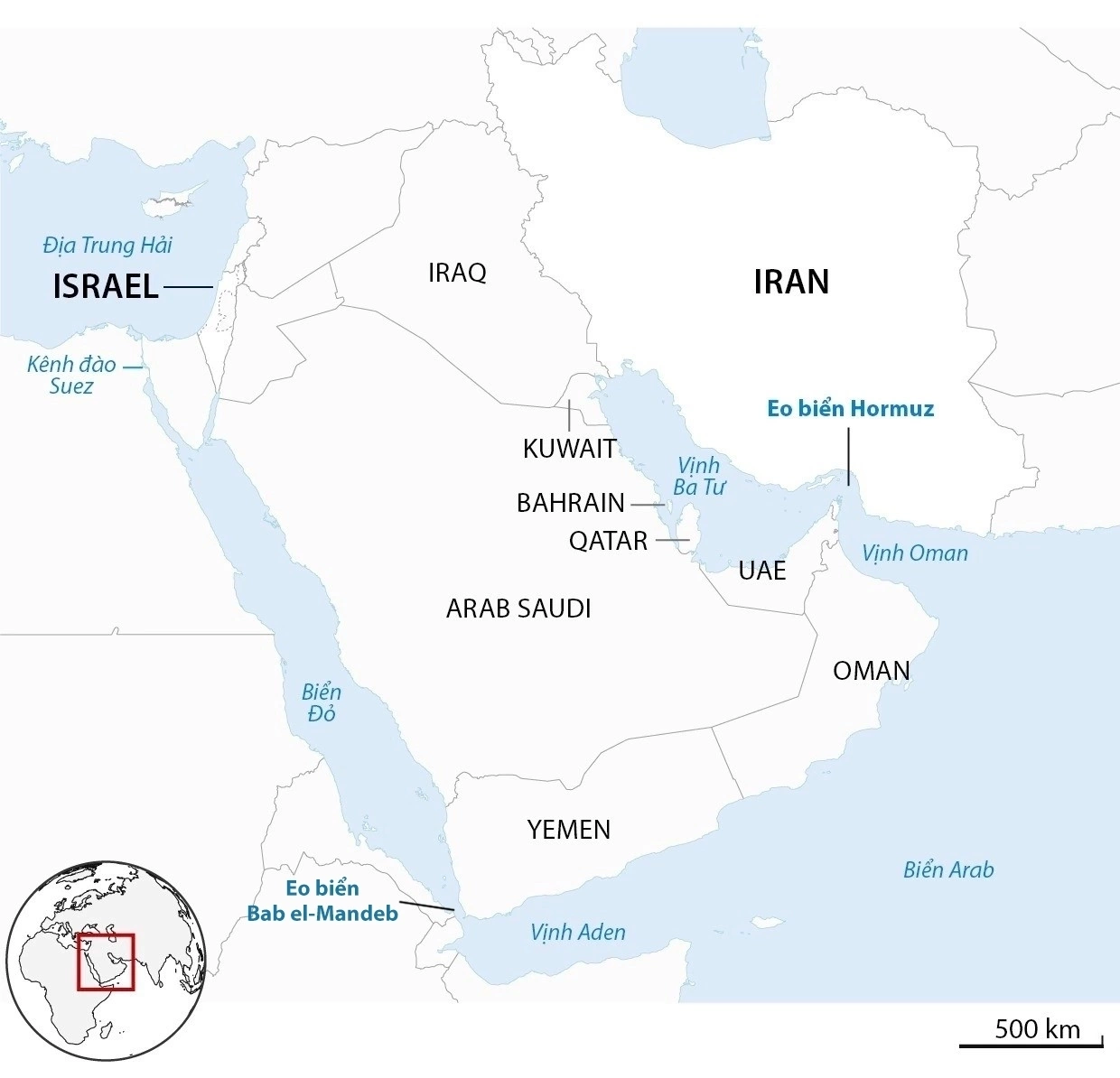 |
Location of Oman, Iran, Strait of Hormuz. Graphic: Guardian
"By publicly warning Oman and simultaneously rejecting any Iranian role in overseeing Hormuz, Trump has drawn a 'red line' against any attempts to establish an internal management mechanism for the strait," Stephen commented.
He believes the Hormuz crisis is no longer merely about reopening shipping lanes after months of conflict. Its true nature is increasingly revealing itself as a broader geopolitical confrontation to determine the rules governing one of the planet's most strategic waterways.
"In that vortex, Oman suddenly finds itself at the eye of the storm," Stephen said.
Vu Hoang (According to Gulf News, Al Jazeera, AFP, Reuters)