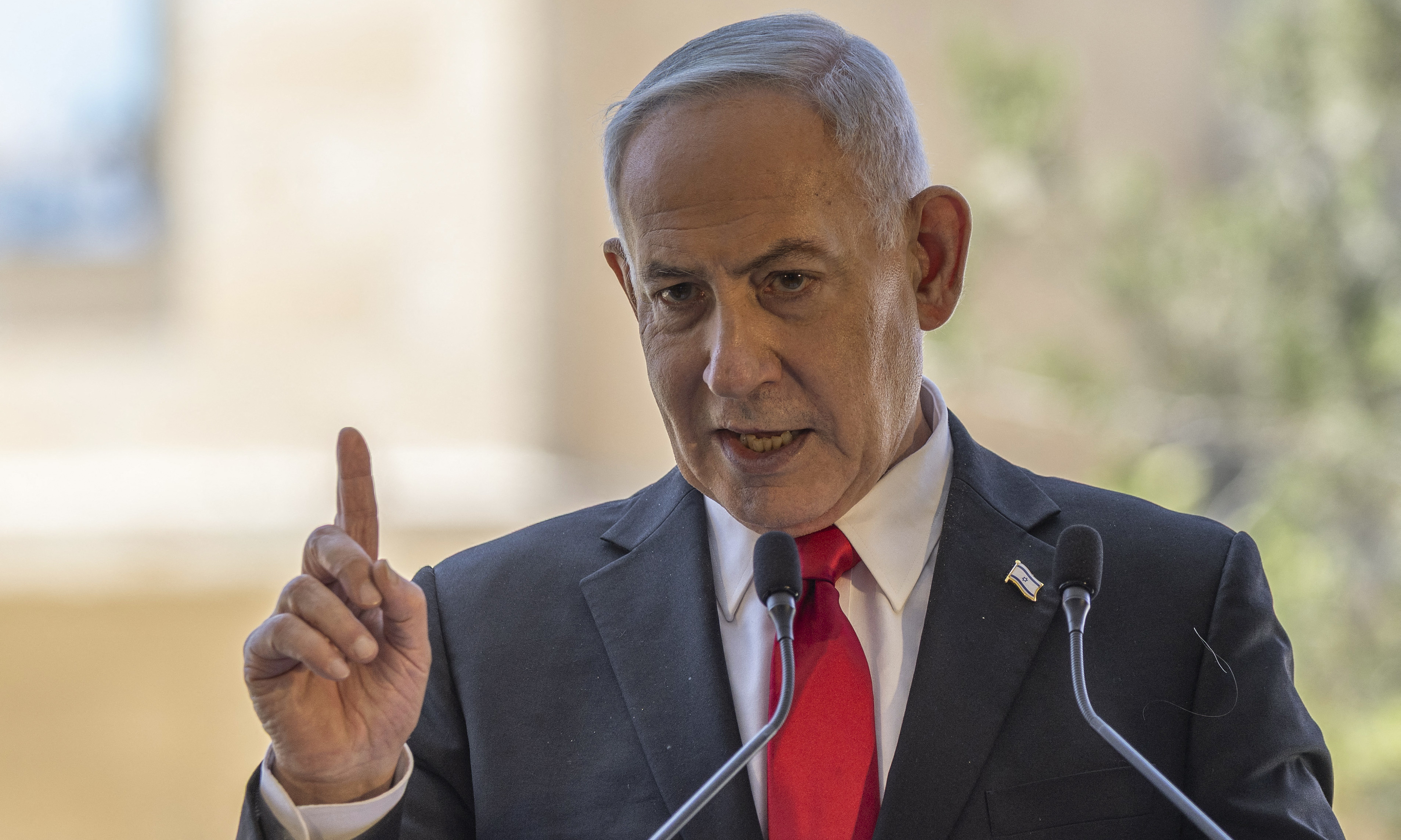
Prime Minister Benjamin Netanyahu announced on 30/7 that the Israel Defense Forces (IDF) had detonated Hezbollah's tunnel system beneath the Beaufort mountain slopes using 700 tons of explosives.
Netanyahu stated this action was in response to Hezbollah's "ceasefire violation," after the group used a drone to attack an Israeli unmanned bulldozer on 29/7.
Israel had postponed the destruction of Hezbollah's "underground fortress" inside Beaufort mountain after signing a framework agreement with Lebanon in June. Israeli officials stated this tunnel system "was a crucial part of Hezbollah's attack plans" in the Galilee region, northern Israel.
"Israel does not accept any ceasefire violations. We will respond strongly and decisively if Hezbollah harms Israeli soldiers, making them pay a heavy price," two Israeli officials stated. "The IDF will maintain its presence in the security zone in southern Lebanon and destroy all Hezbollah infrastructure to prevent the group from restoring its capabilities."
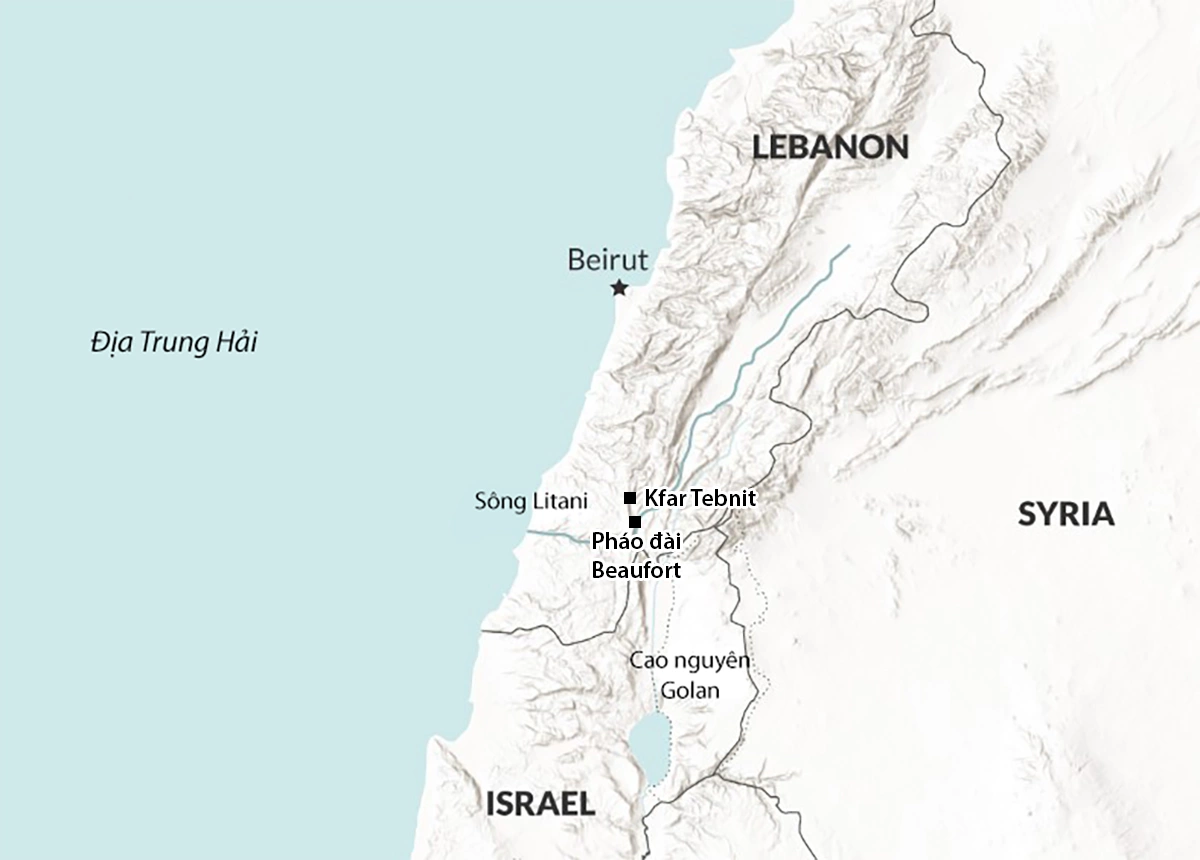 |
Location of Beaufort fortress and Kfar Tebnit. Graphics: RANE |
The IDF confirmed on the same day that it had destroyed a significant portion of the underground tunnel network on Beaufort mountain, including many critical components. According to the IDF, this served as Hezbollah's command center, managing operational activities and directing fire against Israeli soldiers and civilians.
"In recent weeks, the IDF completed its control of the Beaufort mountain slopes, searching for underground structures to destroy," the IDF stated.
The forces reported they are continuing to deploy operational troops in the nearby Ali al-Taher mountain area, maintaining a high state of combat readiness, and "will respond commensurately to attacks against us."
Hezbollah and Lebanon have not yet commented on the information.
On 31/5, the Israeli army occupied the Beaufort fortress, a structure located on a strategic hill built during the Crusader era. The IDF stated at the time that this was the first step in a month-long ground offensive, aiming to capture the underground fortress near Kfar Tebnit village, located approximately 4,6 km away.
According to Israeli experts, Hezbollah spent over 20 years constructing this underground system with support from Iran. It served as the headquarters for Hezbollah's Badr unit, an integral part of the group's frontline defense and main force in southern Lebanon.
Israel once controlled the Ali al-Taher range after attacking Lebanon in 1982. This was the last area the IDF departed when it withdrew its forces in 2000. According to a Lebanese official, Hezbollah's shelters and underground structures occupied a significant portion of the area.
Nguyen Tien (According to AFP, AP, Reuters, Times of Israel)