Efforts to restore trade routes destroyed by flash floods on 26/8 in Nepal have begun. Kicking off this process is a new bridge over the Tadi River, which the Nepali army calls the "bridge of hope".
Nepali government officials estimate the post-disaster reconstruction budget alone will cost at least USD 5 billion. Experts, however, suggest this figure does not account for the ripple effects caused by the loss of essential infrastructure for travel and goods transport.
"This flash flood disaster does not affect just one sector. It impacts agriculture, power plants, trade routes, tourism, businesses, and insurance, from individual household losses to the recovery of the national economy," said Nischal Dhungel, an expert at the Nepal Policy Research Institute.
Several major countries, including the US, China, and India, have pledged humanitarian and financial aid to Nepal.
Nepal seeks increased international aid partly due to concerns that extreme floods will become more frequent as warming temperatures melt Himalayan glaciers. Last month's disaster occurred when a large ice mass from Nepal's Langtang Lirung mountain, bordering Tibet, collapsed, creating a massive water flow.
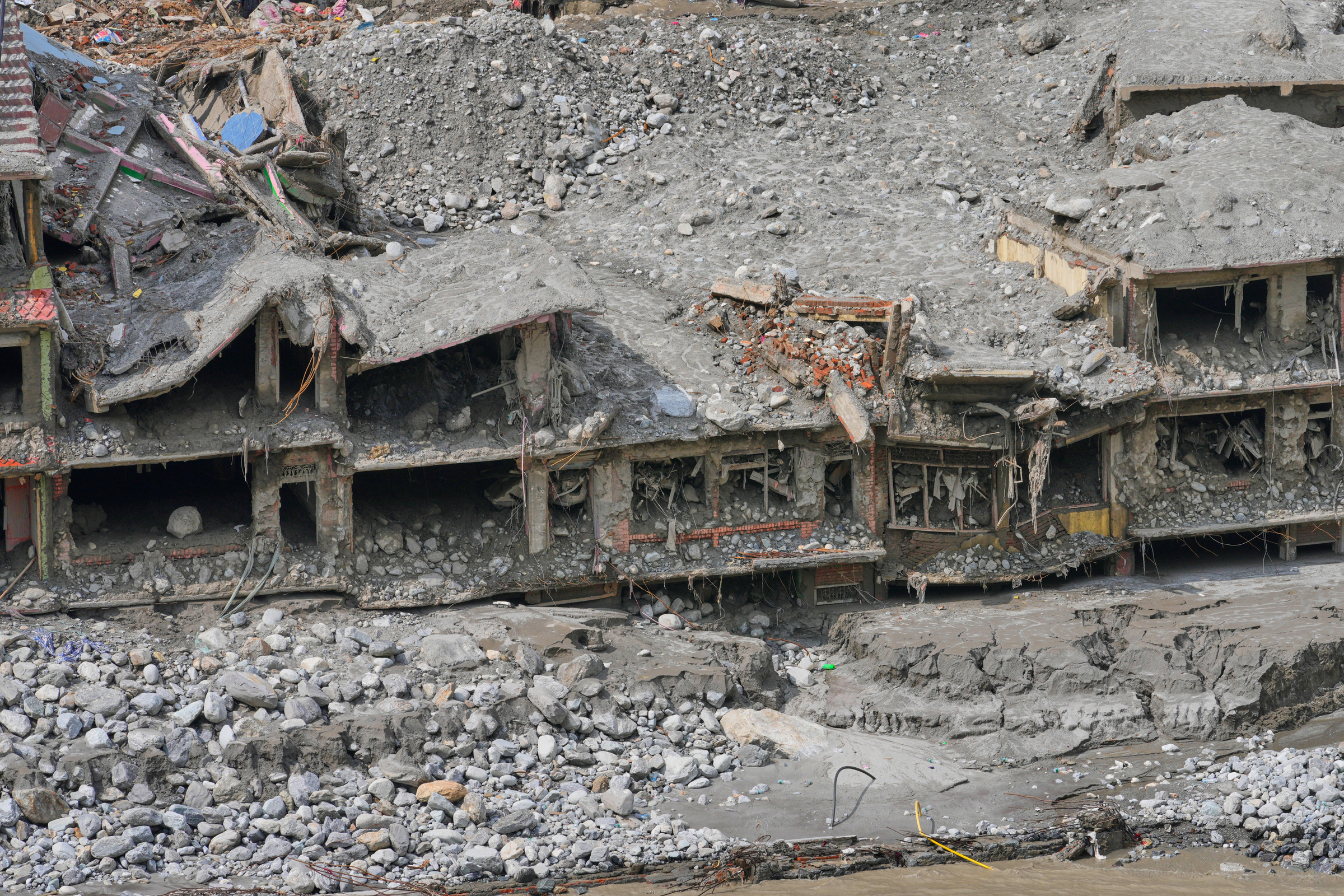 |
Homes submerged in thick mud and debris in Nuwakot district, Nepal, on 8/9. Photo: AP. |
Homes submerged in thick mud and debris in Nuwakot district, Nepal, on 8/9. Photo: AP.
While damage was concentrated in a few central Nepal districts, challenges in restoring trade routes, coupled with climate change impacts, could hinder the country's economic growth for years.
If global warming continues at its current rate, Nepal could lose about 4% of its GDP by 2050, according to a World Bank analysis.
The risk of subsequent floods further complicates reconstruction.
"The reconstruction process faces a dilemma: build quickly and cost-effectively, or build thoroughly to withstand future natural disasters. Even under normal conditions, balancing these two goals is difficult. When disasters strike repeatedly, this problem becomes even more challenging," said Soniya Rijal, a postdoctoral researcher at the University of Sydney.
Sudip Bhaju, a director at the Nepal Economic Forum, stated that elevated infrastructure standards after the floods could lead to higher future construction costs. He added that the increasing risk of climate change might double reconstruction costs compared to initial losses.
Some projects, such as hydroelectric dams, could be permanently canceled, hindering Nepal's ambition to diversify its economy by exporting energy to neighboring countries like India and Bangladesh, according to Bhaju.
"We are simply waiting for the next 'ticking time bomb', aren't we? So, the biggest question is how we will rebuild?" he said.
The moment flash floods swept through a checkpoint, washing away a parking lot at the Gyirong border gate on 26/8. Video: CCTV.
Bhaju has already observed the economic impacts spreading to Kathmandu, even though Nepal's capital is outside the flood-affected area.
Daily necessities like fruits and vegetables have seen price increases of 5-8%, according to Bhaju. Gas prices in unofficial markets have surged by up to 36%, yet even this supply is not always available.
"If the government does not ensure supply for hotels, restaurants, a black market will form. This will impact everything, from transportation to daily essentials," he said.
For many Nepali businesses, the floods risk exacerbating long-standing difficulties from previous disasters and economic shocks.
The 2015 earthquake killed 9,000 people and caused USD 10 billion in damage, also closing a vital border crossing with China. Most of Nepal's trade then shifted to Rasuwaghadi in the north, one of the areas most severely affected by the recent floods.
Last month's disaster marks the second time in under two years that Rasuwaghadi has been devastated by climate change-induced floods.
Saloni Sethia, managing director at Vie Tec, a company specializing in building systems and construction supplies in Kathmandu, stated that her business has been affected by both floods.
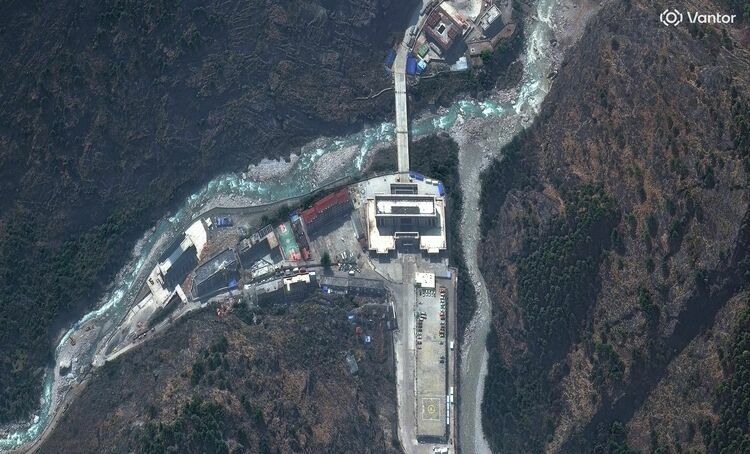 |
The China-Nepal border area and the Rasuwagadhi border post in Nepal before and after the tragedy. Photo: AP.
With trade routes to China restricted, the cost of hiring drivers to transport goods through the Korala border gate has quadrupled, while waiting times are uncertain and increasingly prolonged. Shifting to sea transport from Guangzhou port would add three weeks to delivery times.
"Instability is already a cost. Someone has to pay for those three additional weeks. Either the importing business takes a cut in profit, or customers pay higher prices, and often it's both," Sethia said.
Foreign tourists may also hesitate to visit Nepal, impacting an industry that contributes about 7% of GDP and generates over one million jobs. According to the Nepal Economic Forum, international tourist numbers dropped 26% after the 2015 earthquake.
"That's how an incident in one trade corridor becomes a national problem," Sethia said.
Thanh Tam (According to CNN, AFP, Reuters)