Panama's Supreme Court on 29/1 ruled that the laws underpinning the concession agreement between the Panamanian government and Panama Ports Company (PPC) are unconstitutional. This decision impacts the Hong Kong-based company's long-standing operation of two strategic port terminals at either end of the Panama Canal.
PPC, a subsidiary of CK Hutchison, a Hong Kong-based conglomerate, signed these contracts with the Panamanian government in the 1990s. These agreements granted PPC the right to operate the Balboa container port at the Pacific end and the Cristobal port at the Atlantic end of the canal. The agreement was automatically renewed in 2021 for an additional 25 years.
The ruling follows recent pressure from US President Donald Trump, who urged Panama to limit China's influence and increase US control over the canal. Trump asserted that the Panama Canal was "de facto under Chinese control", posing a security risk. US Secretary of Defense Pete Hegseth echoed these concerns during a visit to Panama on 8/4/2025, alleging Chinese interference in the canal's operations.
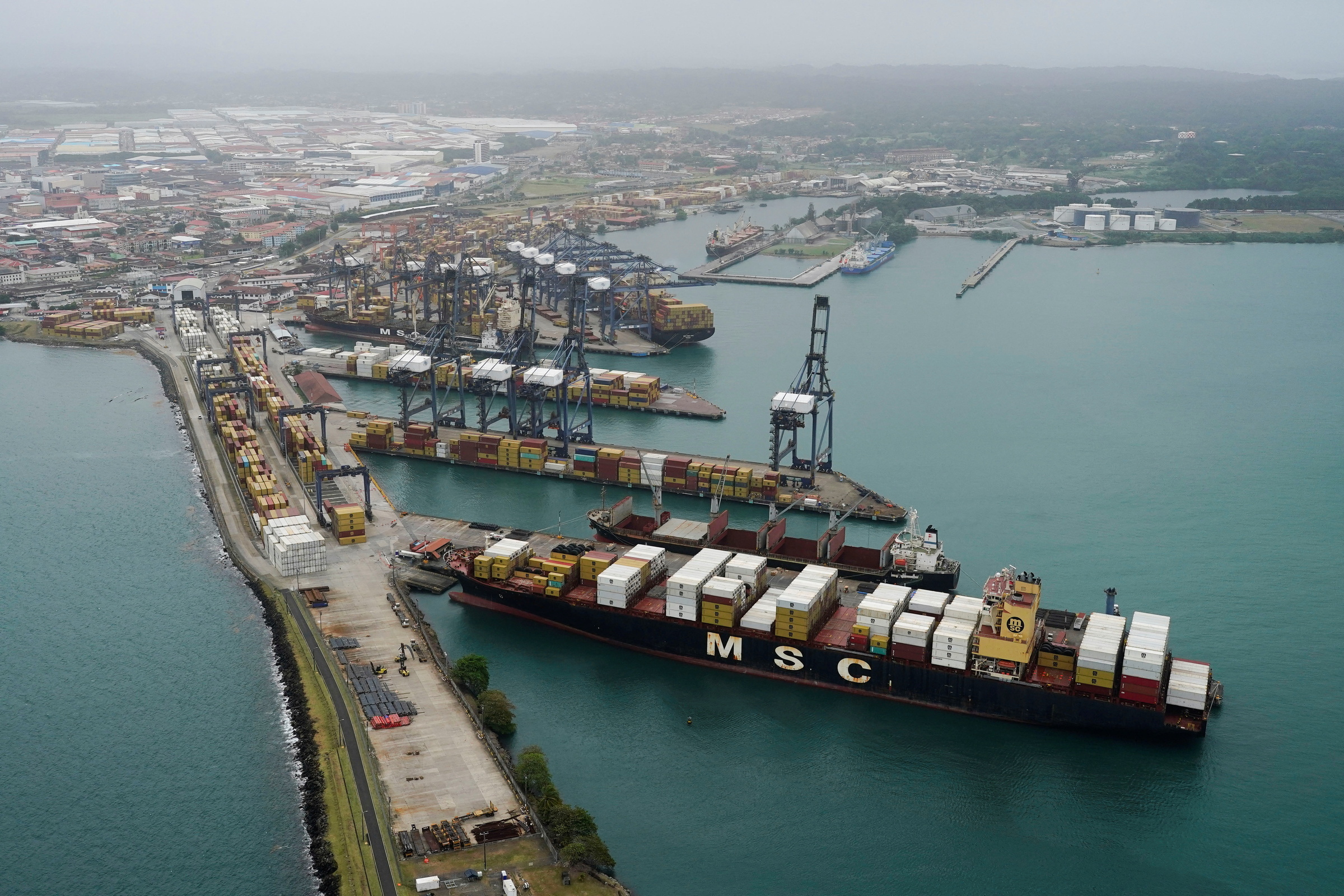 |
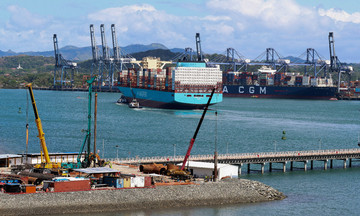
Cristobal container port in the Panama Canal, February 2025. Photo: Reuters |
The Chinese Embassy in Panama rejected these accusations. In a statement, it affirmed that "China has never participated in the management or operation of the Panama Canal, nor has it interfered in matters related to this waterway". The embassy also called on the US to stop "intimidating" Panama and other regional countries.
A lawsuit to annul PPC's contracts was filed in a Panamanian court in 2025. The suit alleged that the contracts were based on unconstitutional laws and that the Hong Kong company failed to pay full taxes as required by Panamanian law. Panamanian prosecutors investigated and discovered accounting irregularities and unusual signs in PPC's operations. Local media cited information indicating these irregularities caused Panama an estimated 300 million USD loss since the agreement's renewal, and approximately 1,2 billion USD in the previous 25 years.
This ruling could compel Panama to restructure the legal framework for port operation contracts, potentially leading to a re-tender of the rights to operate the two vital ports. PPC denied all allegations and rejected the court's decision. A company statement claimed, "The ruling lacks legal basis and threatens not only PPC and our contract, but also impacts the lives and stability of thousands of Panamanian families dependent on port operations".
 |
Location of the Panama Canal. Graphic: BBC |
Beijing also voiced strong opposition. A spokesperson for China's Ministry of Foreign Affairs stated, "The Chinese side will take all necessary measures to protect the legitimate rights and interests of Chinese enterprises".
The US completed construction of the Panama Canal in 1914 and managed the project with Panama for decades before handing over full control to Panama in 1999. The 82 km waterway connects the Pacific and Atlantic Oceans, allowing ships to bypass South America and significantly shorten journeys.
Approximately 5% of global maritime traffic passes through the Panama Canal annually. The US is the largest user of this waterway, accounting for 74% of cargo traffic, while China accounts for 21%.
Following Trump's threat to control the canal in early 2025, CK Hutchison announced an agreement to sell 43 ports in 23 countries, including the two Panama Canal ports, to a BlackRock-led group for 19 billion USD. However, this deal subsequently stalled due to opposition from Beijing.
Duc Trung (According to Al Jazeera, AP, Washington Post)