Video posted by Jordanian citizens on 9/9 showed US Patriot missile defense systems in Jordan firing an unprecedented number of interceptors against an Iranian ballistic missile attack. Despite the intense barrage, at least four Iranian ballistic missiles successfully penetrated the defenses and struck the Muwaffaq Salti airbase. The footage revealed streaks of light and smoke plumes as Patriot missiles launched to protect the airbase.
Defense analyst Babak Taghvaee, who monitors Middle East conflicts, observed that US Army Patriot crews launched a large volume of PAC-2 and PAC-3 missiles during the early morning engagement on 9/9. He noted that dozens of valuable interceptors were expended against the Iranian ballistic missiles, to the extent that "nothing was left to intercept the enemy's second and third waves."
The scale of the interception effort was striking. Ukraine's Defense Express estimated approximately 60 Patriot missiles were fired, while military specialist publication Defense Security Asia suggested the number could be closer to 100. Defense Express characterized the situation, stating, "Patriot batteries had to fire like machine guns to intercept Iranian ballistic missiles."
This high rate of expenditure is particularly noteworthy because the batteries defending Muwaffaq Salti airbase are operated by the US Army, not Jordanian forces. Defense Express pointed out that previous instances of Patriot batteries firing "like machine guns" were attributed to less skilled or inexperienced foreign crews. However, US forces involved in the conflict have been active for over six months and are familiar with the threat posed by Iranian ballistic missiles.
Experts propose that this aggressive firing strategy might be a deliberate measure to ensure a higher probability of hitting targets when confronting modern ballistic missile attacks launched in large numbers, rather than solely indicating limitations in operator skill.
AMK Mapping, an open-source intelligence account monitoring conflicts, previously indicated that Iran launched between 30 and 40 ballistic missiles from various locations. These missiles reportedly targeted US military facilities in Aqaba, along with the Muwaffaq Salti and Prince Hassan airbases in Jordan.
The account also raised concerns about the sustainability of US missile stockpiles. "It's crazy to realize that this engagement caused US forces to expend more than two months' worth of Patriot missile production," AMK Mapping stated, adding that "their reserves continue to deplete, while the rate of weapon manufacturing has not yet met demand."
The US Central Command (CENTCOM), responsible for US military operations in the Middle East, has not commented on the information. The Jordanian military, however, announced it responded to 20 ballistic missiles targeting its territory, successfully intercepting 18. The remaining two missiles fell in uninhabited areas. Israeli broadcaster i24News, citing sources, reported that Jordan intercepted at least 35 missiles, describing it as "one of Iran's largest attacks on Jordan to date."
Previously, US officials had disclosed that air defense units sometimes "intentionally allowed some missiles and unmanned aerial vehicles (UAVs) to pass through," no longer attempting to intercept every target to conserve ammunition. The intense firing rate by Patriot batteries on 9/9 could indicate the presence of high-value assets at Muwaffaq Salti airbase at that time.
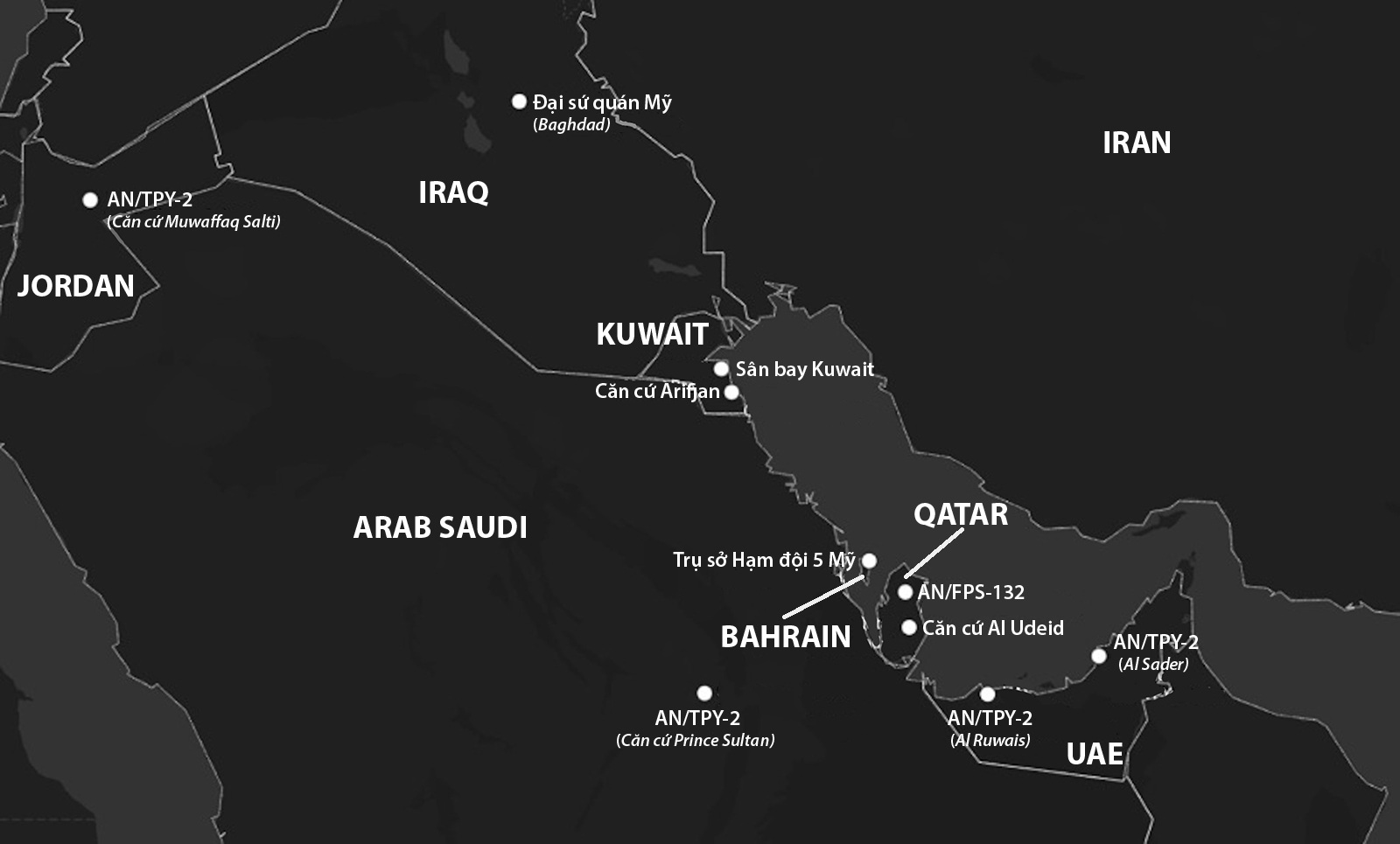 |
US and allied radar sites targeted by Iran in the three weeks of conflict. Graphic: ABC News |
The Iranian Revolutionary Guard Corps (IRGC) claimed responsibility for the ballistic missile attack on 9/9. They stated the strike targeted "US military infrastructure at Muwaffaq Salti airbase in Jordan" in retaliation for an attack on five crude oil tankers the previous day.
According to the IRGC, the operation involved a large number of ballistic missiles, including both solid and liquid-fuel types. They claimed these missiles struck hangars and areas used for maintenance, preparation, and deployment of F-35, F-15, and F-16 fighter jets, causing "heavy damage to the enemy."
By Thanh Danh (Defense Express, Defense Security Asia)