A US AH-64E Apache Guardian attack helicopter made an emergency landing in a rice field in Pyeongtaek city, Gyeonggi province, approximately 65 kilometers south of Seoul, on 15/5. Major Eileen Poole, a spokesperson for the US Army's 2nd Infantry Division, stated that officials are investigating the cause of the incident but did not provide further details.
Yonhap news agency reported that police indicated repairs were expected to take two to three days. Images published by US media on 18/5 showed the aircraft still stranded in the field, seemingly due to incomplete repairs. No further information about the incident has since been released.
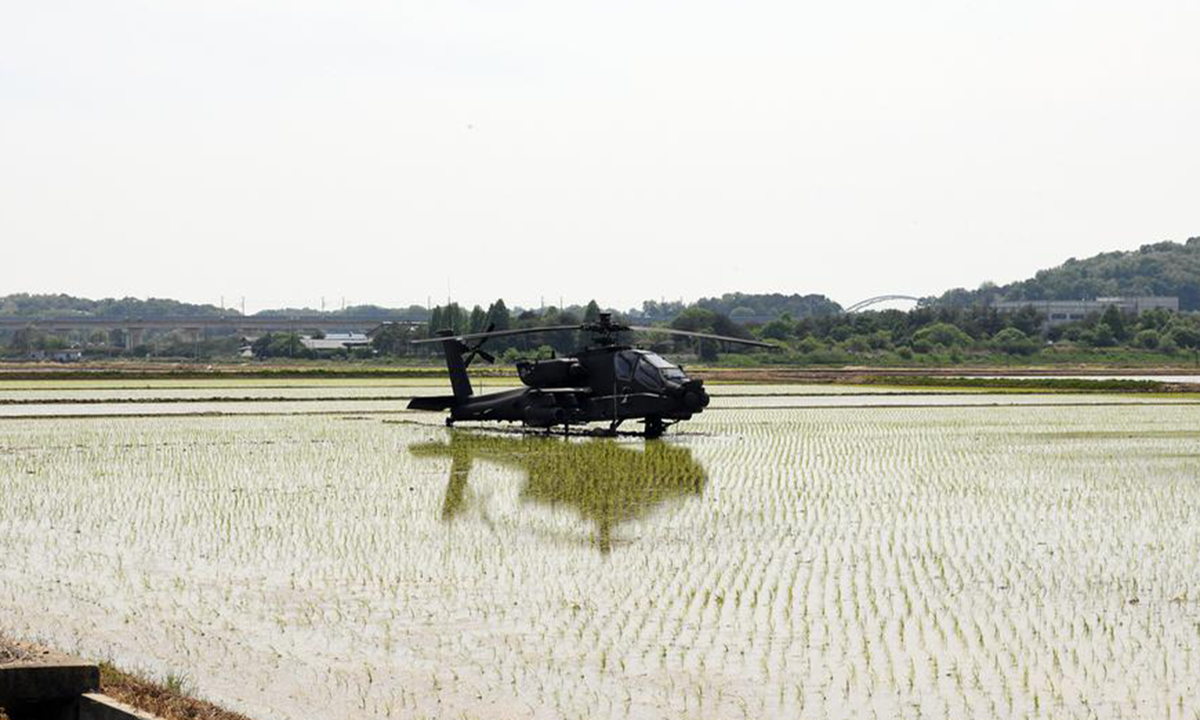 |
A US AH-64E helicopter parked in a rice field in South Korea on 18/5. Photo: Stars and Stripes |
This incident is among a series of malfunctions affecting the Apache helicopter fleet in recent months. In March, an AH-64E crashed during a training flight at Rucker base in Alabama, injuring two crew members.
One month later, another Apache was forced to make an emergency landing in a field in Alabama due to an in-flight malfunction. In the same month, a helicopter crashed at Hood base in Texas during an acceptance flight following maintenance.
These incidents coincide with the US Army identifying new problems within the Apache helicopter's drivetrain system.
Defense One, a defense news outlet, reported on 19/5, citing an internal safety document released by the US Army in April. The document indicated that an investigation found several main drivetrain assemblies in Apache helicopters could suffer internal failure, leading to a loss of drive to the accessory gearbox. This could potentially result in a loss of tail rotor thrust, as well as power and hydraulic failure.
"The root cause is under investigation," the document stated.
According to the document, all AH-64E helicopters are affected, and the US Army was instructed to cease operating aircraft with faulty main drivetrain assemblies until further guidance is received.
The US Army confirmed the investigation but declined to specify when the issue was discovered or how many helicopters are affected. A US Army spokesperson stated, "We have identified a potential issue with the AH-64E helicopter drivetrain system and are actively coordinating with the manufacturer to conduct a comprehensive investigation to determine the cause."
However, US Army officials declined to confirm whether the recent incidents are linked to the AH-64E drivetrain problems. The spokesperson added, "While some preliminary conclusions have been made, we have not released these details to avoid unnecessary speculation while the investigation is ongoing."
Yonhap reported that initial information from the AH-64E crew suggested the engine might have overheated. US officials have not commented on this information, and it remains unclear if this is a consequence of the drivetrain issues.
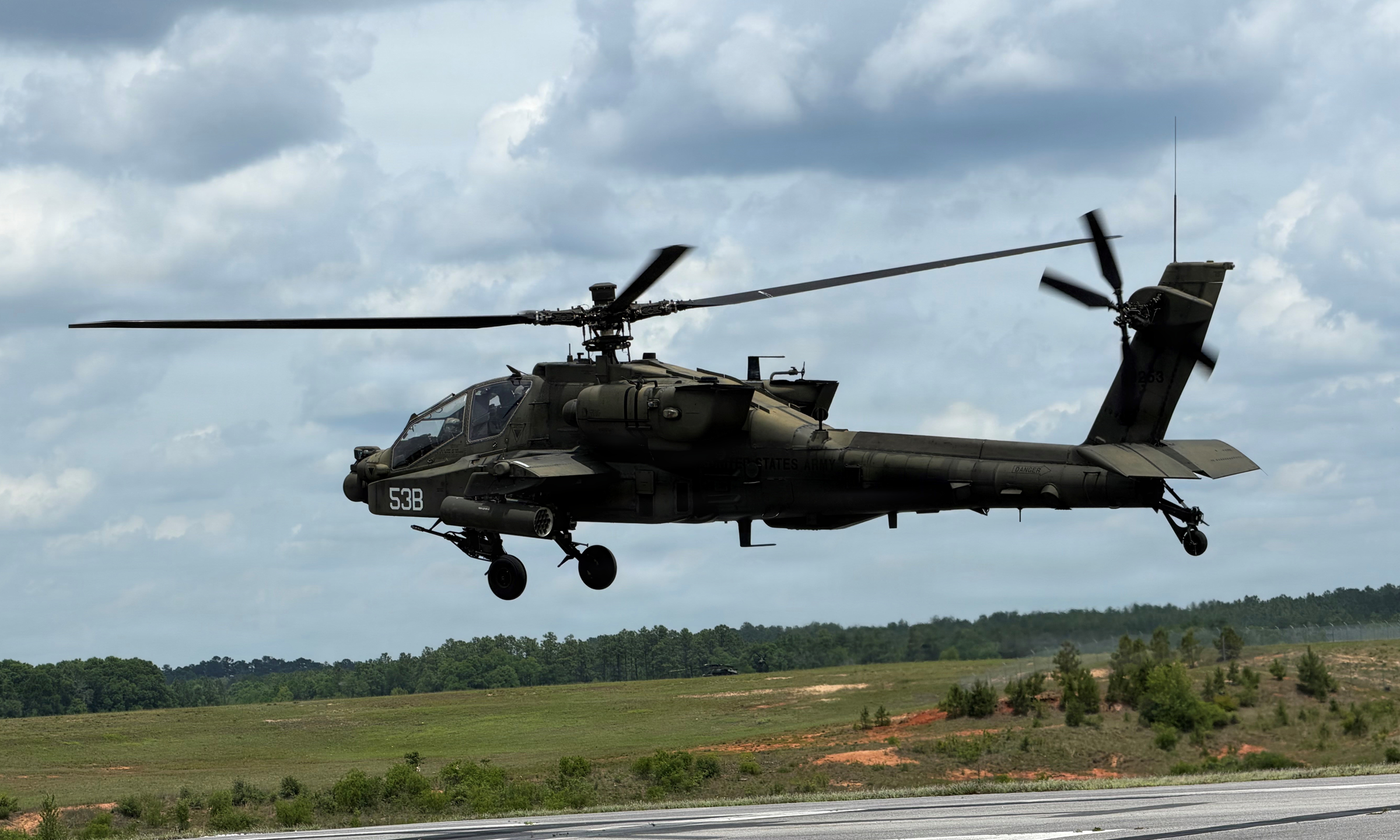 |
A US AH-64E helicopter at Rucker base in Alabama on 8/5. Photo: US DoD |
The US Army is currently facing budget challenges, which have led many of its aviation units to cut flight hours and phase out the AH-64D variant, according to internal documents reviewed by Defense One.
Senator Jack Reed, speaking at a Senate Armed Services Committee hearing last week, noted, "The Army is nearly two billion USD short of maintaining readiness, largely due to the Department of Homeland Security not reimbursing costs for border support missions. I have received alarming reports about the risk of canceling rotational training, suspending flight hours, and reducing resources for the National Guard and reserves."
According to an Apache pilot, abruptly reducing flight hours while the helicopter fleet is experiencing persistent technical problems is very dangerous. The pilot commented, "Aircraft malfunctions are inherent in this profession, but it's like a snowball effect. In my personal opinion, the number of incidents will increase as flight hours decrease."
According to manufacturer Boeing, the multi-role AH-64 Apache attack helicopter is utilized by the US Army and 15 other nations. The AH-64E is the most modern US variant, previously known as the AH-64D Block III. It incorporates several enhancements in connectivity and information distribution, radar, and is equipped with more powerful engines than older models.
The factory price for each AH-64E is approximately 35 million USD. Including the costs of components, technical support, weapons, and operational training, each AH-64E helicopter can cost up to 52-65 million USD.
Pham Giang (According to Defense One, Yonhap, Stars and Stripes)