Iran is proposing a joint initiative with Oman to establish a toll system for vessels transiting the Strait of Hormuz, citing the need for security services and efficient maritime traffic management. Mohammad Amin-Nejad, Iran's ambassador to France, stated in a 20/5 interview that "Iran and Oman must mobilize all resources to provide security services and manage maritime traffic effectively" in the Strait of Hormuz.
He added that such efforts would incur costs, and "naturally, those who benefit from this traffic route must pay their share." Ambassador Amin-Nejad emphasized that any toll system for the Strait of Hormuz would be fully transparent. The Iranian ambassador asserted, "If there is a desire to improve the situation, solutions are needed to address the root cause of the problem."
Further confirming these discussions, Iranian Foreign Ministry spokesperson Esmaeil Baghaei announced in a press conference on 18/5 that Iran is continuously consulting with Oman to design a new mechanism for managing vessels in the Strait of Hormuz. Baghaei stated, "Iran consistently strives to ensure safe and secure passage through this route and maintains that transit through the Strait of Hormuz must occur with absolute safety." He also mentioned that Iranian and Omani experts met in Muscat last week, adding, "We are in regular contact with Oman and other relevant parties to establish a mechanism to achieve this goal," referring to the proposed Hormuz toll.
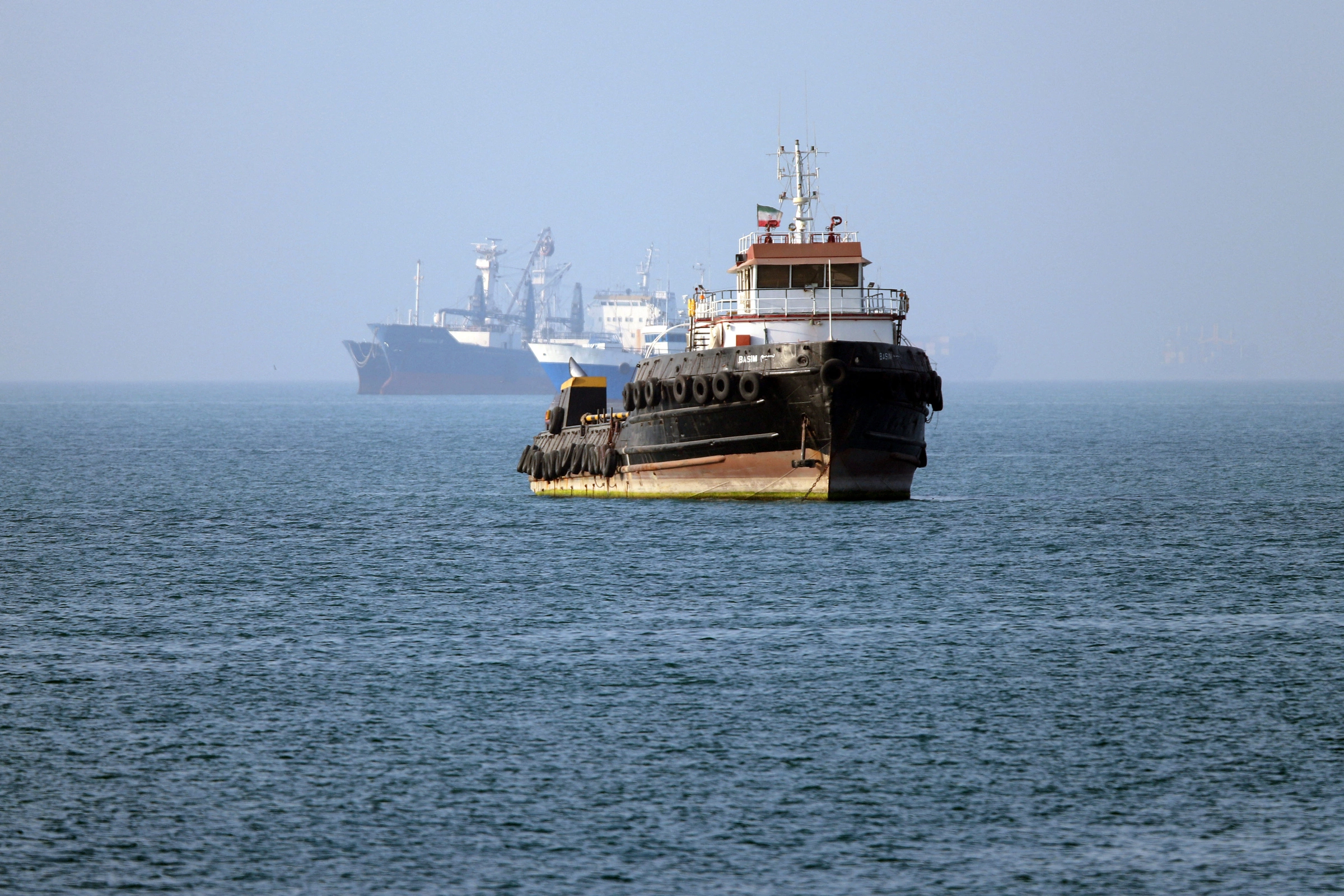 |
An image released by the Iranian news agency ISNA on 4/5 depicts an Iranian-flagged tugboat near an anchored vessel in the Strait of Hormuz. *AFP* |
Ambassador Amin-Nejad noted that Strait of Hormuz traffic was not entirely disrupted, with 26 vessels passing through on 19-20/5, supported by the Islamic Revolutionary Guard Corps. This figure is considered "unusually high" for recent weeks, yet it remains significantly lower than the pre-conflict average of about 135 vessels daily. Amin-Nejad attributed this decline to excessively high insurance costs. Shipping companies, however, cite the primary concerns as missile and drone attacks, along with the risk of striking mines. Most companies have stated they will avoid the Strait of Hormuz until the conflict concludes.
The proposal has faced international opposition. US President Donald Trump rejected Iran's proposed toll plan for the Strait of Hormuz, stating, "We want the Strait of Hormuz to be freely open. We do not want tolls." The Omani government has not yet commented on the matter. The US has repeatedly asserted that Oman's government holds a similar stance on Strait of Hormuz tolls.
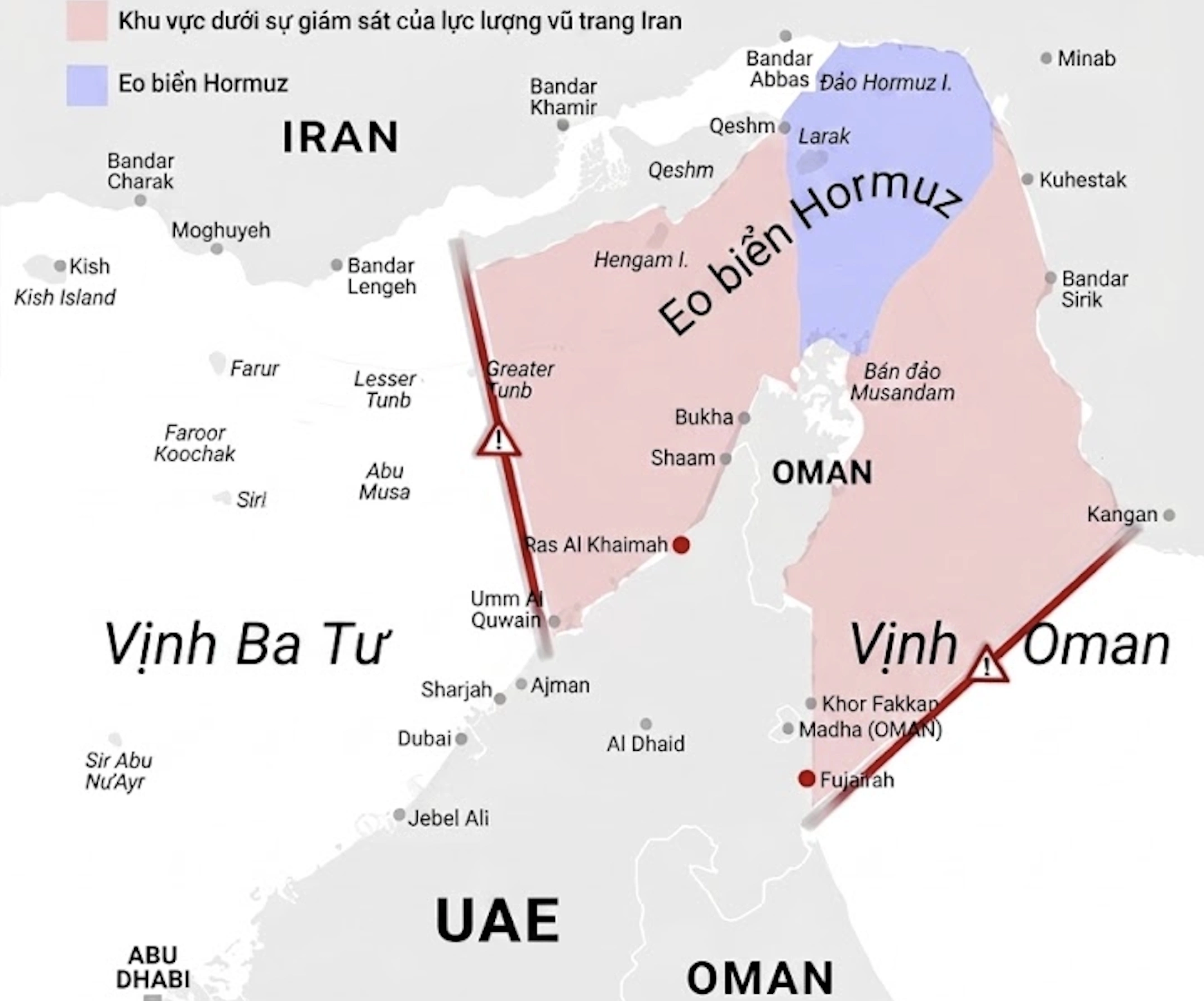 |
Iran released a map illustrating its control over the Strait of Hormuz and adjacent waters. *Graphic: X/PGSA* |
The Strait of Hormuz is a strategically vital waterway. Prior to the conflict, it facilitated the transport of approximately 20% of global oil and natural gas. Following the outbreak of hostilities with the US-Israel on 28/2, Iran largely blocked transport activities on this vital waterway. Iran briefly reopened the Strait of Hormuz after a ceasefire on 8/4. In response, the US declared a blockade of Iranian ports, nearly paralyzing the region's energy flow.
Ngoc Anh (According to Bloomberg, AFP, Yahoo News)