On 21/5, The Washington Post, citing anonymous US officials familiar with the matter, reported that the US has expended over 300 long-range air defense missiles, 120 more than Israel, in its efforts to protect its ally from retaliatory attacks by Iran during six weeks of conflict.
A Pentagon assessment indicates that the US military has used over 200 Terminal High Altitude Area Defense (THAAD) missiles, which is half of its total reserves. US warships in the eastern Mediterranean also launched over 100 SM-3 and SM-6 air defense missiles.
Meanwhile, the Israel Defense Forces (IDF) launched fewer than 100 missiles from its long-range Arrow air defense system, along with around 100 interceptor missiles from the David's Sling defense system. Some of these were used to counter inexpensive, rudimentary weapons deployed by Iran-backed armed groups in Lebanon and Yemen.
A 2007 test of the THAAD system in Hawaii. *Video: US Department of Defense*
According to an official, the US had to confront twice as many Iranian missiles as Israel. "The US military has largely depleted its stock of advanced interceptor missiles, having expended many expensive munitions to protect Israel during the conflict with Iran," an official revealed.
The US and Israel had previously agreed on a defense mechanism where long-range interceptor weapons, such as warships and the THAAD system, would bear the majority of the responsibility for protecting Israel from ballistic missiles.
To counter attacks from armed groups in Lebanon and Yemen, the IDF primarily used the David's Sling and Iron Dome systems, thereby preserving its advanced interceptor weapons like Arrow-2/3. As a result, US stockpiles have been significantly depleted, while Israel has maintained its inventory of long-range air defense missiles.
An official stated that if the US and Israel resume attacks against Iran in the coming days, as President Donald Trump threatened, Washington would likely bear even greater responsibility for air defense, as Tel Aviv has decommissioned some batteries for maintenance.
"This imbalance could worsen if fighting re-erupts," the official said.
The Pentagon later defended the US-Israel resource allocation during the conflict with Iran.
"Ballistic missile interceptors are just one of many weapons that make up a multi-layered air defense network. The US and Israel share defense responsibilities fairly in Operation Horrific Rage, both utilizing fighter jets, counter-drone systems, and many advanced air defense capabilities to maximum effect," said Pentagon spokesperson Sean Parnell.
The Israeli government also defended the resource allocation between the two countries, asserting that Washington and Tel Aviv "coordinated at the highest and closest levels, benefiting both nations and their allies."
"The US has no other partner that possesses the military will, combat readiness, shared interests, and capabilities like Israel," stated the Israeli embassy in the US.
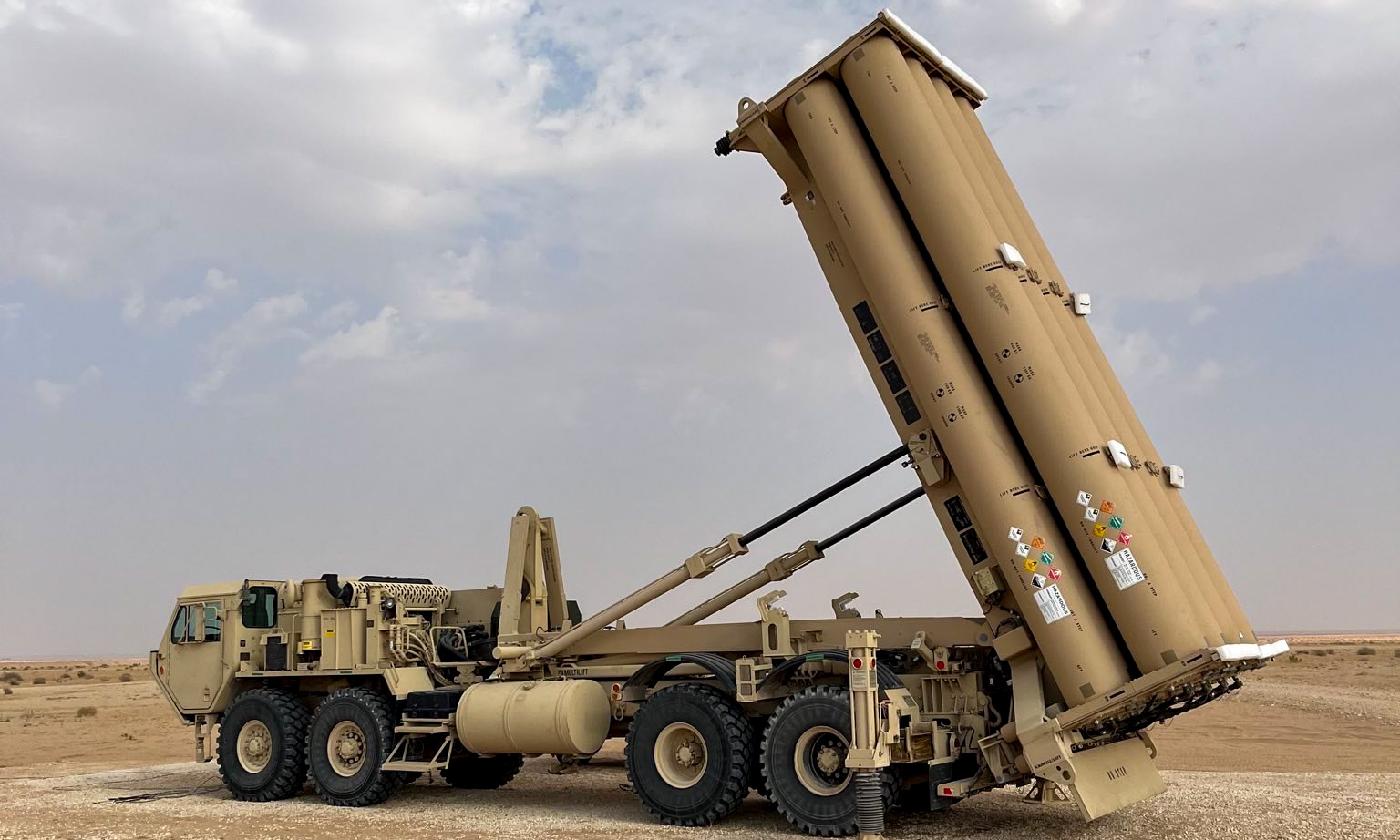 |
A THAAD system launcher in the Middle East in 1/2024. *Photo: US Army*
In a report on the Middle East conflict published last month, the Center for Strategic and International Studies (CSIS) estimated that the US military had launched nearly half of its Patriot air defense system missile inventory, as well as over 50% of its THAAD munitions.
Additionally, US forces reportedly expended about 45% of their new-generation PrSM ballistic missiles, 20% of JASSM stealth cruise missiles, 30% of SM-3 long-range air defense missiles, and at least 10% of SM-6 munitions during the conflict. About 27% of the Tomahawk cruise missiles in inventory were also launched.
CSIS estimates it will take one to four years for the US to restore its missile stockpiles to pre-conflict levels, adding that these weapons would play a crucial role in the event of conflict in the Pacific.
*By Pham Giang (According to The Washington Post)*
THAAD | Middle East | Iran | Israel | US | US