"Although the election results are not yet complete, they are clear and understandable. This is a painful yet undeniable result: We are no longer trusted by the people with the responsibility and opportunity to lead," Hungarian Prime Minister Viktor Orban stated on 12/4 at Fidesz party headquarters, conceding defeat to the opposition Tisza party in the general election.
Voter turnout reached a record 79,50%, reflecting the importance of an election described as determining Hungary's future within the European Union (EU). This outcome will end Prime Minister Orban's 16-year leadership of Hungary, following numerous controversies over judicial reforms and a perceived distancing from the EU in recent times. Orban is 62.
 |
Hungarian Prime Minister Viktor Orban speaks in Budapest on the evening of 12/4. *Photo: AFP*
Vote counting is almost complete, showing that Peter Magyar's center-right Tisza party will hold 138 of the 199 seats in parliament, surpassing the two-thirds majority required to pass major legal and constitutional changes. Orban's Fidesz party secured approximately 55 seats.
Speaking to supporters in the capital Budapest, Magyar, 45, declared victory, stating that the result opens an opportunity for systemic change in Hungary. He pledged to restore checks and balances and ensure democratic function, while calling for national unity to put Hungary "back on the right path".
Tisza's victory could influence relations between Hungary and the EU, potentially fostering cooperation and resolving previous disagreements.
"Hungary has chosen Europe, and Europe always chooses Hungary", commented European Commission (EC) President Ursula von der Leyen, one of the EU's top leaders, on the election results.
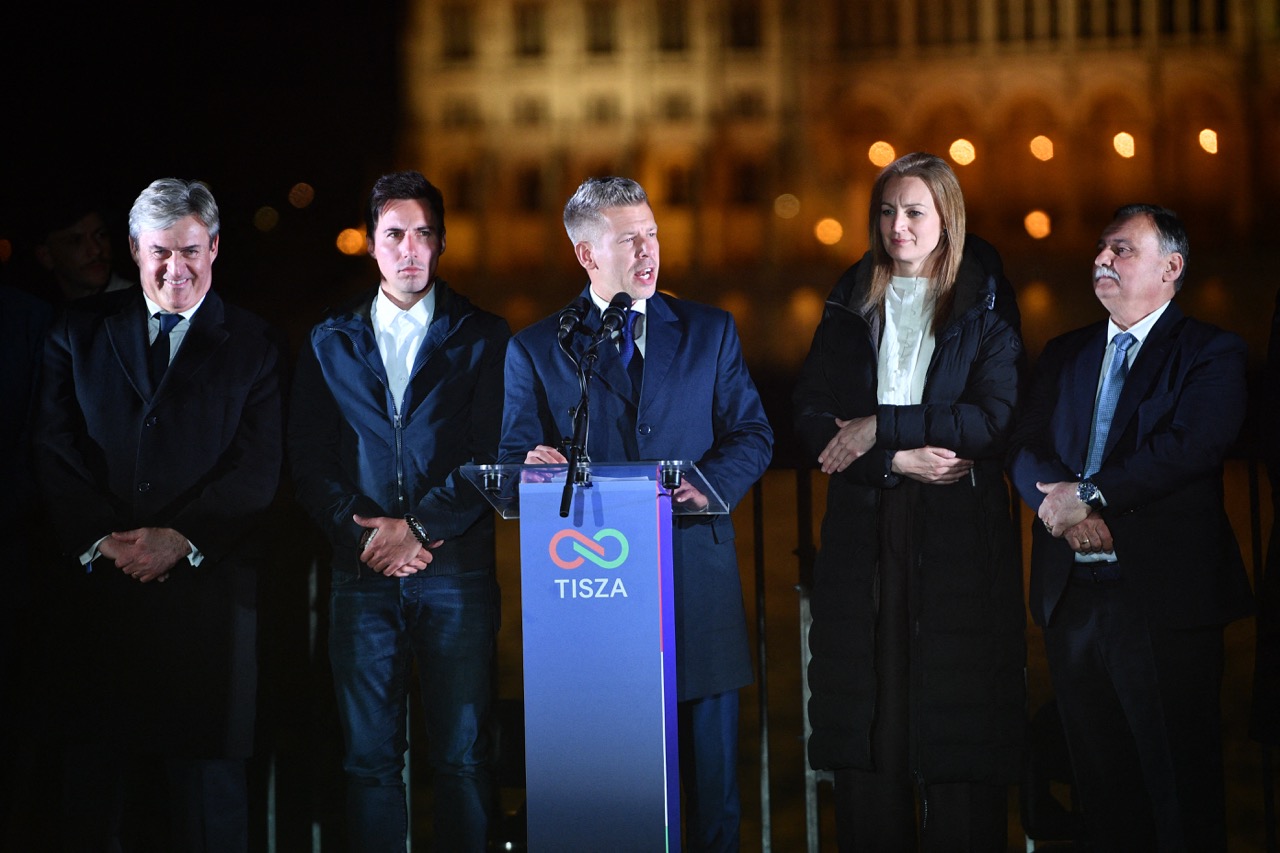 |
Peter Magyar, leader of the center-right Tisza party, declares victory on the evening of 12/4. *Photo: AFP*
Magyar has risen in Hungarian politics over the past two years, campaigning on anti-corruption and public service reform. He gained support amid widespread voter desire for change after Fidesz's long period in power.
Prime Minister Orban's defeat may pave the way for the EU to resume disbursing financial aid to Hungary. These funds were suspended due to EU concerns that judicial reforms in Hungary would undermine standards of democratic ownership and the rule of law.
During the four years of the Ukraine conflict, Orban was one of the few European leaders to maintain a friendly stance towards Moskva and oppose military aid to Kiev. Since US President Donald Trump took office in 2025, Orban has also received strong support from Washington, viewed as a pioneering politician for the right-wing wave in Europe.
Thanh Danh (According to Reuters, AFP)