During his final campaign rally before last weekend's election, Thai Prime Minister Anutin Charnvirakul took the stage, declaring his readiness to lead the country with his team if his Bhumjaithai party won.
He asserted that Thailand, in its current state, needs experienced "professionals" to lead, not a testing ground for unproven models. Under Bhumjaithai's leadership, Thailand will no longer accept the image of the "sick man of Asia" but will advance strongly in the new global economic order.
The new balance of power
The Bhumjaithai party then exceeded all predictions with a decisive election victory. According to preliminary results from the Thai Election Commission, the party secured 193 seats in the 500-seat House of Representatives, far surpassing the 116 seats won by its closest rival, the reformist, youth-backed People's Party.
Thai political analyst Punchada Sirivunnabood attributes Bhumjaithai's better-than-expected results to Anutin's ability to capitalize on a wave of nationalism, sparked by the border conflict between Thailand and Cambodia.
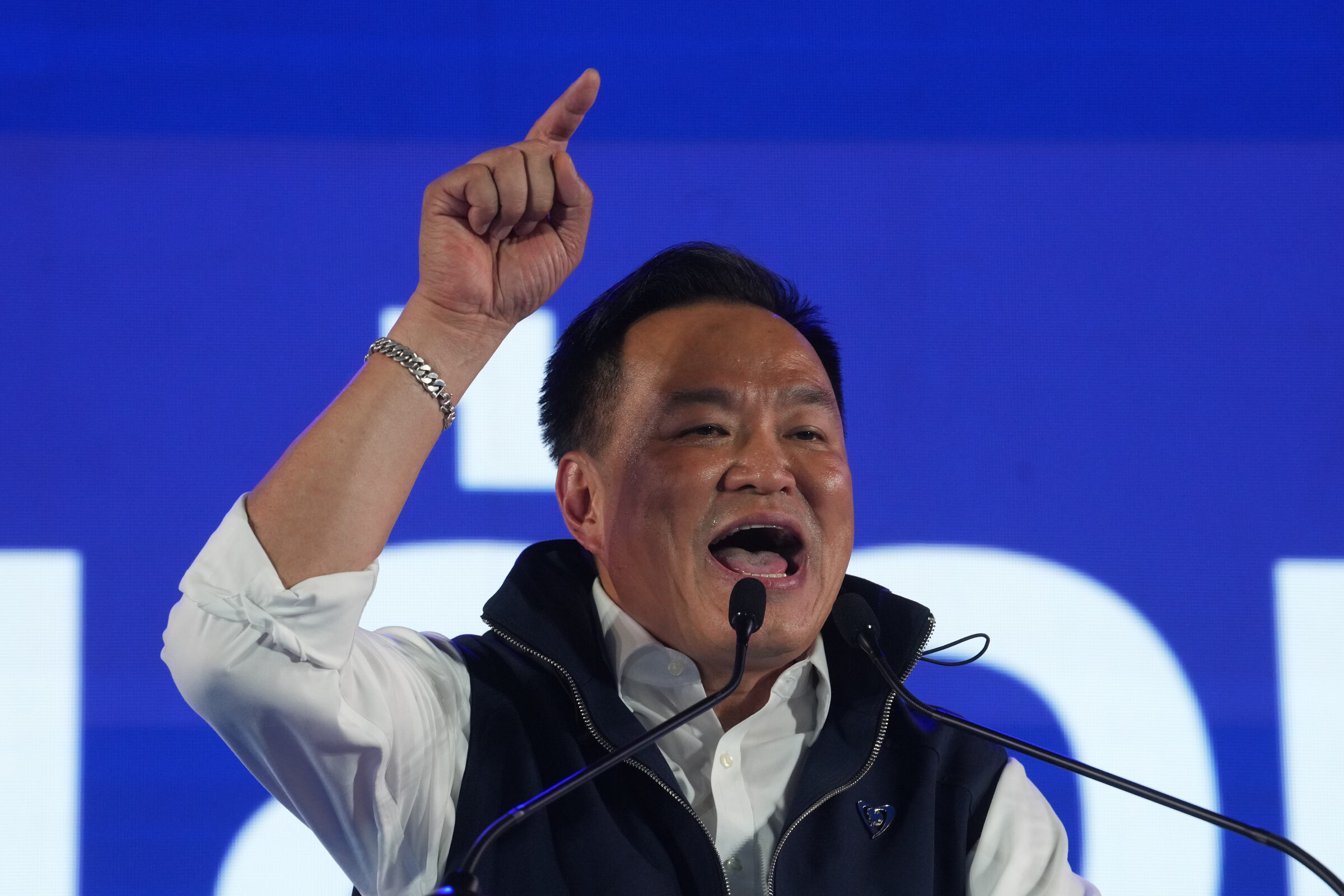 |
Thai Prime Minister Anutin Charnvirakul at a campaign event in Bangkok on 30/1. Photo: AP |
Anutin's promises to "diagnose" the Thai economy with a team of "professionals" he plans to appoint to key ministries like commerce and finance also met voters' desire for faster economic growth.
With support from the fourth-ranked Klatham party, Bhumjaithai will command a total of about 251 parliamentary seats to form a government and re-elect Anutin as Prime Minister for a new term. However, such a slim majority presents a significant challenge, likely forcing Anutin to seek additional coalition partners to ensure government stability.
"These two parties are enough for a minimal majority, but Anutin needs more. Therefore, he will seek to attract and invite smaller parties to join the coalition", said Thitinan Pongsudhirak, a professor of political science and foreign affairs at Chulalongkorn University.
The question now is whether Anutin will include the Democratic Party and Pheu Thai in the coalition. The Democratic Party, founded in 1946, is Thailand's oldest political party and is projected to win 22 seats in this election. Pheu Thai, the party of the Shinawatra family which once dominated Thai politics, is expected to win 76 parliamentary seats.
A decisive victory and clear voter confidence mean Anutin will likely seek to build a coalition government based on shared values, according to Erik Kuhonta, an associate professor of political science at McGill University in Quebec.
"Bhumjaithai has many favorable options to form a conservative coalition", he stated.
This position could give Anutin more influence over crucial legislation and independent agencies with the power to investigate politicians.
'Diagnosing' the economy
This reduces the likelihood of decision-making deadlocks, a factor that has destabilized Thai politics in recent years, according to observers.
For investors who prioritize short-term stability, a Bhumjaithai-led coalition is seen as the least disruptive scenario, minimizing risks from sudden policy changes or new instability that could erode business confidence.
Economically, Bhumjaithai focuses on stimulus packages and short-term measures to support growth rather than profound structural changes. One of the party's prominent proposals is that the government will subsidize a portion of daily living costs for citizens, such as food and transportation.
Bhumjaithai estimates its economic stimulus plan will cost about 148 billion baht (4.7 billion USD) annually, with the co-payment initiative accounting for about 44 billion baht.
Most of the budget will be allocated to a plan to ensure affordable energy. Anutin also called for increased public spending on infrastructure, transportation, and healthcare.
Bhumjaithai has proposed an initiative to attract 100,000 caregivers for Thailand's aging population and replace the traditional military conscription system with a volunteer, contract-based force.
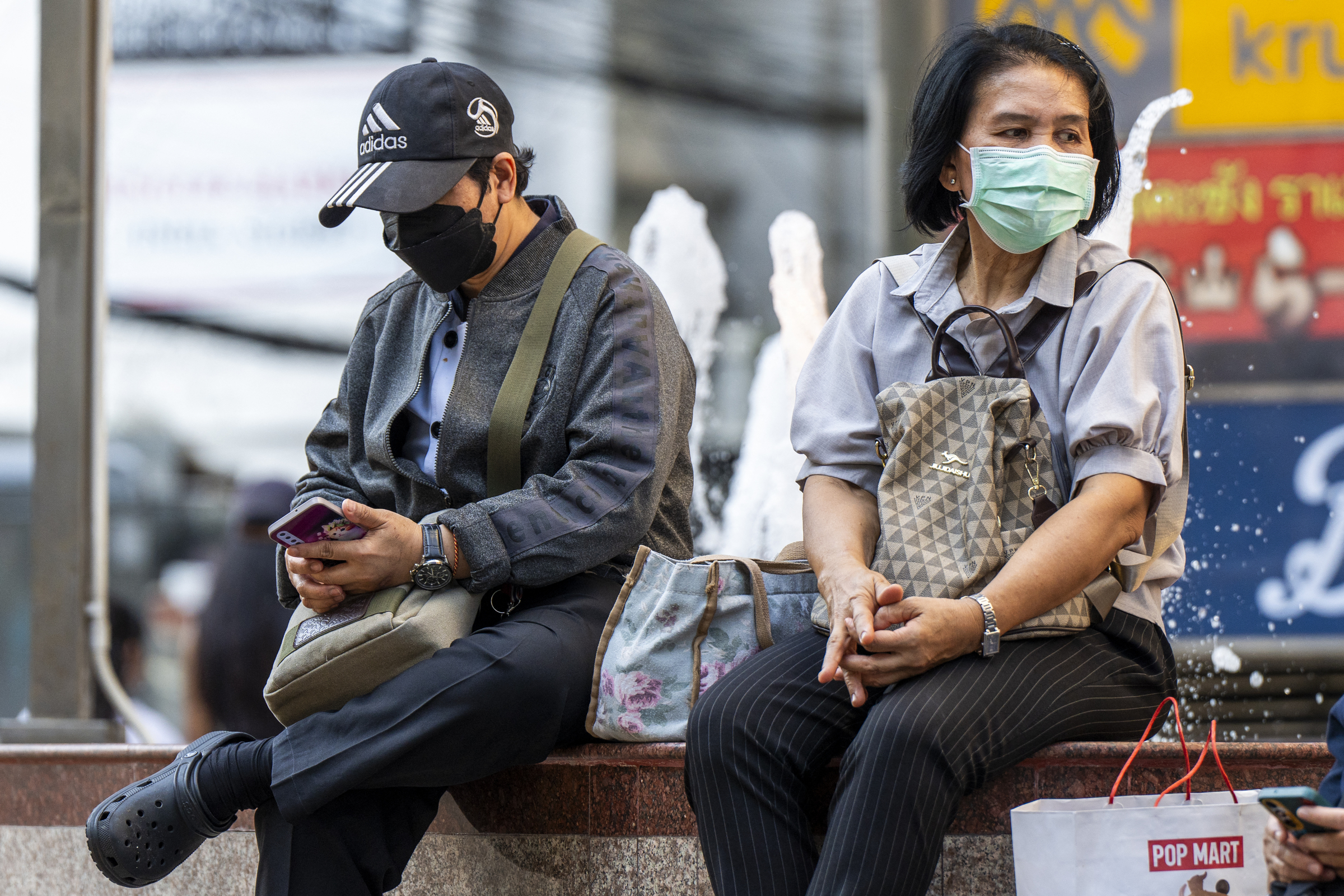 |
People sit by a fountain in the capital Bangkok, Thailand on 16/1. Photo: AFP |
It remains unclear whether Anutin can translate his election momentum into sustainable economic recovery prospects for Thailand. The nation faces slow growth, declining competitiveness, and a rapidly aging population. Thailand's average growth has been only about 1% annually since the peak of the pandemic, lagging behind regional neighbors.
Although the election results are considered the most investor-friendly scenario, many foreign businesspeople are becoming more cautious about doing business in Thailand. This places additional pressure on Anutin to restore confidence and attract capital back.
Anutin will also need to manage border tensions with Cambodia and undertake the task of amending the 2017 Constitution. In the recent general election, over 60% of voters supported a referendum to amend the constitution, originally adopted during military rule.
Many Thai voters believe the current constitution grants excessive power to unelected bodies such as the Senate, Constitutional Court, and Election Commission. These bodies play a significant role in Thai politics, with powers to dissolve political parties, strip parliamentary status, and even impeach prime ministers, contributing to political instability in the country in recent years.
However, efforts to amend the Constitution will undoubtedly face fierce opposition from the opposition. "This process will be highly contentious, with fierce confrontations in parliament", Thitinan predicted.
Thanh Tam (According to CNA, DW, Bangkok Post)