The aircraft carrier USS Abraham Lincoln arrived at Laem Chabang port in Thailand on 2/9 after 250 consecutive days at sea, much of which was spent participating in the US military's Iran offensive. Its hull showed extensive algae growth and rust streaks, clearly visible along the waterline and the edge of the warship's flight deck.
When questioned about its appearance, Captain Dan Keeler stated this was "normal" after such a prolonged deployment. "We will not comment further," he added.
The aircraft carrier USS Abraham Lincoln arrived at Laem Chabang port, Thailand on 2/9. Video: X/wuthi11_
Joseph Trevithick, an editor for the military news site War Zone, emphasized that extended mission durations, continuous exposure to seawater, and the absence of port visits for maintenance significantly accelerate rust and wear on a warship's hull.
"Aircraft carriers have large crews and typically maintain a good appearance during deployments. However, maintenance capabilities become very limited when the warship is on extended missions and all resources must be focused on high-intensity combat operations," Trevithick noted.
US officials also explained that warship exteriors often suffer significant damage from prolonged exposure to seawater, ultraviolet rays, and pollutants. "Hull degradation is normal for large warships operating in harsh environments," a US Navy spokesperson affirmed in January.
US experts emphasized that the USS Abraham Lincoln's condition is a special case, stemming from a very specific operational situation. However, Trevithick also acknowledged these were "stunning images," particularly for one of the world's most powerful warships and a symbol of US military might.
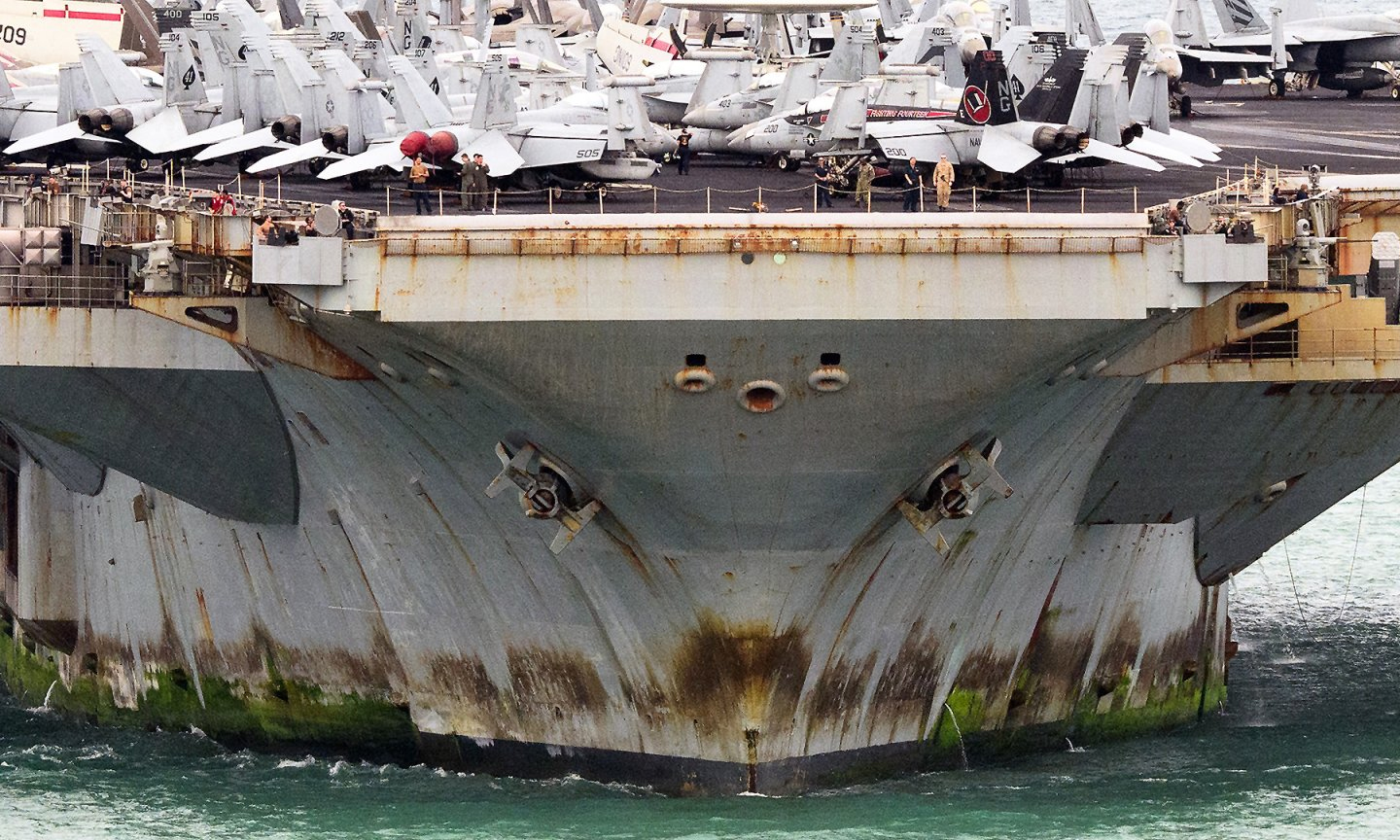 |
A close-up of rust at the waterline of the aircraft carrier USS Abraham Lincoln, photographed on 2/9. Photo: AFP
Beyond its visual impact, the severe rust on the ship's hull significantly affects maintenance operations. This can extend the time spent in port, incur higher costs, and ultimately reduce the overall combat readiness of the force.
"The extended deployment, as well as the damage to the Lincoln, highlight larger issues for the shipbuilding industry and the US Navy's struggle to maintain combat readiness. Pressure on the aircraft carrier fleet has accumulated for many years and is gradually becoming a small-scale crisis," the War Zone editor commented.
The issue of warships rusting and paint peeling after long sea voyages previously emerged during the peak of the Covid-19 pandemic, when US warships had limited port access and fewer maintenance opportunities.
The appearance of US warships has also been a focus of criticism in recent years, with President Donald Trump frequently expressing dissatisfaction about the issue. Part of the reason is believed to be the negative image projected when US Navy ships visit foreign ports.
"It's terrible, I think they should be ashamed of this. Would you want to get on these ships?" John Phelan, then Secretary of the US Navy, stated during a congressional hearing in January 2025, referring to photos of the destroyer USS Dewey rusting during a port visit to Singapore.
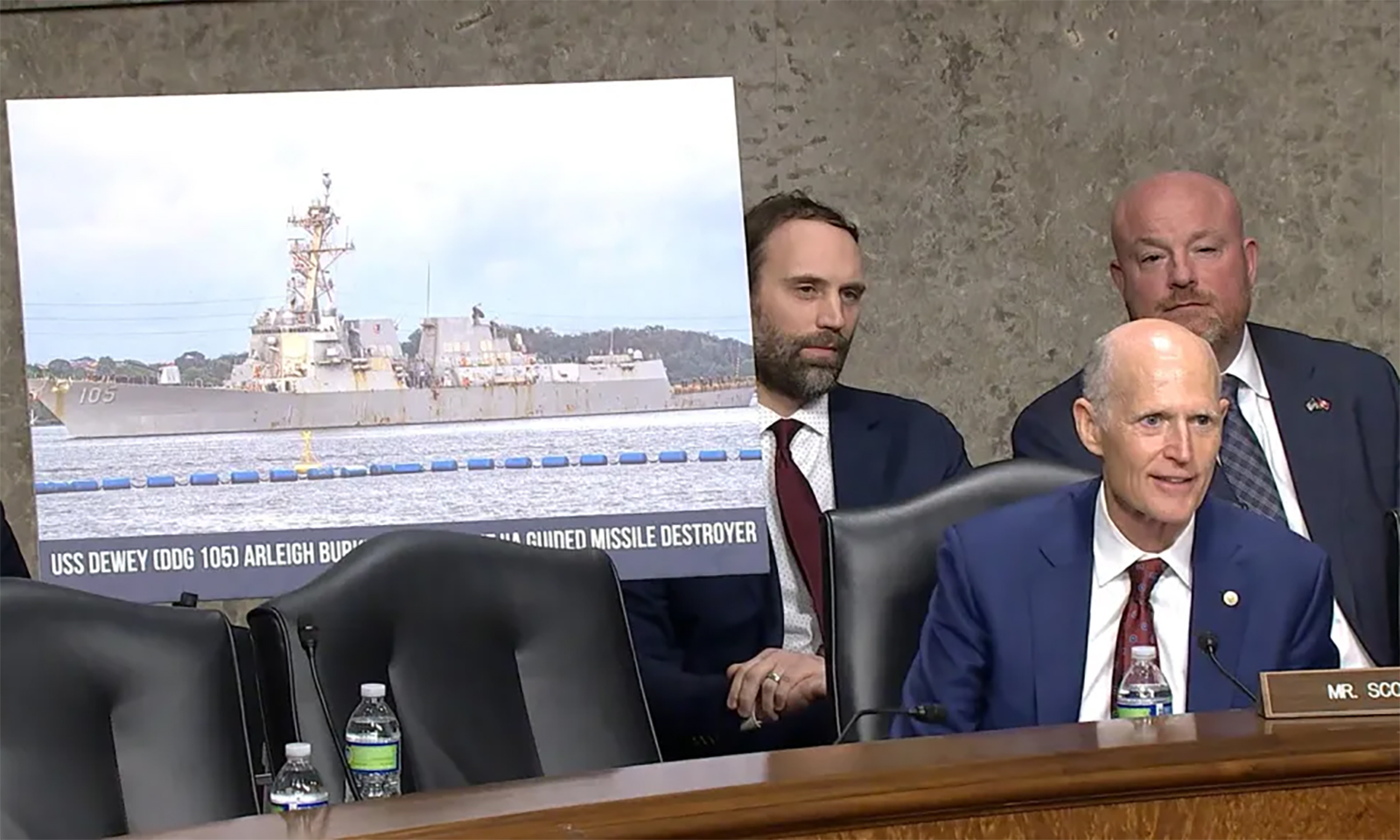 |
Photos of the rusted destroyer USS Dewey released during a US congressional hearing in January 2025. Photo: War Zone
The USS Zumwalt and USS Michael Monsoor, two destroyers each estimated to cost over USD 9 billion, previously appeared with significant rust and large peeling patches on their hulls. Many questioned whether this condition would affect the stealth capabilities of the Zumwalt and Michael Monsoor.
US Navy officials later affirmed these were only surface damages, not affecting the warships' combat capabilities. However, War Zone editor Tyler Rogoway warned that rust and corrosion still carry the risk of adversely affecting hull structures, leading to other problems.
"These issues are part of the significant and serious challenges the US Navy is currently facing in maintaining its surface warships and submarines, problems that have persisted for many years," Trevithick stated.
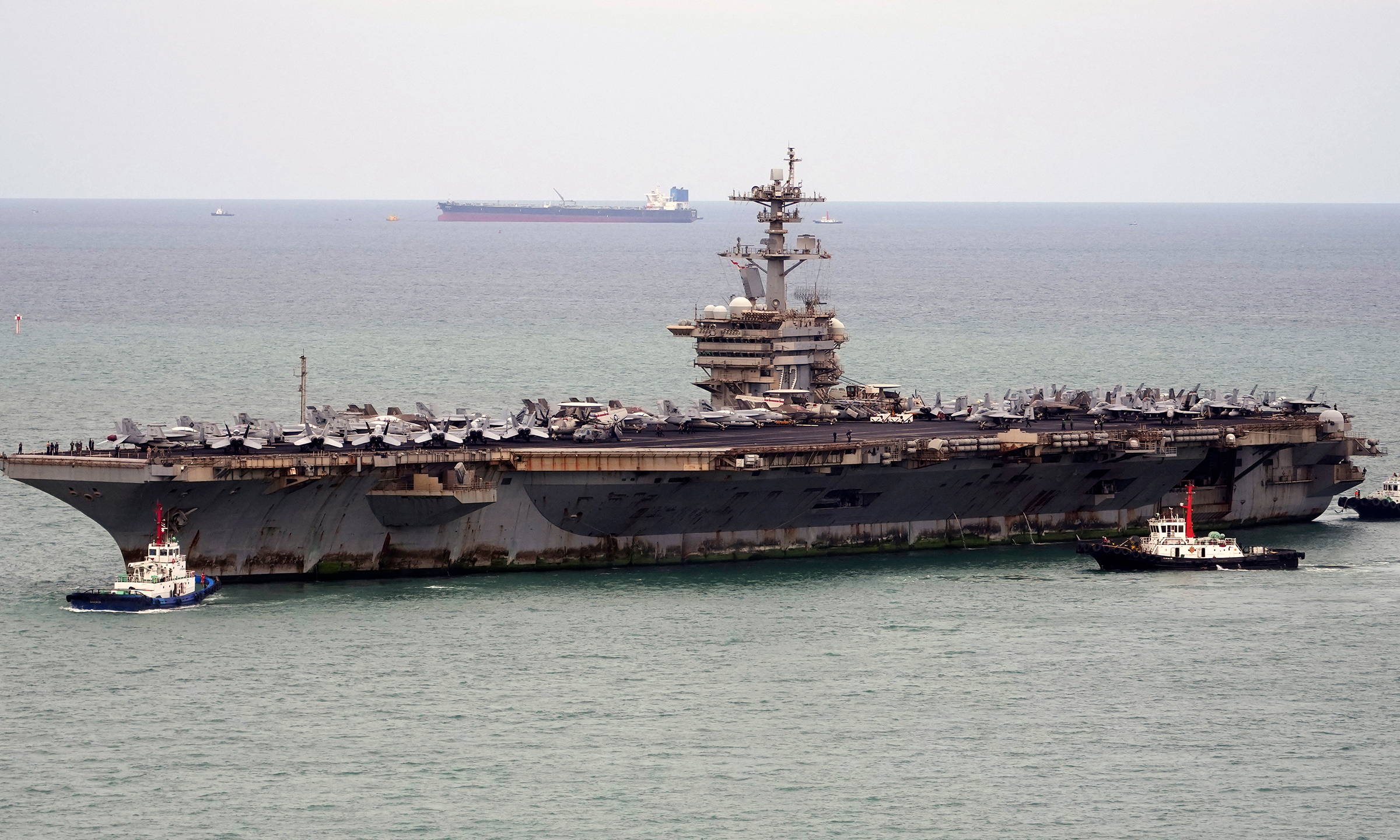 |
The aircraft carrier USS Abraham Lincoln arrived at Laem Chabang port, Thailand on 2/9. Photo: AP
Numerous debates are resurfacing regarding US Navy safety regulations, which restrict the maintenance tasks crews are permitted to perform, as well as the decision to switch to less toxic paints and coatings criticized for peeling quickly.
Trevithick and Rogoway affirmed that warships always symbolize US military power and global influence. "Proper maintenance of these ships, particularly their exterior, is important. Otherwise, it will negatively impact overall morale," the two editors warned.
Nguyen Tien (According to War Zone, AP)