Reporters from the Kyiv Independent newspaper stated that a series of explosions caused by ballistic missiles shook the capital Kiev early this morning. Tymur Tkachenko, head of Kiev's military administration, confirmed the city was targeted by Russian missiles but did not specify the damage.
DTEK, Ukraine's largest private energy company, announced the attack caused severe damage to equipment at a thermal power plant it operates.
Kharkov Governor Oleh Syniehubov stated that 4 people died and 6 were injured in the attack targeting the outskirts of the namesake provincial capital. Kharkov Mayor Igor Terekhov reported that a Russian unmanned aerial vehicle (UAV) struck a children's medical facility in the city, causing a fire.
Ukraine's Air Force Command stated that Russia used a total of 18 Iskander-M ballistic missiles and modified S-300 air defense missiles, along with 7 Iskander-K cruise missiles and 293 various UAVs in the attack.
"Air defense units shot down or suppressed two Iskander-M missiles, 5 Iskander-K missiles, and 240 UAVs. Ballistic missiles along with 48 UAVs struck 24 locations. Many aircraft are still present in Ukraine's airspace," the agency stated.
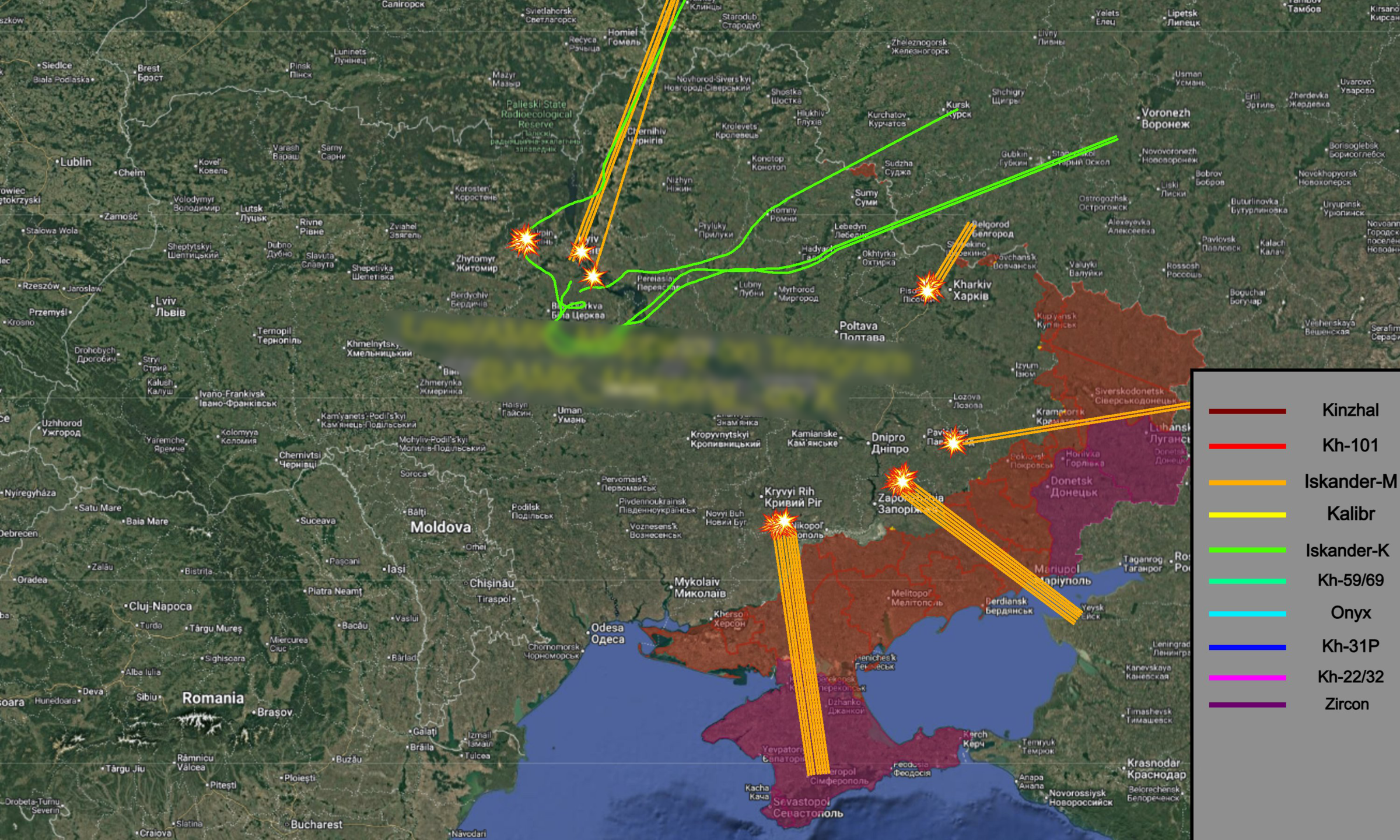 |
Flight paths of Russian missiles during the attack on 13/1. Graphics: X/AMK Mapping |
AMK Mapping, an X account specializing in monitoring open-source intelligence data on the conflict, estimated that Russia launched 21 Iskander-M ballistic missiles and 8 Iskander-K cruise missiles, with two Iskander-M missiles and 4 Iskander-K missiles intercepted in the capital Kiev.
"Key targets included the Trypillya thermal power plant in Kiev province, the Kryvyi Rih thermal power plant in Dnipropetrovsk province, and the 750 kV 'Zaporizka' substation in the Ukrainian-controlled area of Zaporizhzhia province. The TEC-5 combined heat and power plant in Kharkov was hit by three Iskander-M missiles, while one ballistic missile struck an unidentified target south of the capital Kiev," the account stated.
Russia's Ministry of Defense has not yet commented on the information.
Russia and Ukraine have regularly exchanged missile or UAV attacks since the start of the conflict. Recent attacks by Moscow targeting the opponent's energy infrastructure have caused widespread power outages, leaving many without heating during the cold winter.
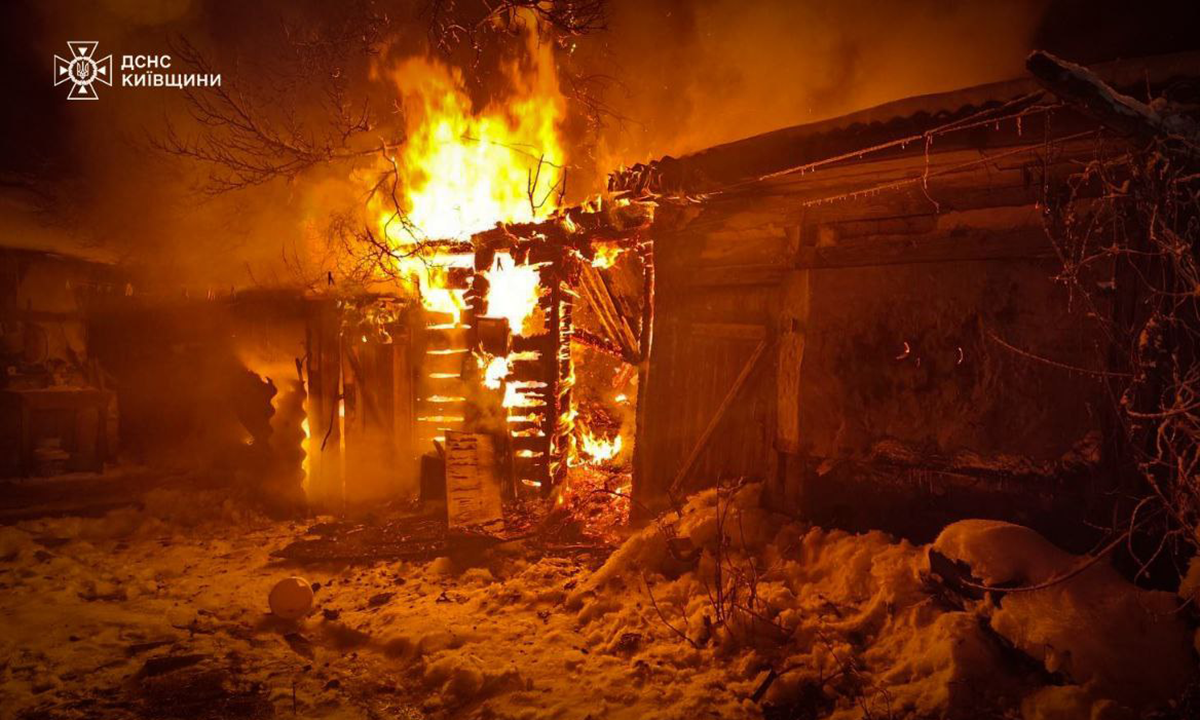 |
Fire in Kiev province after a Russian attack in an image posted on 13/1. Photo: SES |
Conversely, Russia's border province of Belgorod also faced its most severe power outages since the start of the conflict, following a Ukrainian attack last week. Local officials stated that the strike left approximately half a million people without electricity or heating. As of 12/1, utility services had not yet been restored in some areas.
Pham Giang (According to Ukrainska Pravda, Reuters, Moscow Times)