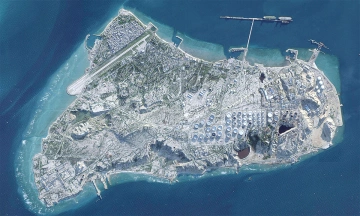
Local media reported the shooting occurred on 3/2 in Zintan, a town about 137 km southwest of the capital Tripoli. Saif al-Islam's political advisory team described four masked men attacking him at his home in "a cowardly and treacherous assassination".
Libya's Public Prosecutor's Office stated on 4/2 that investigators and forensic doctors examined Saif al-Islam's body, determining he died from gunshot wounds. The office added it is continuing the investigation, identifying suspects, and taking necessary steps to prosecute the case.
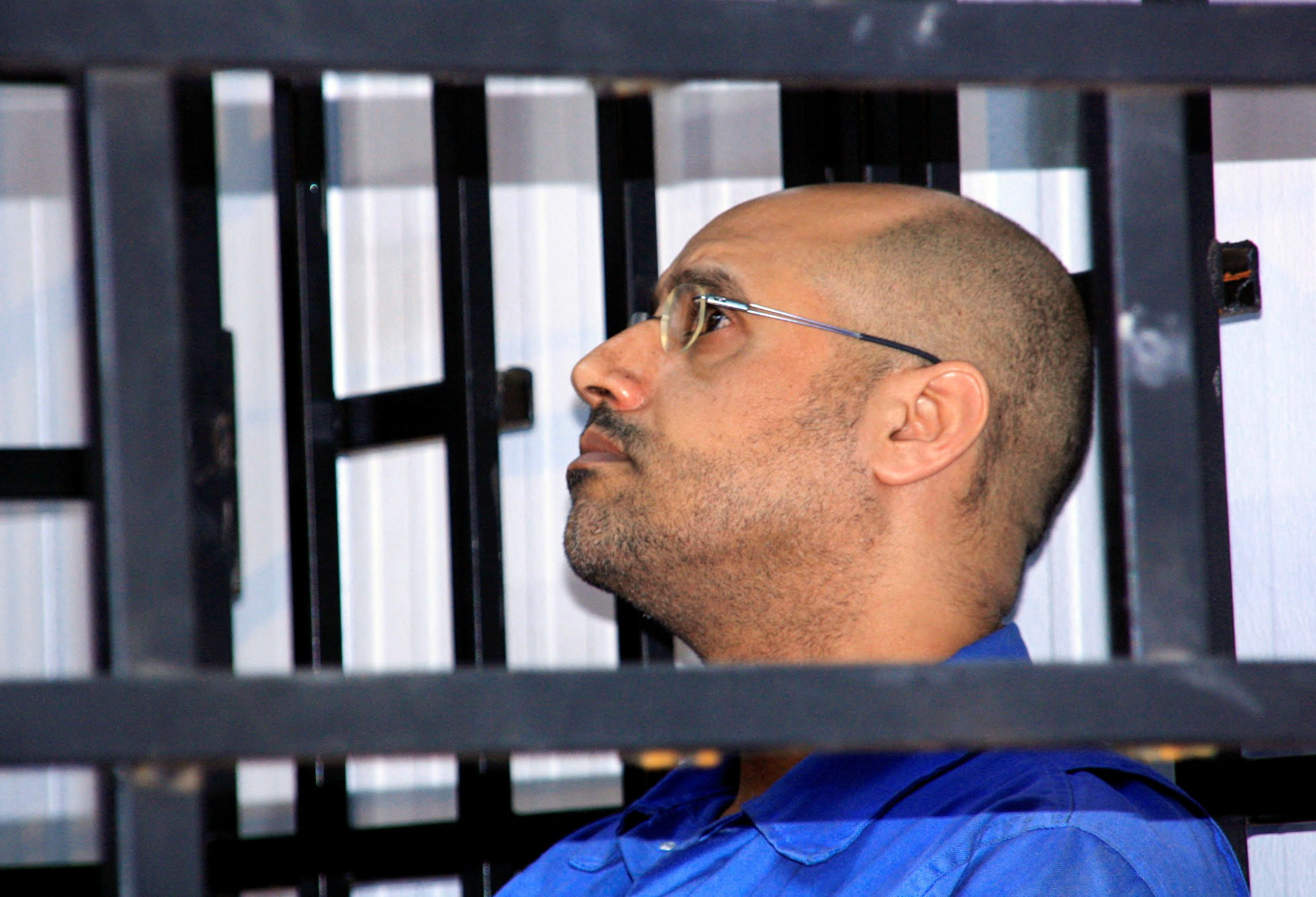 |
Saif al-Islam Gaddafi appearing in court in 5/2014. *Photo: Reuters*
Saif al-Islam, 53, was a prominent political figure during the final phase of Muammar Gaddafi's four-decade rule, before the government collapsed due to a NATO-backed uprising and military intervention in 2011. Although he held no official position, Saif al-Islam was considered the second most powerful person in the country, after his father.
He helped shape policy and participated in sensitive diplomatic missions, including negotiations for Libya to abandon weapons of mass destruction and agreements to compensate victims' families of the Pan Am 103 bombing over Scotland in 1988.
Educated in London, Saif al-Islam was once viewed by many governments as a "Western-friendly" figure. However, when the uprising erupted in 2011, he sided with his family, becoming a chief architect of the crackdown campaign. He warned of a "river of blood" and declared the government would fight to the last bullet.
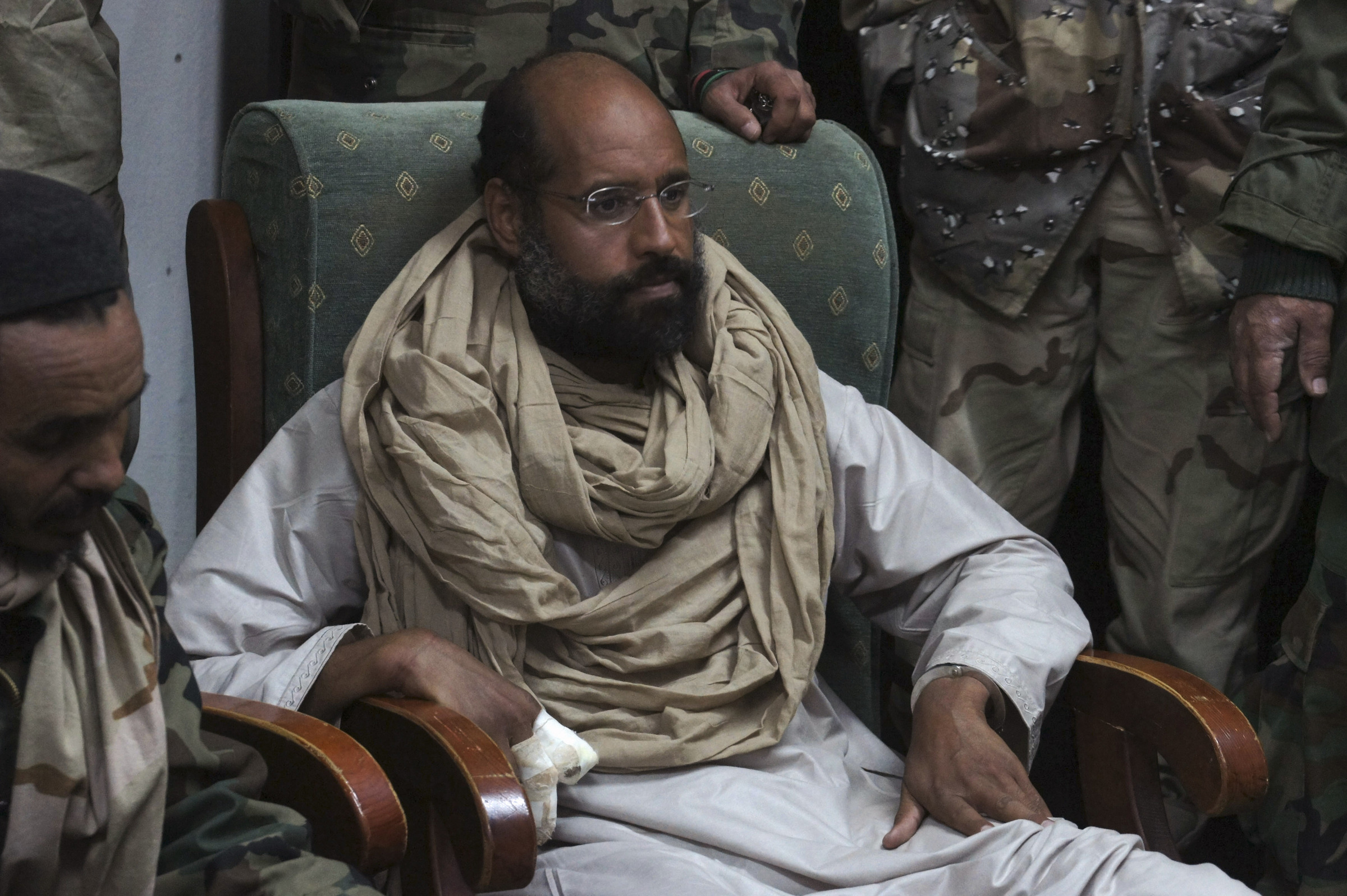 |
Saif al-Islam arrested by militia in Obari while fleeing to Niger in 11/2011. *Photo: Reuters*
After rebels controlled Tripoli, Saif al-Islam attempted to flee to Niger but militia forces captured him en route. He was then detained in Zintan for six years. Saif al-Islam described being isolated, unable to meet anyone from outside, though he had access to satellite television and books.
In 2015, a Libyan court sentenced Saif al-Islam to death in absentia for his role in the 2011 crackdown campaigns. The International Criminal Court (ICC) also issued a preliminary indictment against him on charges of crimes against humanity. By 2017, militia released him under an amnesty order, but he chose to live "in hiding" in Zintan for several years, fearing assassination.
Saif al-Islam returned to politics in 2021, registering to run for president in an election scheduled for December that year. His message was to "reunify" a country divided by forces in the east and west. The electoral process ultimately collapsed amid political deadlock, and Saif al-Islam's candidacy was rejected due to his 2015 conviction.
Thanh Danh (According to Reuters)