Saudi Press Agency and Pakistan's Ministry of Foreign Affairs announced today that Riyadh, Islamabad, and Ankara have signed the Mecca Joint Defense Treaty. The parties committed to "further strengthening collective security, while promoting peace, security, and stability in the region and globally."
According to Pakistan's Ministry of Foreign Affairs, this treaty implies an attack on any member state will be considered an attack on all. The ministry emphasized the agreement aims to "enhance collective deterrence capabilities."
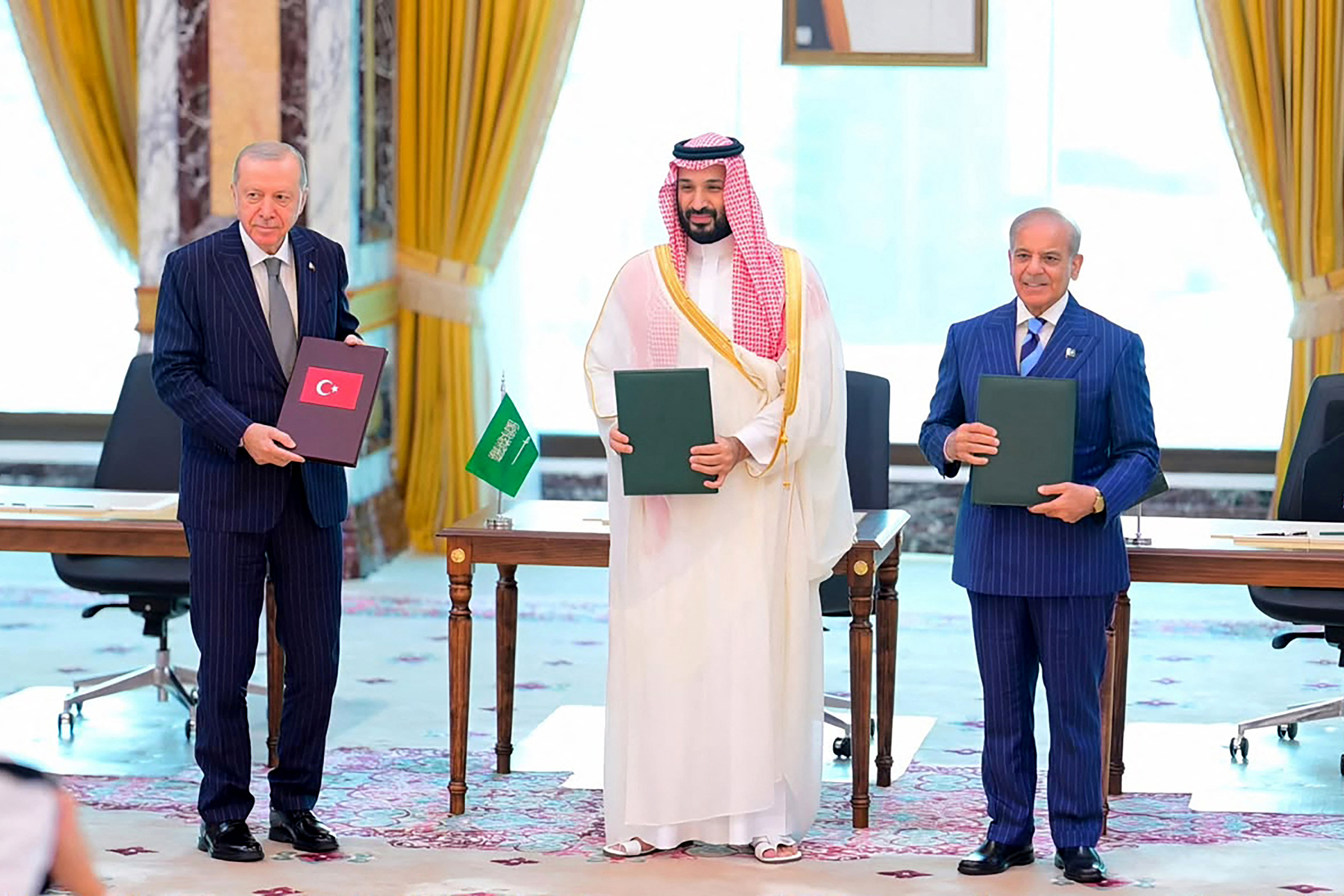 |
From left to right: Turkish President Recep Tayyip Erdogan, Saudi Crown Prince Mohammed bin Salman, and Pakistan Prime Minister Shehbaz Sharif pose for a photo after signing the Mecca Joint Defense Treaty in Mecca, Saudi Arabia on 7/8. *AFP*
The Turkish Presidential Communications Director later posted on X, stating that the agreement "is not aimed at any specific country."
Riyadh affirmed the agreement does not represent an effort to establish a military bloc or a political factional alliance.
"This agreement is also not related to any nuclear ambitions or an arms race, but focuses on building sustainable capabilities," Deputy Foreign Minister Rayed Krimly stated on X.
Since the Iran conflict erupted, Saudi Arabia has tightened relations with Turkey, Egypt, and Pakistan. These countries are working to mediate and find a solution to end the war.
Umar Karim, an expert on Saudi foreign policy at the University of Birmingham in England, noted this three-country cooperation "is clearly aimed at Iran and to counter Tehran's strategy of expanding influence across the Gulf region."
He added that Turkey and Pakistan sharing borders with Iran means they can "create another form of leverage" against Tehran.
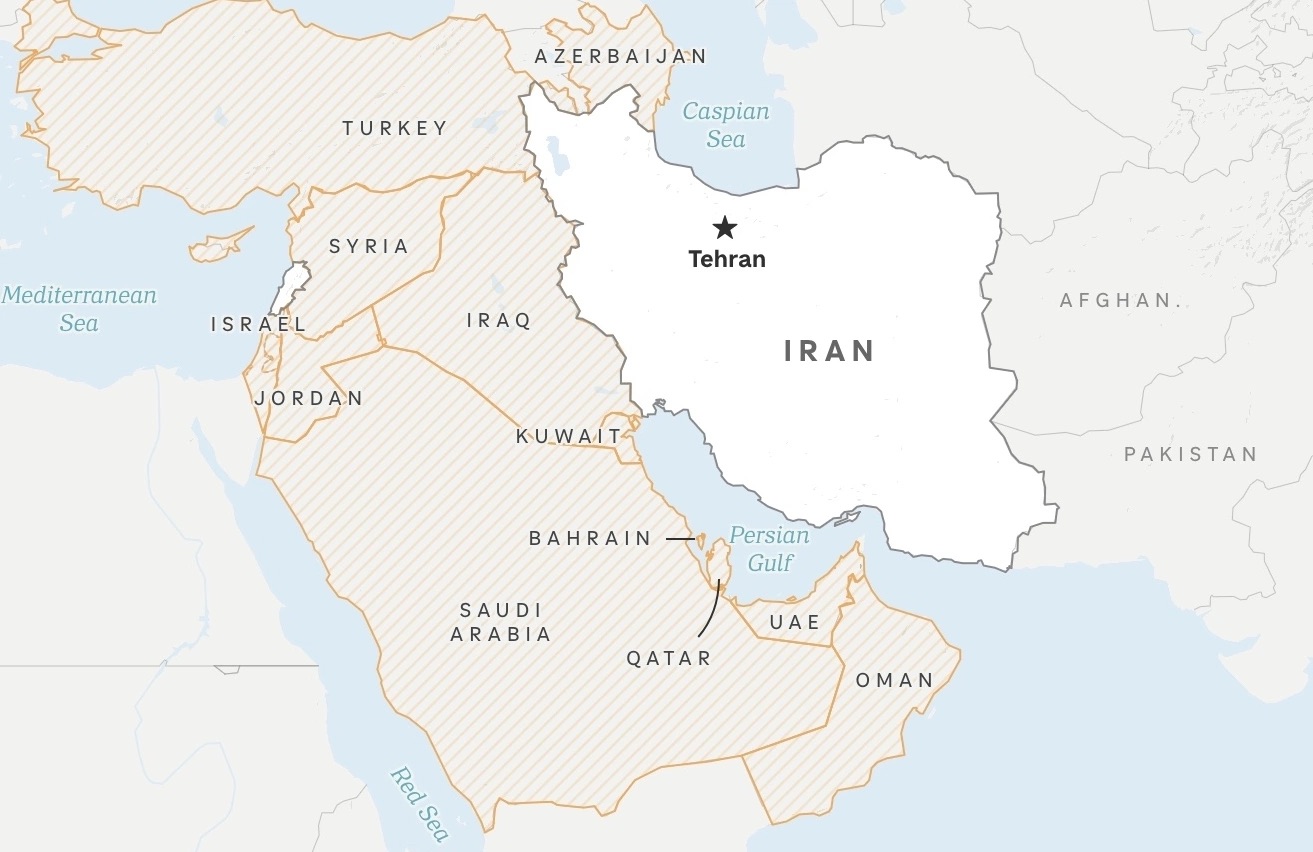 |
Location of Iran, Turkey, Saudi Arabia, and Pakistan. *NPR*
A source close to the Saudi military and government told AFP that the agreement had been under discussion for a long time. However, "recent developments in the region have accelerated this process."
Andreas Krieg, an expert at King's College London, commented that the agreement demonstrates a clear desire by these countries to diversify alliances, not solely relying on the US.
"Saudi Arabia, Turkey, and Pakistan are not seeking to replace the US role. They are simply building capabilities to protect their own interests in cases where Washington cannot or is unwilling to do so," Krieg said.
Krieg added that Riyadh truly "wants multiple layers of security instead of solely relying on an American protective umbrella," following the shock from the Iran war.
By Thanh Tam (Sources: AFP, AP, Reuters)