


Danish shipping company Maersk A/S announced on 5/5 that its commercial vessel, the US-flagged Alliance Fairfax, operated by its US subsidiary Maersk Line (MLL), was successfully escorted out of the Persian Gulf via the Strait of Hormuz. This confirmation followed earlier statements from US Central Command (CENTCOM) regarding assistance to commercial vessels.
The Alliance Fairfax's transit through Hormuz was smooth, with no incidents, all crew members safe, and no injuries, Maersk reported. The vessel had been stranded in the Persian Gulf since a conflict involving the US, Israel, and Iran erupted on 28/2, leading to the Strait of Hormuz being blocked. Maersk stated that the US military had recently contacted them to discuss options for their vessels to depart the Gulf under the protection of US warships.
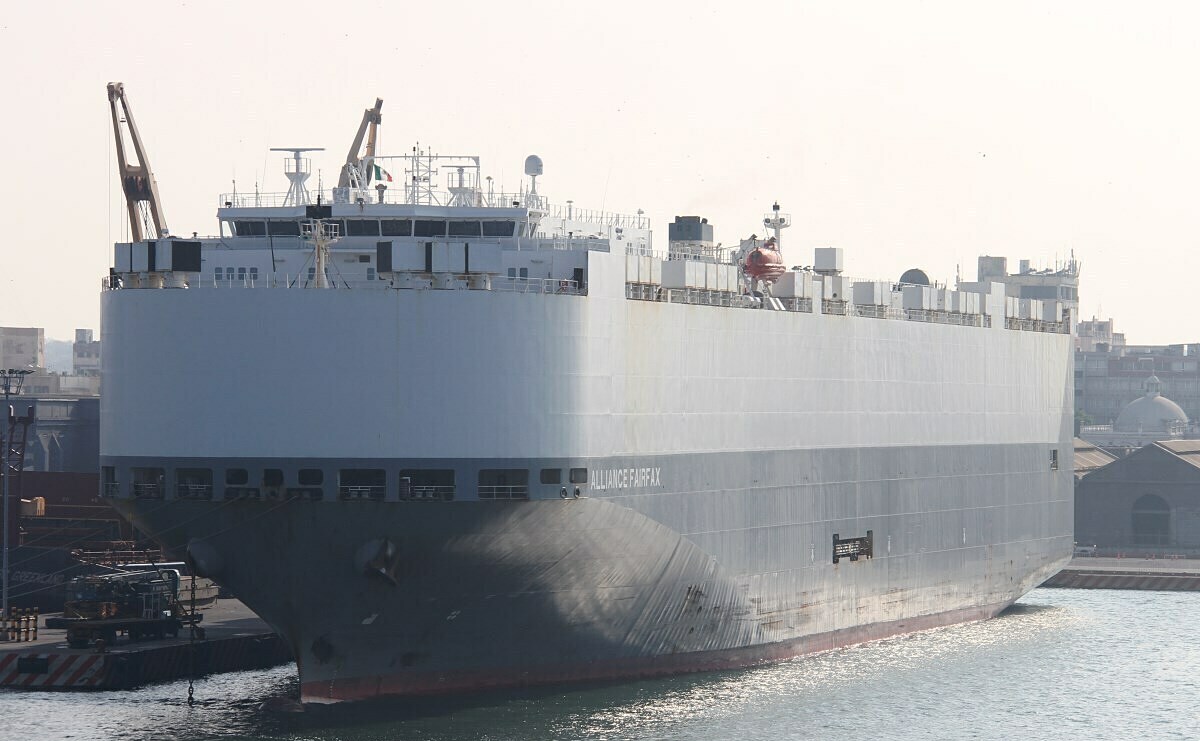 |
Commercial vessel Alliance Fairfax docked in Veracruz, Mexico, 3/2018. *Photo: Shipspotting* |
"After coordinating with the US military on a comprehensive security plan, MLL and the ship's leadership approved the decision to transit Hormuz. The vessel then departed the Persian Gulf with US forces accompanying it," Maersk stated. The company expressed appreciation for the US military's professionalism and effective coordination, anticipating the vessel's swift return to normal commercial operations. At least one other US-flagged vessel remains in the Persian Gulf region.
MLL, headquartered in Norfolk, Virginia, specializes in global container and cargo ship management, operating independently from its Danish parent company's commercial logistics division. The company states it possesses the world's largest fleet of US-flagged cargo vessels, providing transport services to the US government and military. The Alliance Fairfax, a US-flagged vessel, is enrolled in the US Maritime Security Program, which provides financial support from the US government in exchange for readiness to serve in military operations during emergencies or conflicts.
CENTCOM had previously announced that its guided-missile destroyers had passed through the Strait of Hormuz, entering the Persian Gulf to support Project Freedom, an initiative launched by President Donald Trump. While CENTCOM stated these forces assisted two US-flagged commercial vessels in successfully transiting the Strait of Hormuz, it did not specify an escort operation in its initial announcement.
CENTCOM Commander Brad Cooper reported that US forces fired upon and disabled six speedboats threatening commercial maritime activity in the area, while also intercepting all Iranian missiles and drones aimed at cargo vessels. Admiral Cooper explained that the US military is not directly escorting individual cargo ships, but rather deploying multiple layers of protection to create a "comprehensive defensive posture" for vessels supported through the Strait of Hormuz.
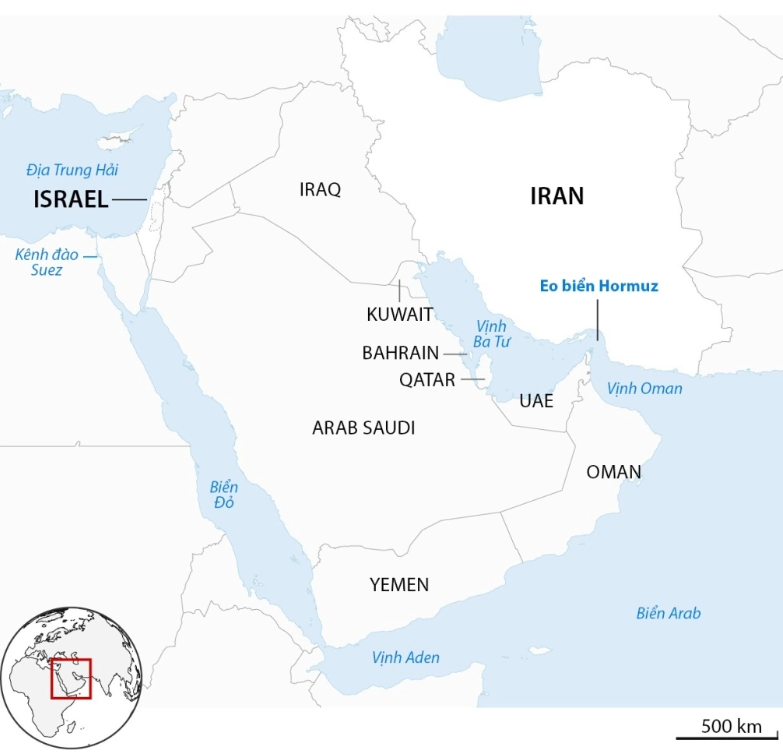 |
Location of the Persian Gulf and Strait of Hormuz. *Graphic: Guardian* |
Cooper added that Project Freedom was implemented after US forces utilized "highly sophisticated technology" to open a corridor through Hormuz in recent weeks, subsequently "erecting a protective umbrella over the area." This corridor will eventually become a two-way transit route, rather than solely for vessels departing the Persian Gulf. The US Commander did not elaborate on the nature of this "highly sophisticated technology" or how CENTCOM is ensuring the security umbrella in that maritime corridor. However, establishing a safe corridor requires the US military to clear all mines from the transit path and to create an air defense zone capable of intercepting any Iranian missiles or drones.
The Strait of Hormuz is a crucial maritime route, which previously accounted for approximately 20% of global oil shipments before being nearly paralyzed by conflict. Hundreds of vessels were stranded in the Persian Gulf after this route was closed in early 3.
Thanh Danh (According to AFP, Reuters)



