


US and allied forces are continuing search efforts for two army soldiers missing off the coast of southern Morocco since 4/5. While the personnel were participating in the annual African Lion exercise, their disappearance is believed to be unrelated to training activities.
According to a preliminary report cited by CBS News, one soldier fell into the water while a group of US service members were hiking to watch the sunset. An unnamed US defense official had previously stated that the soldiers were last seen near coastal cliffs adjacent to the Cap Draa training area.
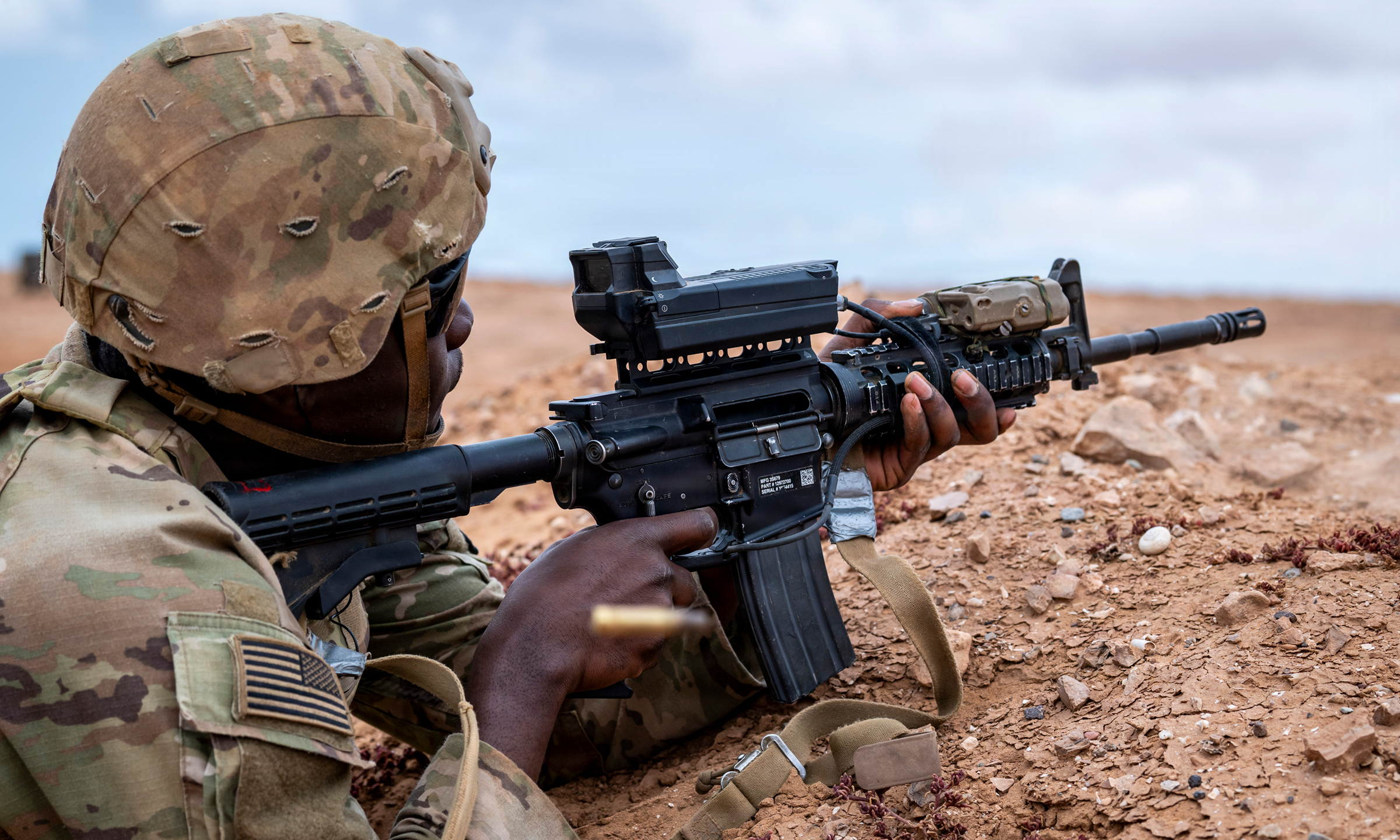 |
US military personnel during the African Lion 26 exercise in Morocco on 28/4. *Photo: US Army*
When the first soldier fell, other service members attempted a rescue by forming a "human chain" with belts, but this failed. A second US soldier then jumped into the water to save their comrade, who could not swim, but was immediately struck by waves. Neither could return to shore, prompting a third individual to enter the water. This service member was also unable to rescue the two comrades and returned to shore alone.
The US Department of Defense has not yet commented on these details.
Numerous aircraft, unmanned aerial vehicles, divers, and boats have scoured the southern Moroccan coast for the past three days in search of the missing service members.
African Lion, the largest annual exercise conducted by the US Africa Command (AFRICOM), involves thousands of troops from the US, African partner nations, and NATO allies. Its purpose is to train participants in modern warfare across land, sea, air, space, and cyberspace domains.
This year marks the 22nd iteration of the exercise, which is taking place from 27/4 to 8/5 across four nations: Morocco, Ghana, Senegal, and Tunisia.
US soldiers train to detect improvised explosive devices during the African Lion 26 exercise on 21/4. *Video: US Department of Defense*
The majority of the exercise activities are held in Morocco, involving approximately 5,000 service members from over 40 nations. Training encompasses a wide range of areas: from large-scale combat operations, crisis response, and humanitarian assistance, to special operations, cyber security defense, intelligence gathering, and explosive ordnance disposal. Participating forces demonstrate coordination in air, land, and sea operations, alongside the application of sensor technology and real-time information sharing.
Pham Giang (Based on CBS News, Reuters, Hill)


