Tens of thousands of people marched through the streets of Madrid on 26/9 and 27/9 to protest the eviction of Maria del Carmen Abascal, a resident of the El Retiro area. She was forced out of her home, which she had rented for over 70 years, on 23/9, despite dozens of people standing guard outside her house the night before to prevent the eviction.
Abascal, affectionately known as Maricarmen, was hospitalized following the eviction. Her lawyer, Beatriz Duro, stated that her client would remain in the hospital for a few days pending test results.
 |
Maricarmen, 87, waits at home before police arrive for the eviction on 23/9. Photo: AP |
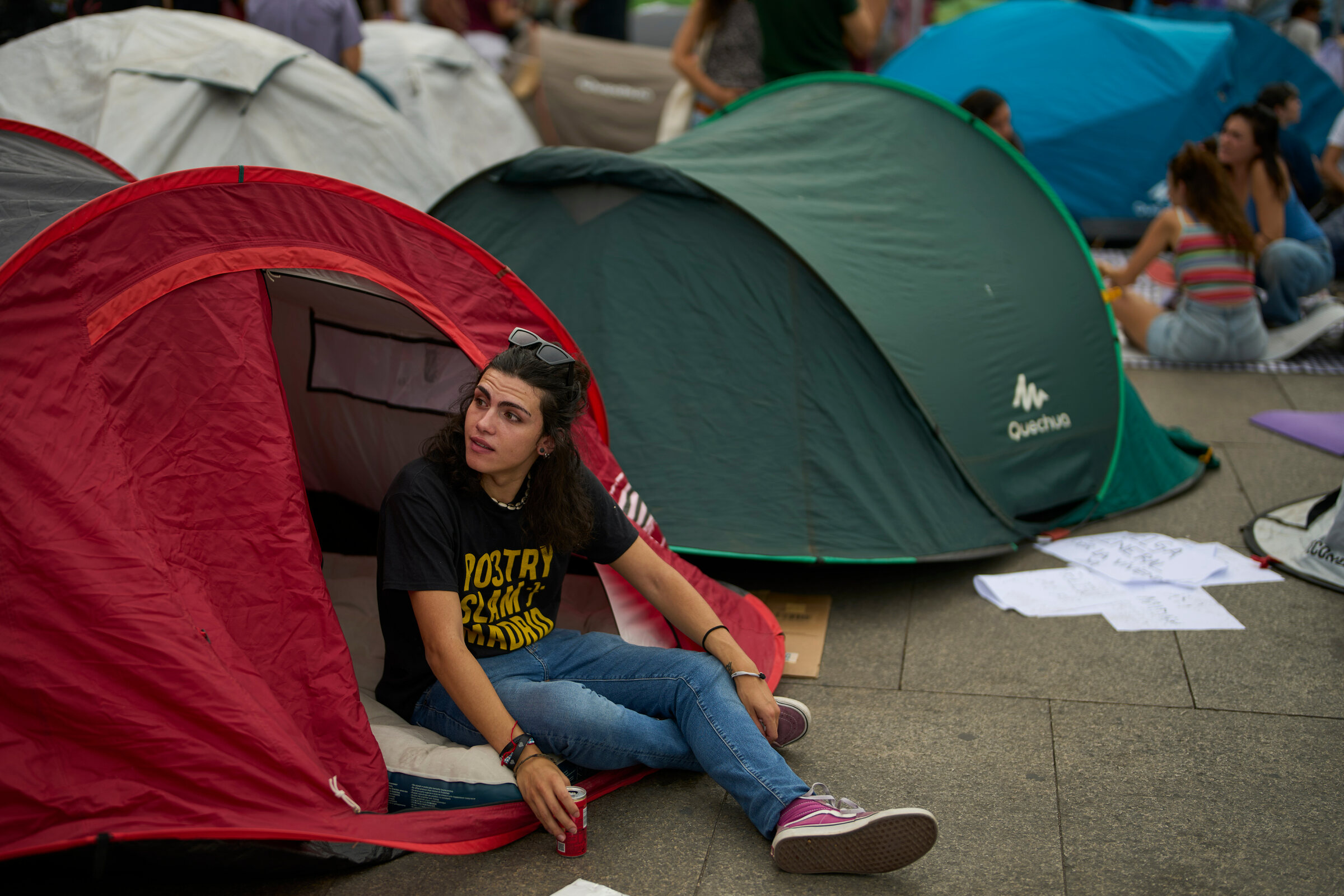
By the afternoon of 26/9, nearly 10,000 people had gathered in the capital to protest the eviction, expressing frustration over the increasingly difficult housing situation. Protesters set up tents overnight in Puerta del Sol square, demanding protection for tenants' rights and a ban on evictions without alternative housing solutions in the vicinity. The wave of protests also spread to other cities such as Barcelona, Seville, and Valencia.
Abascal had lived in her apartment near El Retiro Park since 1956, growing up and living with her parents until she inherited the old-style rental contract from them. The rent for this contract was USD 568 per month.
However, things changed when the real estate company Urbagestion Desarrollo e Inversion acquired ownership of the building in 3/2018 for USD 280,787. This marked the beginning of her struggles. According to the Madrid Tenants' Union, the new owner demanded a four-fold increase in rent, despite Abascal's pension being only USD 1,478.
In 3/2020, the real estate company filed a lawsuit to terminate the lease. Abascal won the case at the lower court, but the company appealed, and the Provincial Court ruled in their favor. Facing this situation, lawyer Duro filed a petition for constitutional protection with the Constitutional Court and an appeal with the Supreme Court, but both were rejected. Concurrently, Urbagestion filed a lawsuit to enforce the lease termination and reclaim the property, leading to four eviction notices.
In 10/2025, Abascal's legal team managed to halt an eviction for four months thanks to a legal provision allowing for a suspension of enforcement. By 6/2026, the second eviction was postponed for nearly one month because the tenant had no alternative housing. The eviction was further postponed until 7, but lawyer Duro continued to appeal this decision.
 |
Protesters gather at Puerta del Sol square in Madrid to protest the eviction on 26/9. Photo: AP |
Despite the support network proposing various mediation options, such as buying back the apartment or an anonymous person offering to help Abascal pay the rent, Urbagestion rejected them all. "The situation is deadlocked", lawyer Duro said. "She has no alternative housing and has not received any housing proposals or solutions from the authorities".
The difficulty in accessing housing, whether buying or renting, is not new in Spain. Protests have increased in recent years, and pressure is mounting on both local authorities and the government led by Prime Minister Pedro Sanchez. This discontent stems from soaring housing prices and is felt particularly acutely in major cities. In Madrid, rent has nearly doubled in a decade, from USD 14,55 per square meter in 8/2016 to USD 26,49 in 8/2026, according to data from real estate website Idealista.
For home purchases, the price per square meter has increased 227,9% in just 10 years, from USD 3,229 in 8/2016 to USD 7,361 in 8 this year, according to Idealista. These prices contrast sharply with the national average annual salary of USD 33,596 in 2024, according to data from the Spanish National Statistics Institute. Based on these figures, a tenant renting a 50 square meter apartment in Madrid would have to spend approximately USD 15,894 per year on housing, accounting for almost half the average salary.
 |
Protesters camp at Puerta del Sol square on 26/9. Photo: AP |
This financial burden severely impacts the ability to save and cover other expenses. UN-Habitat (United Nations Human Settlements Program) estimates that affordable rent should be under 30% of a person's income. The Bank of Spain attributes the root cause of this problem to a housing shortage, currently estimated at 755,000 units and potentially reaching one million units by 2028.
Speaking at a Socialist Workers' Party rally in Madrid on 27/9, Prime Minister Pedro Sanchez directly addressed Abascal. "I send the following message to Maricarmen: the government is working tirelessly to present the Royal Decree on housing on 29/9. I urge parliamentary blocs to make a final effort for the decree to be approved by parliament for Maricarmen", he said.
Earlier, Abascal had criticized Sanchez, blaming him for her tragedy. The Spanish government maintains that it tried to buy back the home where Abascal lived to rent it to her at an affordable price, while criticizing local and regional authorities for doing nothing to help her. Madrid Regional President Isabel Diaz Ayuso attributed responsibility to Prime Minister Sanchez's government, asserting that the eviction was carried out by the National Police, under the government's jurisdiction, according to a law they had 8 years to amend. Meanwhile, members of the Sumar coalition proposed expropriating the apartment and pushing for an emergency decree to freeze rental prices, while halting similar evictions.
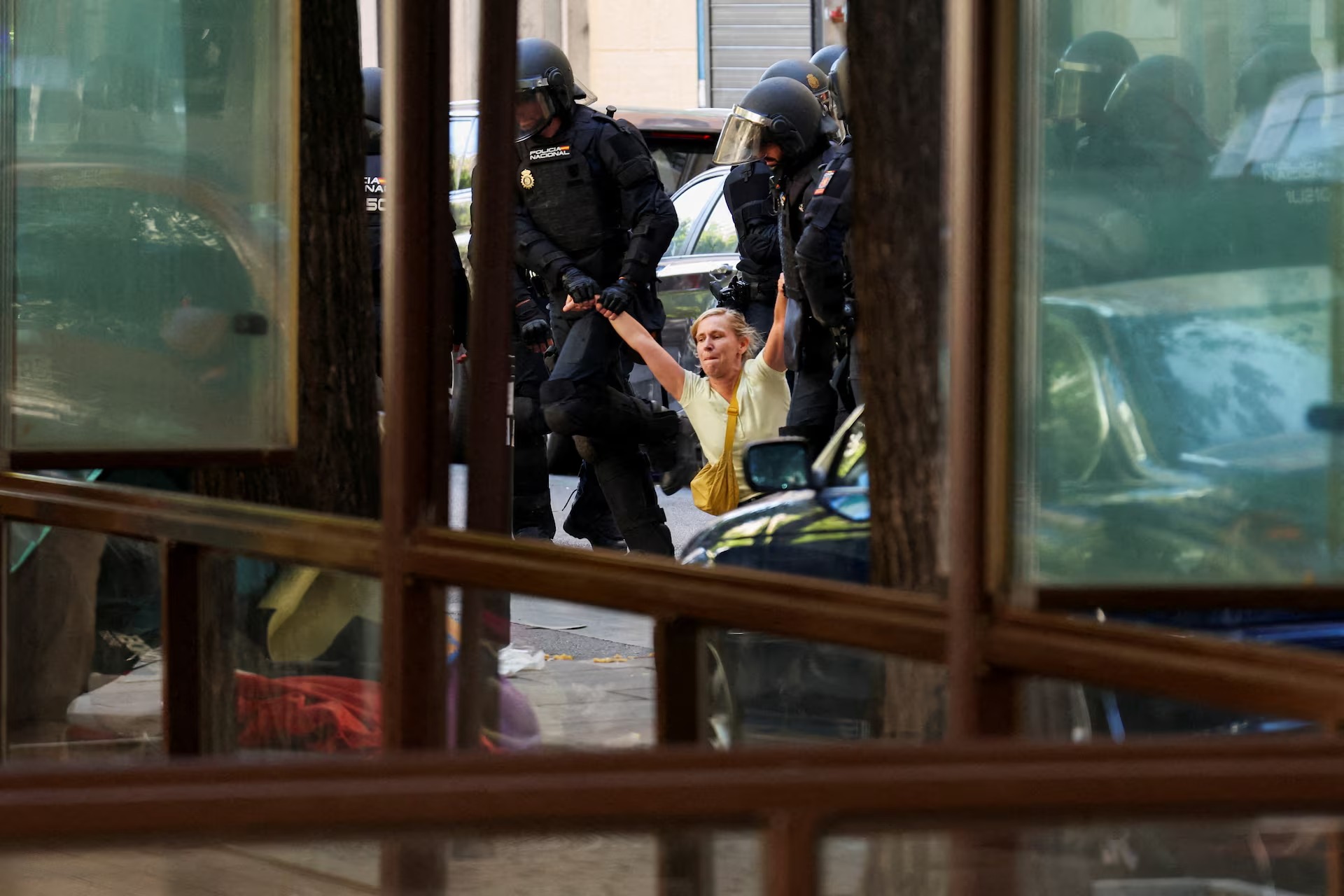 |
Police carry a protester in front of Maricarmen's house in Madrid on 23/9. Photo: Reuters
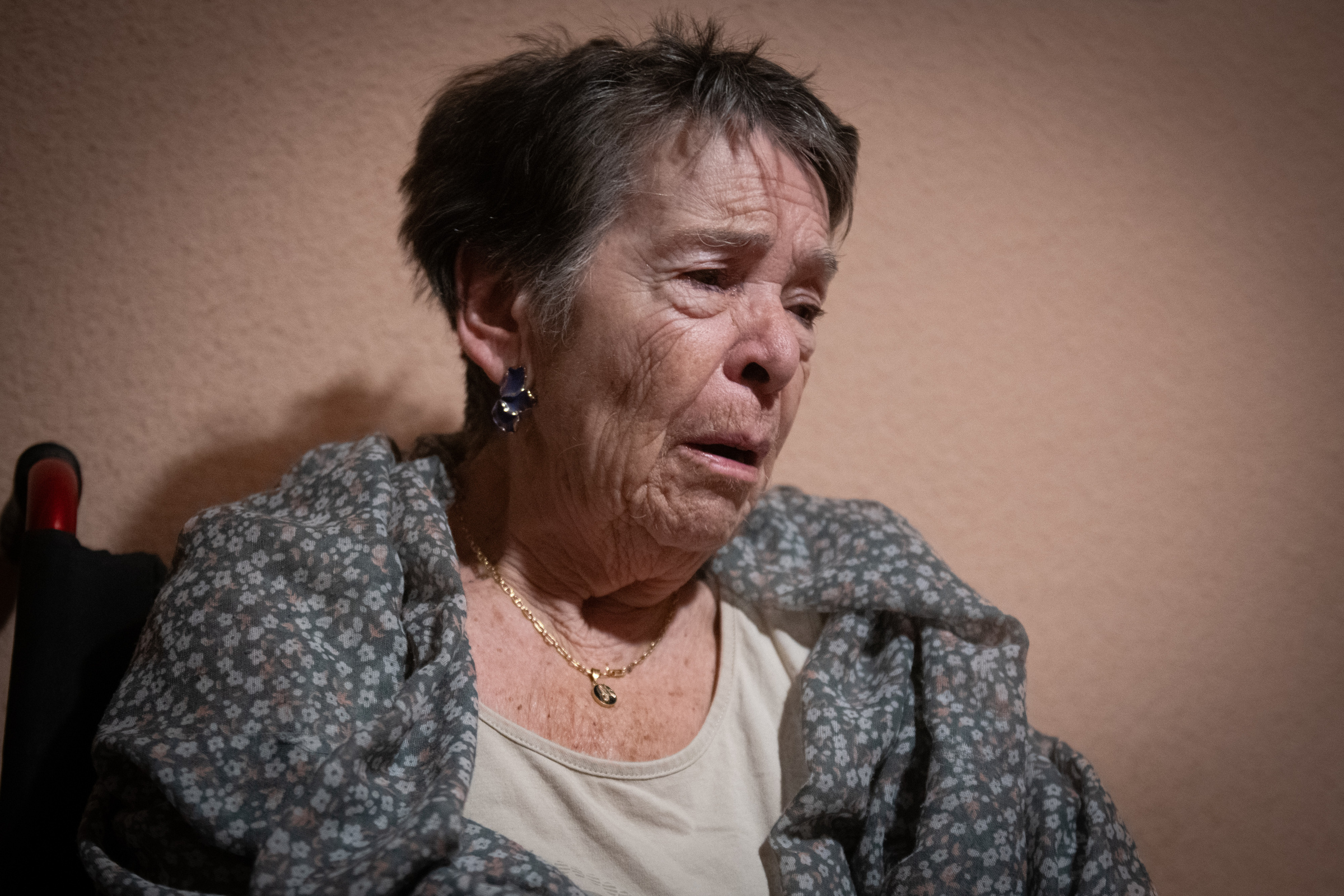 |
Maricarmen lies on a stretcher, being taken to an ambulance after being evicted from her home on 23/9. Photo: Reuters
 |
Protesters gather in front of Maricarmen's house on 23/9, protesting the eviction. Photo: Reuters
 |
Police pull a defiant protester on 23/9. Photo: Reuters
Hong Hanh (According to CNN, AP)