NBC News, citing unnamed US officials on 27/9, reported the incident occurred two weeks prior. The service members did not sustain severe injuries but suffered from smoke inhalation and potential traumatic brain injury, exhibiting symptoms of concussion.
The eight individuals, comprising one officer and seven enlisted personnel, returned to duty after the attack. At the time of the strike, they were operating as part of an amphibious battalion on a "non-US naval vessel." US officials declined to disclose the vessel type, referring to it only as a "sea vessel."
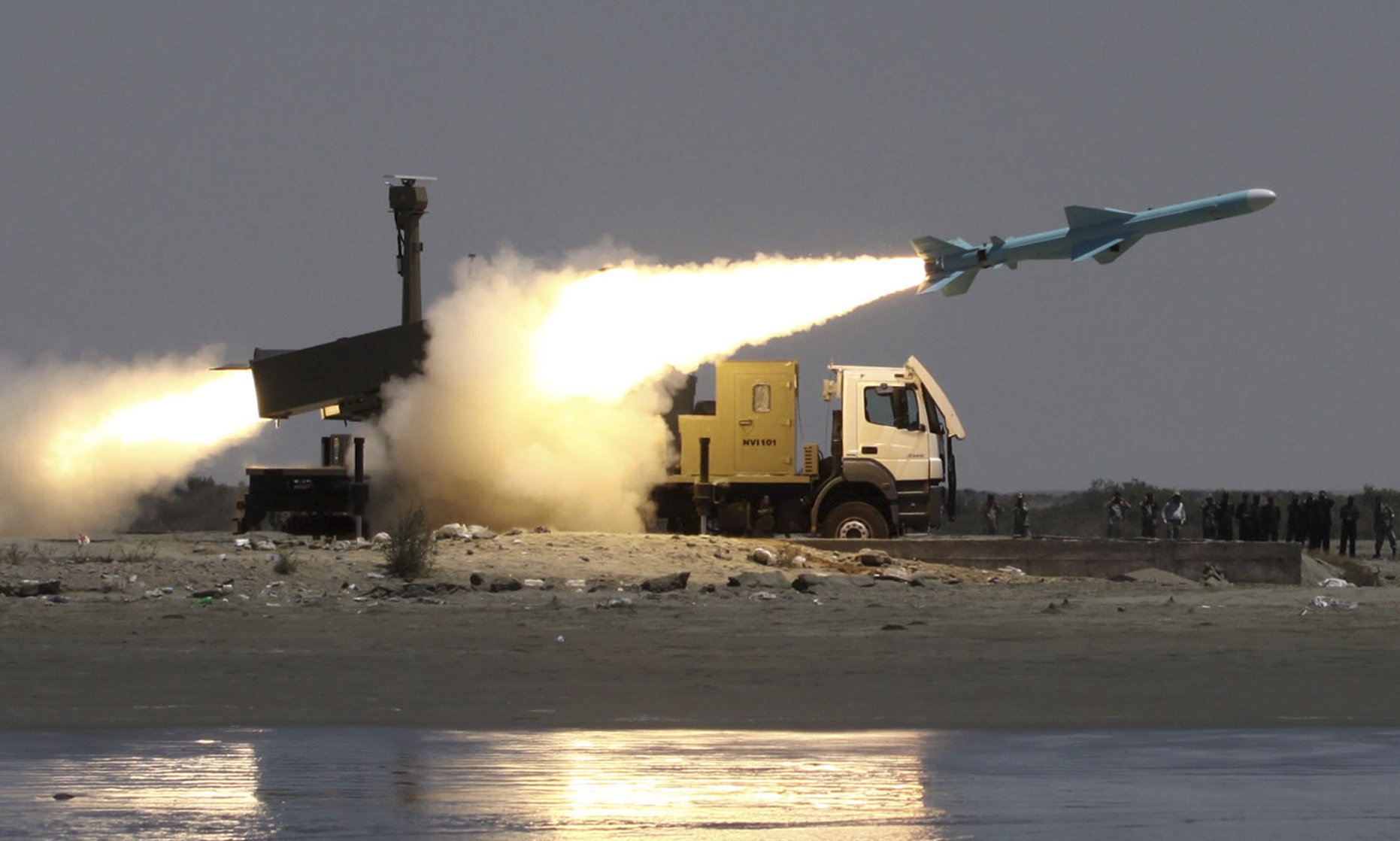 |
The Noor anti-ship missile launched from a platform during an Iranian exercise in 2010. Photo: Fars News |
The United States Central Command (CENTCOM), responsible for US military operations in the Middle East, declined to comment on the information.
The Pentagon maintains a database called the Defense Casualty Analysis System (DCAS) to track US service member fatalities and injuries. On 23/9, nearly 10 days after the attack, DCAS added eight Marines to its list of personnel "injured in the line of duty abroad."
It remains unclear if these were the same service members involved in the sea vessel attack in Hormuz. DCAS did not provide basic details about the eight Marines, such as where, when, or how they were injured.
According to DCAS data updated as of 23/9, a total of 861 US service members have been injured in conflicts with Iran. A US official stated that injury figures often lag behind actual events because DCAS is not updated in real-time, and symptoms experienced by service members are not always immediately recorded.
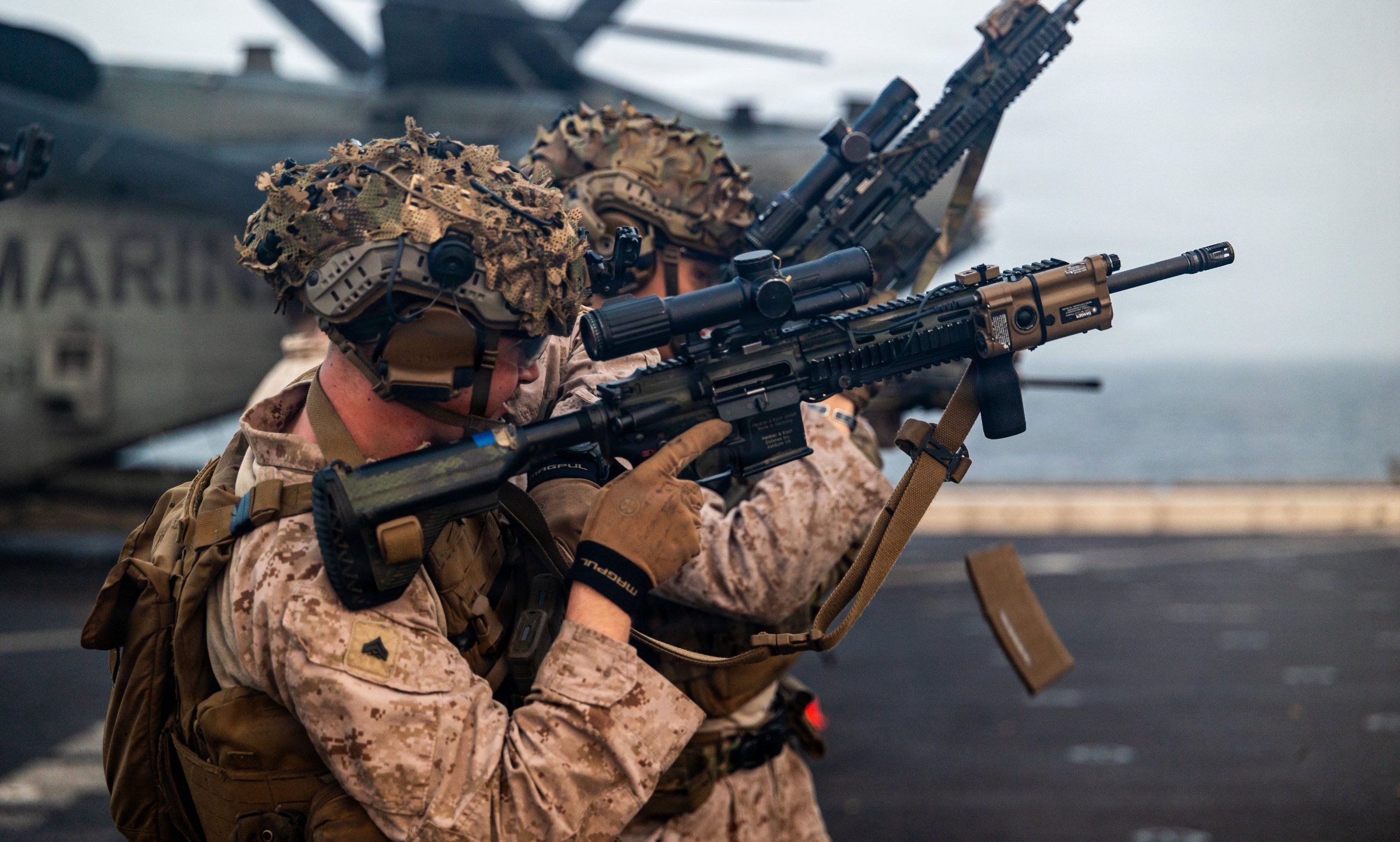 |
US Marines training aboard the amphibious transport dock USS Portland in the Arabian Sea on 12/9. Photo: CENTCOM |
NBC News did not specify the missile model Iran used in the 14/9 attack. According to Press TV, the English-language channel of Iranian state television, the country's anti-ship cruise missile arsenal is divided into three classes: from short-range tactical weapons to long-range strategic systems.
One such missile is the Qader-380, advertised as having a range of over 1,000 km, possessing anti-jamming capabilities, and capable of being launched in just 5 minutes by a single operator.
Another notable weapon is the Abu Mahdi, carrying a 400 kg warhead and boasting a range of 1,000 km. This missile reportedly utilizes AI technology for flight path correction, flies sea-skimming at extremely low altitudes, and possesses capabilities to counter advanced electronic warfare measures.
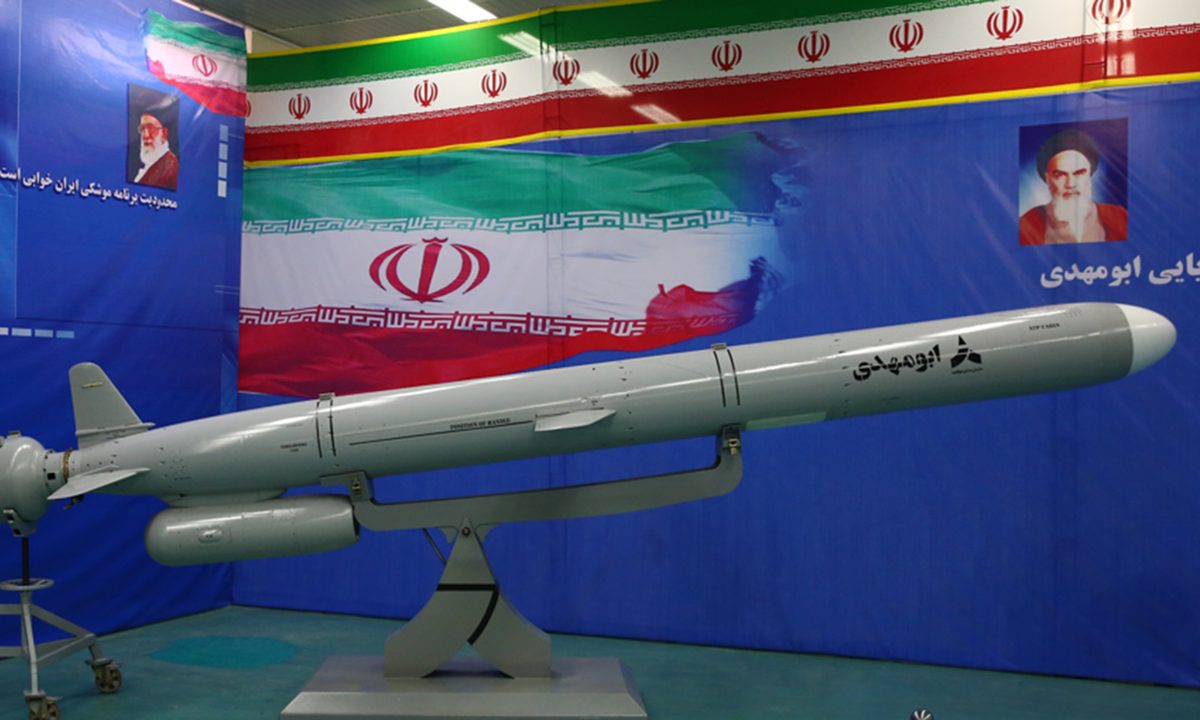 |
The Abu Mahdi cruise missile displayed in Tehran, Iran in 2023. Photo: Press TV |
By Pham Giang (According to NBC News, Press TV)