The border has "completely collapsed" under the pressure of thousands of migrants, announced Rachid Sbihi, head of the Civil Defense agency operating in Ceuta, on 30/7. He described the situation as "completely chaotic," noting that an exact number of crossers was unavailable.
Ceuta, a Spanish autonomous city on the North African coast, shares a 6,4 km border with Morocco. Despite a 10-meter-high border fence, migrants often attempt to cross by sea to reach European territory.
Videos from the scene show thousands of individuals, predominantly men, bypassing the breakwaters at Tarajal beach or breaching sections of the border fence to enter Ceuta. Some were heard chanting "Long live Spain" as they crossed into Spanish territory.
Moment migrants from Morocco stream through the border crossing in Ceuta, a Spanish territory in North Africa, on 30/7. Video: X/ElonMusk
Achraf Maimouni, a member of the Moroccan Human Rights Association in the country's north, characterized the situation as "unusual," alleging that Moroccan officials had opened the Tarajal border crossing, allowing the influx into Spanish territory. Moroccan authorities have not yet commented on these claims.
In response, Spain announced the deployment of its military to Ceuta to help local authorities restore order and ensure security. Prime Minister Pedro Sanchez and Interior Minister Fernando Grande-Marlaska were scheduled to visit the area on 31/7. The Spanish Interior Ministry indicated that Morocco is closely cooperating to manage the situation and planning the swift return of those who crossed the border.
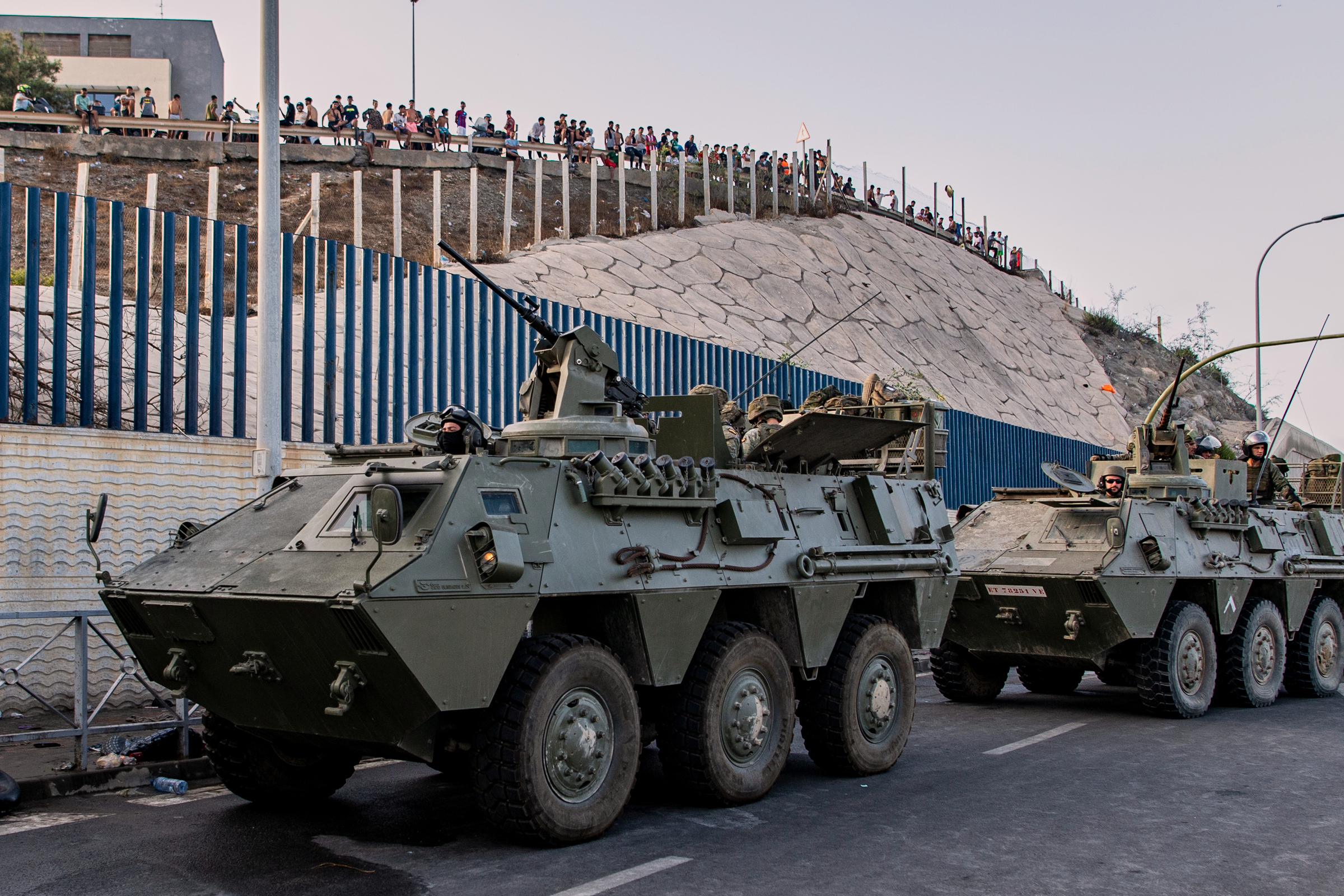 |
A convoy of Spanish army armored vehicles deployed to Ceuta to re-establish order. Photo: *AP*
Local media reported that Moroccan security forces deployed anti-riot measures, using tear gas and water cannons to disperse crowds gathered near the border. Residents in Ceuta were advised to stay indoors, while many shops, bars, and restaurants had to close.
Juan Jesus Vivas, leader of the Ceuta government, called on the central government to declare a national security emergency, increase police presence, and deploy troops to the territory. This action, he stated, is crucial to "ensure the inviolability of the border and the safety of residents." Vivas also noted that migrant reception centers were overwhelmed, with hundreds forced to sleep on the streets after more than 1.500 people crossed into Ceuta last week.
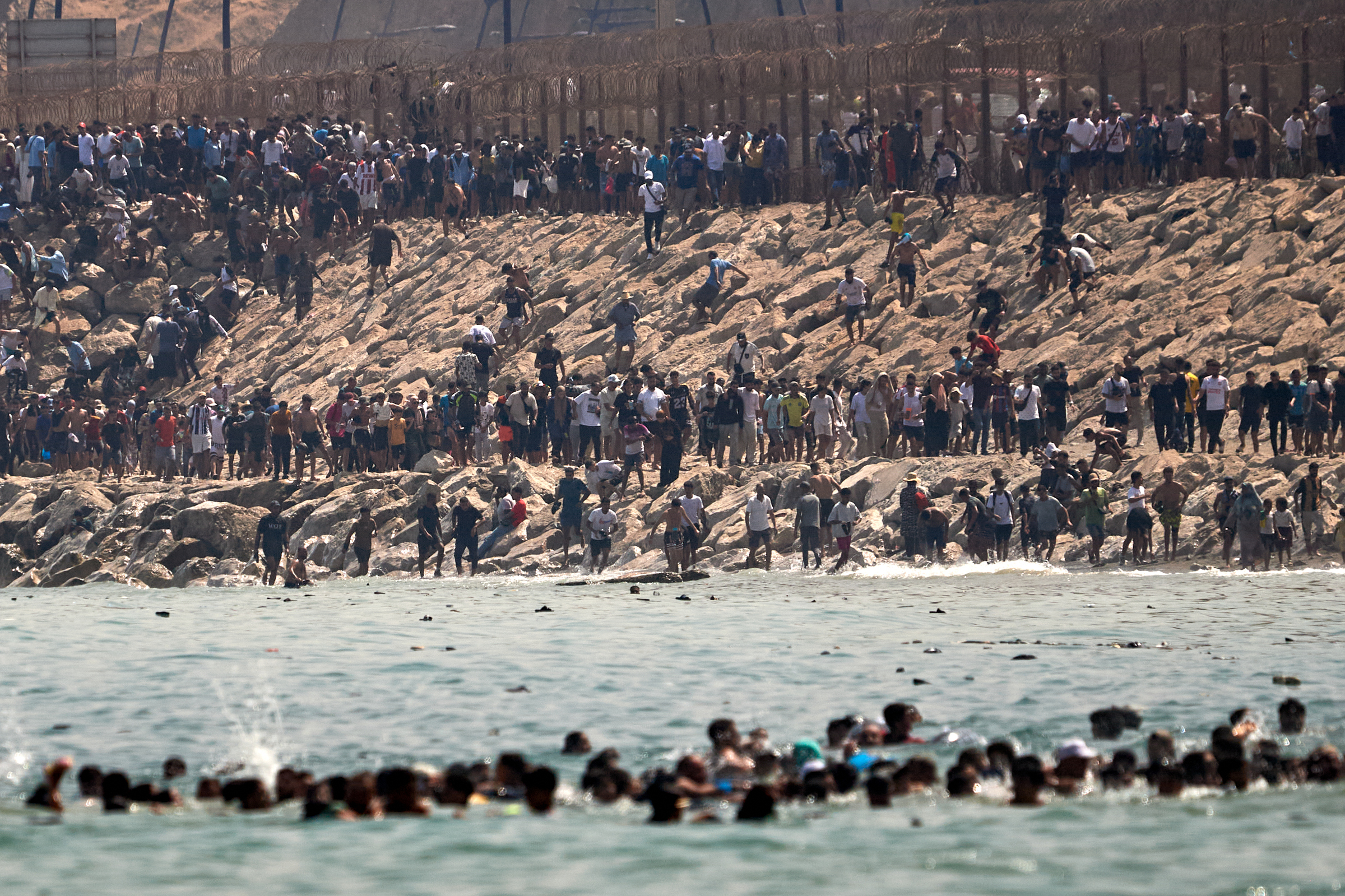 |
Migrants swim past breakwaters onto Ceuta beach, then climb over a fence. Photo: *AP*
The Spanish Interior Ministry has not confirmed the total number of migrants who entered Ceuta in recent days but stated it would release a new report on 3/8. According to ministry data, as of 15/7, nearly 3.000 people had entered Ceuta by land or sea this year.
The situation has also drawn international concern, with Italy expressing worries. Italian Prime Minister Giorgia Meloni declared Rome was ready to implement special measures, including potentially suspending the Schengen free travel agreement with Spain, to "protect its borders and ensure citizen safety." Foreign Minister Antonio Tajani also suggested that the wave of illegal immigration via Spain would threaten national security.
However, Spanish Foreign Minister Jose Luis Albares accused Italian politicians of exploiting the immigration issue for political purposes. He argued that Madrid needed solidarity from its European partners, rather than "populist statements."
Ceuta, with a population of 80.000, is located at the northern tip of Morocco but is under Spanish sovereignty. Along with Melilla, another Spanish territory, Ceuta has long attracted African migrants seeking a better life in Europe. In 2021, Spain witnessed a mass influx of thousands of migrants from Morocco crossing by sea into Ceuta, forcing the country's authorities to reinforce security forces to cope.
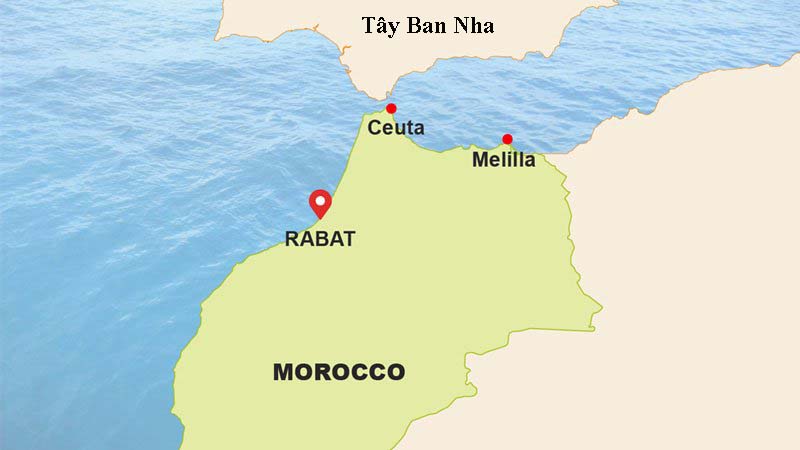 |
Location of Ceuta and Melilla. Graphics: *The New Humanitarian*
By Thanh Danh (According to AP, AFP, NY Post)