Prime Minister Narendra Modi of India last weekend issued a message urging citizens to adopt austerity measures amid Middle East conflict putting pressure on the economy. Among these, a particularly noteworthy proposal was to limit gold purchases for at least one year.
This appeal could have a significant impact, as India is currently the world's second-largest gold buyer, surpassed only by China. In fiscal year 2026, India imported 72 billion USD worth of gold, a 24% increase from a year earlier.
Indians purchased more than 710 tons of gold in 2025, with gold jewelry consumption accounting for approximately 430.5 tons, according to data from the World Gold Council.
This asset is widely favored by Indian citizens not for investment purposes, but for its spiritual value, customary use during festive seasons, and its role in demonstrating social status. A large portion of gold demand in India is also linked to traditional weddings.
The recommendation to curb gold purchases is considered a measure that can directly impact the economy of 1.4 billion people. Unlike many solutions dependent on macroeconomic policies or external conditions, this is a choice individuals can actively make, helping India stem the outflow of foreign currency and alleviate pressure on USD reserves.
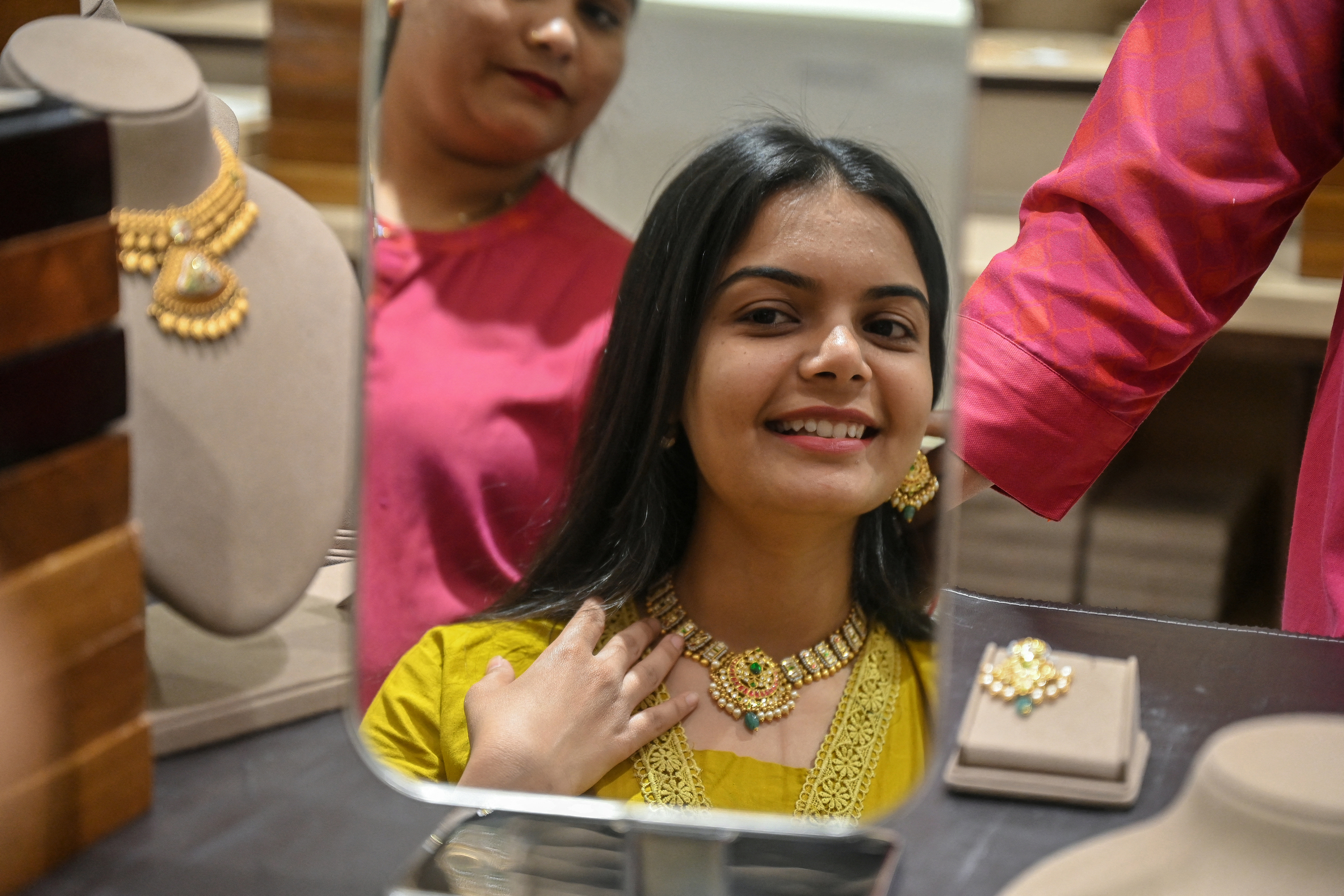 |
Indian women buy gold jewelry in Ahmedabad on 19/4, for the Hindu festival of Akshaya Tritiya. Photo: AFP |
According to data from the Reserve Bank of India, the country's foreign exchange reserves reached 690.7 billion USD as of 1/5, a decrease from 728 billion USD in February. Meanwhile, the International Monetary Fund (IMF) estimates that India's current account deficit (CAD) could reach 84.5 billion USD this year, with gold imports being a significant contributing factor.
A current account deficit occurs when a nation spends more foreign currency than it earns from exports, foreign income, and remittances. When gold imports increase, India must spend more foreign currency for payment, causing the import bill to swell.
This current account deficit will put pressure on the Indian rupee, increase the need for external borrowing, and make the economy more vulnerable to volatile global capital flows. A depreciating rupee will also directly increase domestic inflation, further burdening citizens.
All imported gold is paid for in USD. Among the country's total import bill of 775 billion USD, four major categories—crude oil, gold, vegetable oil, and fertilizers—collectively account for more than one-third.
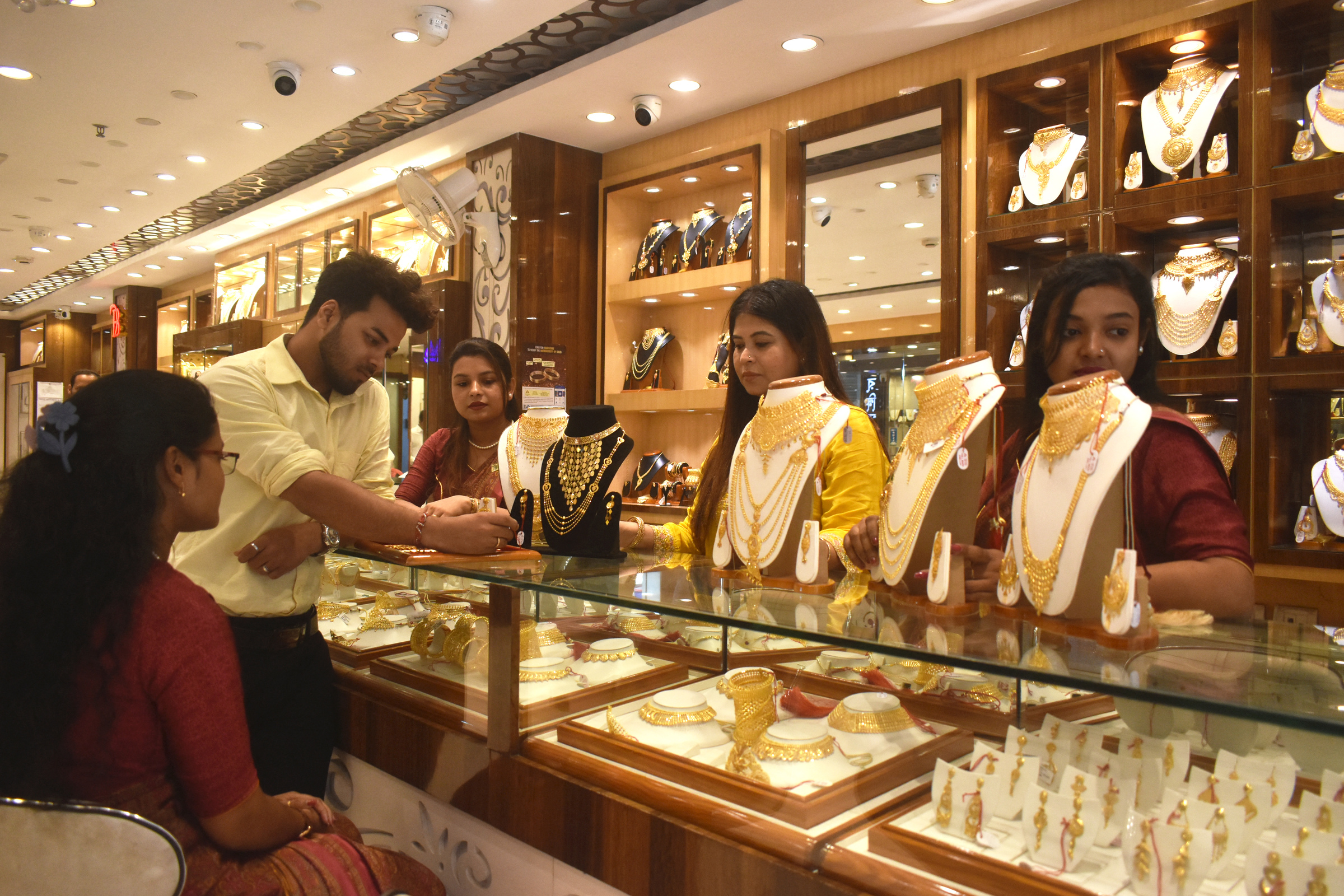 |
A gold shop in Kolkata bustling with customers during the Akshaya Tritiya festival in April. Photo: AFP |
Crude oil leads with 134.7 billion USD. However, it is an essential commodity that is difficult to significantly cut in the world's most populous nation. The situation is similar for vegetable oil, valued at 19.5 billion USD, and fertilizers, 14.5 billion USD, which play a crucial role in food security.
With an import bill of approximately 72 billion USD, nearly double the combined value of vegetable oil and fertilizer imports, reducing gold demand is seen as the clearest way for India to control its foreign exchange balance.
According to NDTV's forecast, if gold imports decrease by 30-40%, India could save around 25 billion USD. If the reduction in gold imports reaches 50%, foreign exchange savings could increase to 36 billion USD.
The Indian government could use these foreign exchange savings to fund energy imports, which are essential for critical activities like agriculture and other energy needs.
The current pressure is intensified by escalating oil prices due to the Middle East conflict. A direct cause is the risk to maritime transport routes, disrupting oil trade. About 20% of global energy cargo passes through the Strait of Hormuz, which has been nearly paralyzed since the conflict in Iran erupted.
Thanh Danh (According to RT, NDTV)