The Taiwan Air Force reported on 7/1 that Captain Xin Baiyi, the pilot of an F-16V fighter jet that crashed on 6/1 during a night training mission, has not been found. According to Jiang Yi-cheng, Inspector General of the Taiwan Air Force, Captain Xin's F-16V, tail number 6700, separated from its formation at 7:27 PM on 6/1 as the aircraft flew into a cloudy area. After reporting a loss of altitude, Captain Xin announced his intention to eject at 7:28 PM. The jet's signal disappeared from radar screens just 8 seconds later. The last recorded position of the aircraft was in the waters approximately 66 km south of Hualien Air Base. Taiwan's defense agency believes the pilot abandoned the aircraft and parachuted into the sea.
However, the Taiwan Air Force has not confirmed if Captain Xin successfully ejected. Jiang stated, "We have not received any signals from the survival beacon, so there is insufficient evidence to confirm whether Captain Xin successfully ejected." The survival beacon, located under the pilot's seat, automatically activates after ejection. This device transmits an emergency signal to a satellite network to help rescuers quickly pinpoint the pilot's location.
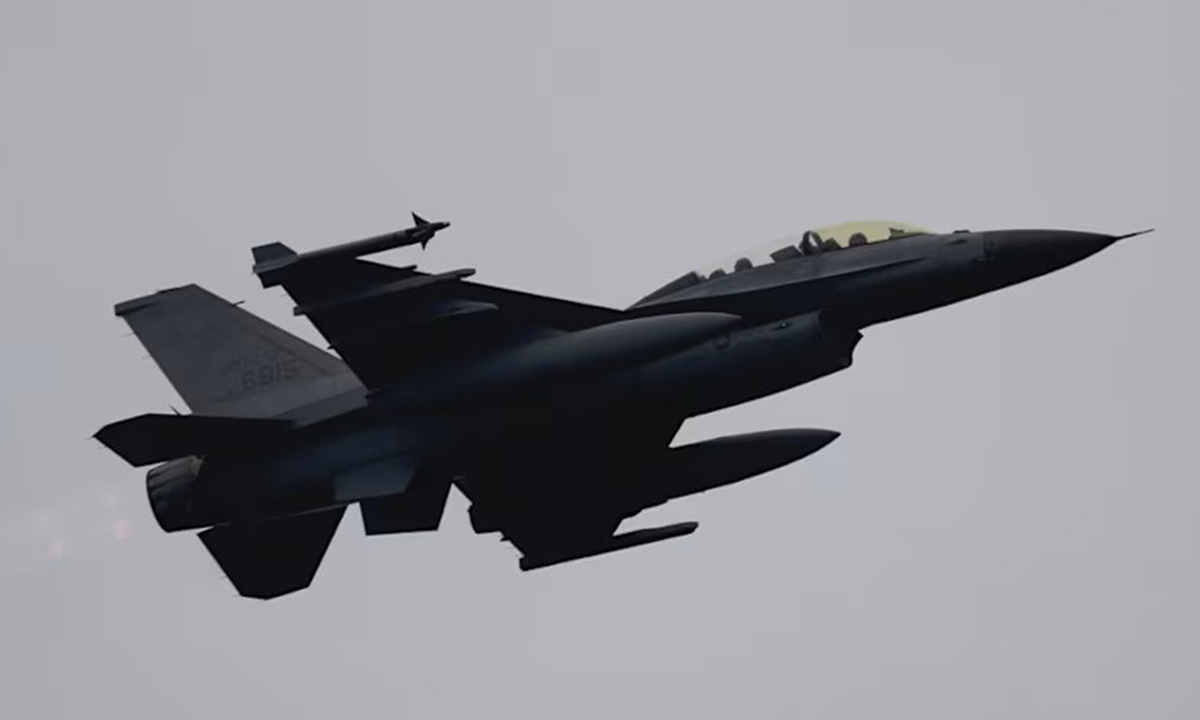 |
F-16 fighter jet of Taiwan during a 2018 exercise. *Photo: CNA* |
Following the crash, Taiwan officials launched a large-scale search operation. Resources deployed include a UH-60 helicopter, a C-130 transport aircraft, and coast guard vessels. Civilian ships operating near the crash site have also been asked for assistance. Taiwan leader Lai Ching-te has instructed the island's defense agency and related units to "prioritize the safety of military personnel and conduct a comprehensive search and rescue operation."
Adverse weather conditions are hindering search efforts. Waves are up to three meters high and strong winds are making it difficult for vehicles to operate. The cold weather also significantly reduces the pilot's chances of survival if he is in the sea.
The F-16V Viper is the most advanced variant of the US-made F-16 fighter jet. It features an APG-83 active electronically scanned array (AESA) radar, upgraded avionics, an improved cockpit display, and the capability to carry electronic warfare suites such as Viper Shield. Taiwan ordered a total of 150 F-16 fighter jets in 1993, with deliveries completed by 2001. Aircraft with tail number 6700 was initially an F-16A delivered by the US and was subsequently upgraded to the F-16V standard along with other fighter jets. The island has also ordered an additional 66 F-16V fighter jets from the US.
By Pham Giang (According to CNA, Aviationist)