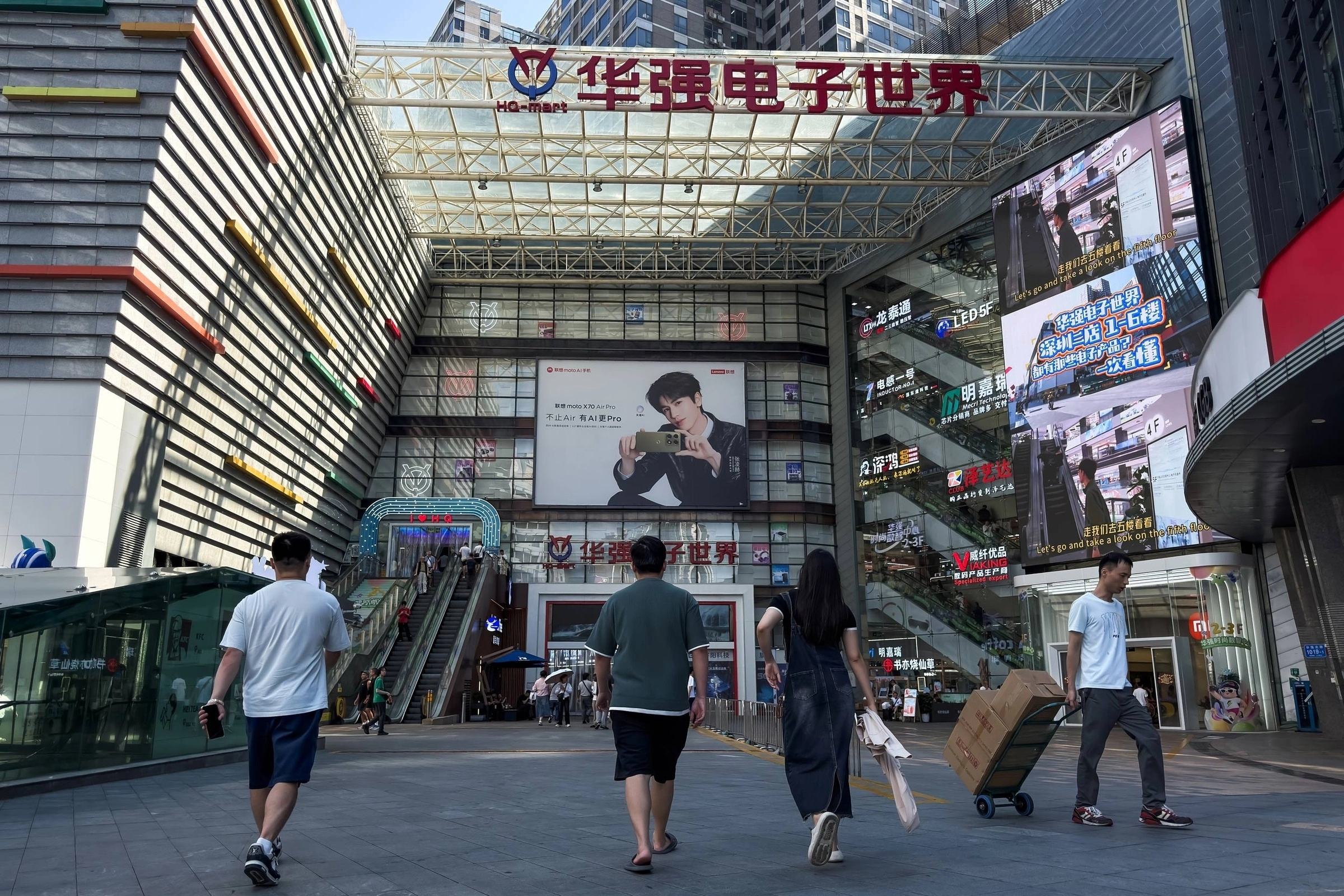
Huaqiangbei, often called China's number one electronics street, is also the world's largest electronics market, featuring tens of buildings across an area of 1,45 square kilometers in central Shenzhen, Guangdong province.
Here, customers navigate narrow, labyrinthine corridors to find electronic products, from the latest smartphones, drones, and robots to capacitors and resistors for manufacturing electronic devices.
The most striking aspect is not the goods, but the language. Merchants here do not speak Mandarin or Cantonese; instead, they converse in Teochew.
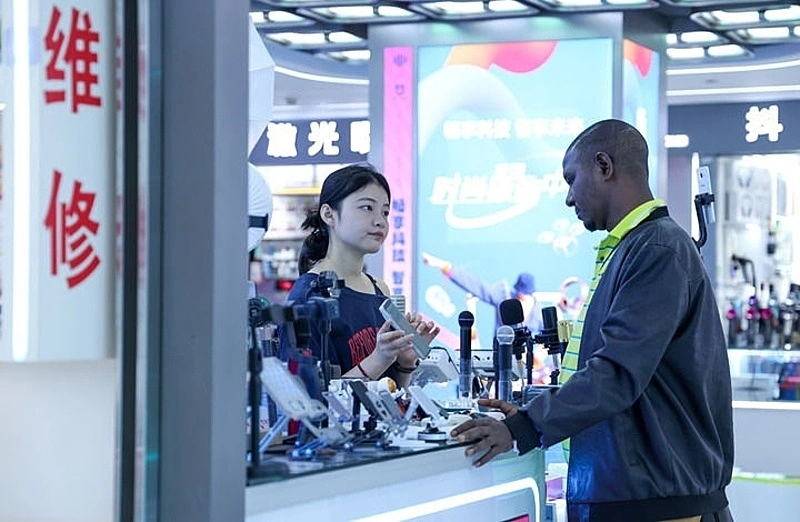 |
A vendor at Huaqiangbei Electronics Market introduces products to a foreign customer on 22/7/2025. Photo: *Xinhua*. |
Approximately 70% to 80% of merchants in Huaqiangbei are of Teochew origin, from a region in eastern Guangdong province. The Teochew people are well-known in China for their philosophy: "Wherever there is seawater, there are Teochew people; wherever there is money to be made, there are Teochew merchants."
Currently, about 15 million Teochew people live abroad, forming the largest ethnic group among overseas Chinese communities. Renowned entrepreneurs such as Hong Kong real estate tycoon Li Ka-shing, former chairman of China's largest electronics retail group GOME Huang Guangyu, and Tencent technology group founder Ma Huateng, are all of Teochew origin.
The history of Huaqiangbei began in September 1979, when Guangdong province decided to relocate three industrial-military factories from the northern mountainous region of the province to Shenzhen. Situated next to Hong Kong, the city was expected to kickstart the electronics industry through a "three imports and one compensation" model, combining foreign capital, technology, and components with local production capabilities.
After the three factories merged and restructured, the new enterprise was named Huaqiang Electronic Industry Company, with "Huaqiang" symbolizing a strong and prosperous China. The factory complex was divided by a road, with the northern area designated as an industrial zone. This area later became known as "Huaqiangbei" (north of Huaqiang).
At that time, Shenzhen, formerly Bao'an county, had only tens of thousands of residents. After nearly 50 years of development, Shenzhen is now a sprawling megacity with approximately 18 million residents.
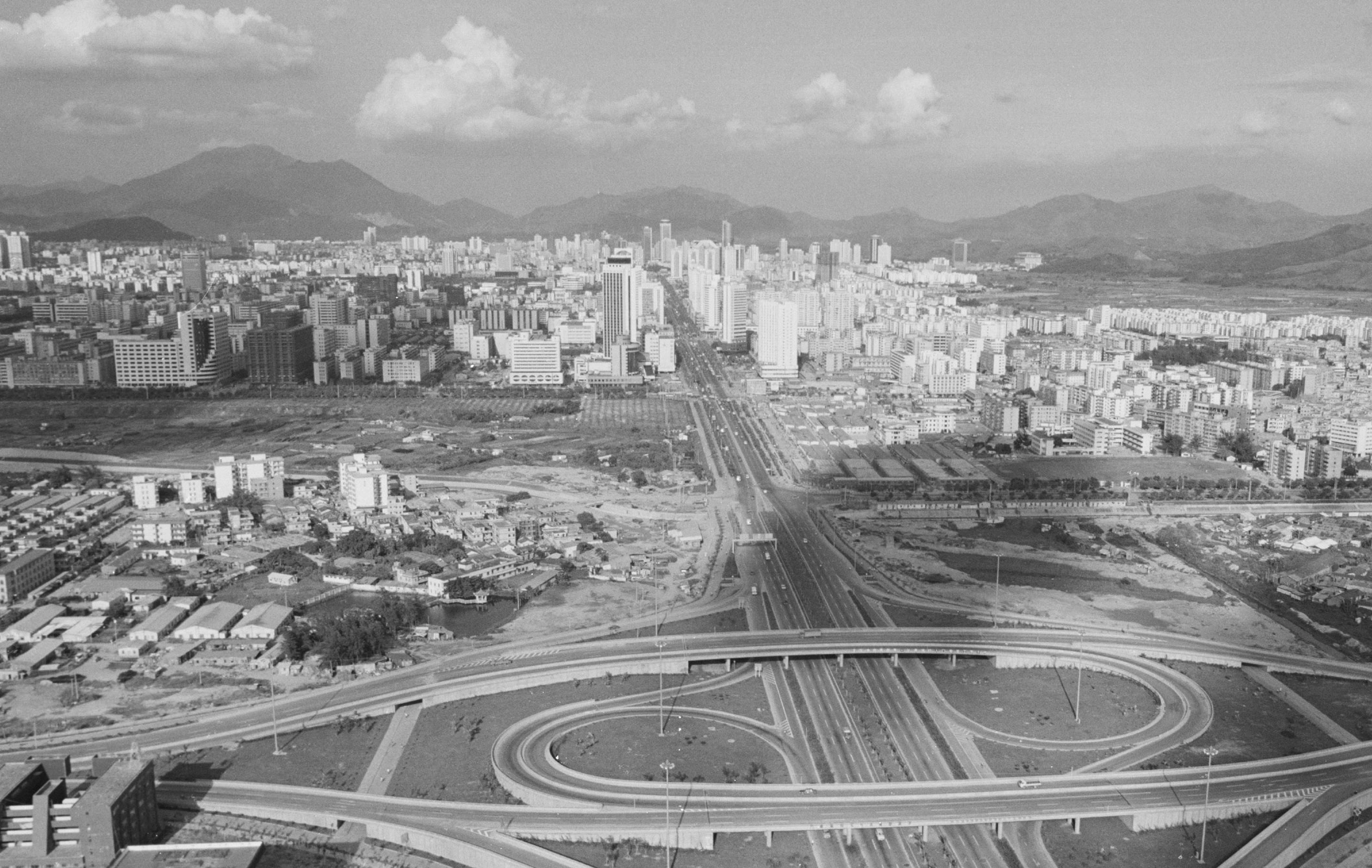 |
Shennan Boulevard, a 25,6-kilometer road running east-west through Luohu, Futian, and Nanshan districts of Shenzhen, in the 1990s. Photo: *VCG*. |
In 1980, Shenzhen was designated a Special Economic Zone. Two years later, the Ministry of Electronic Industry was established, and China began to accelerate the development of its electronics sector.
Shenzhen also designated Huaqiangbei as the industry's growth center. Simultaneously, numerous state-owned enterprises and defense factories shifted towards civilian electronics production, flocking to the area. Recognizing the vast potential, investors from Hong Kong and abroad quickly joined in. Huaqiangbei experienced a construction boom, with workshops continuously rising to accommodate new companies.
These construction sites welcomed the first wave of Teochew people. Thanks to a culture where predecessors assist newcomers, Teochew arrivals in Shenzhen immediately found relatives who provided accommodation and work.
By 1986, a significant opportunity arose, enabling them to dominate Huaqiangbei. At that time, Shenzhen consolidated over 100 small electronics companies into the SEG Group. However, this group faced bureaucratic hurdles: importing components required government approval and waiting for foreign currency clearance took a month, causing the company to miss orders.
To overcome these difficulties, SEG opened the first electronics component market in Huaqiangbei, modeled after Japan's Akihabara. The SEG Electronics Market was established, bypassing cumbersome permits to allow direct transactions between buyers and sellers.
This free-trade model seemed perfectly 'tailored' for Teochew businesspeople. Sourcing high-end components largely depended on international connections. With kinship networks extending from Hong Kong to Southeast Asia, Teochew merchants easily imported components through Hong Kong port to sell to domestic factories.
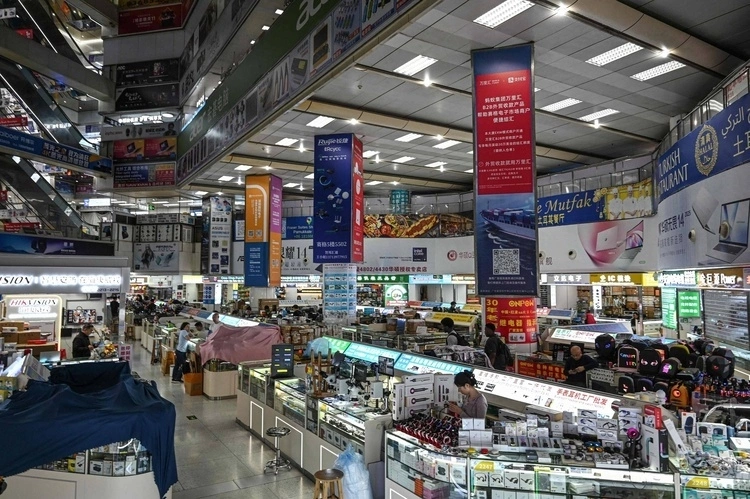 |
Huaqiang World Electronic Market in Shenzhen on 28/5. Photo: *VCG*. |
SEG Electronics Market in Shenzhen in 2026 (left) and the 1980s (right). Photo: *VCG*.
Additionally, they had a more discreet supply source in their Teochew homeland: Guiyu town, then the world's largest e-waste recycling market. Here, imported technological waste was disassembled and refurbished into chips, resistors, and capacitors. When official supply channels were obstructed, this refurbished "foreign waste" became a lifeline for countless factories.
This practice established a buying and selling habit in Huaqiangbei that persists today: people always distinguish between "new in box" (genuine, new) and "loose" (disassembled, refurbished, cheaper but less durable) goods.
When they arrived in Shenzhen, Teochew people brought their culture of mutual support, encompassing internal credit, self-mediation of disputes, and hometown associations. Simply speaking Teochew instantly makes one "part of the family."
Here, family ties and neighborly responsibility often supersede business principles. Urgent deals can be sealed with a verbal promise. When facing financial difficulties, they easily borrow money from wealthy relatives without needing collateral.
Furthermore, "confidential" information such as price fluctuations, clearance stock, or fraudsters is shared discreetly over tea, in restaurants, or through chat groups. This is a competitive advantage that someone born into a Teochew family inherently possesses, while outsiders would take many years to build.
This powerful patronage network, combined with innate business acumen and daring, has enabled the Teochew people to thrive in Huaqiangbei. Younger Teochew generations gradually share the belief that if one is not academically gifted, they can still go to Huaqiangbei, rely on relatives to rent a "one-meter stall," and begin their dream of getting rich.
 |
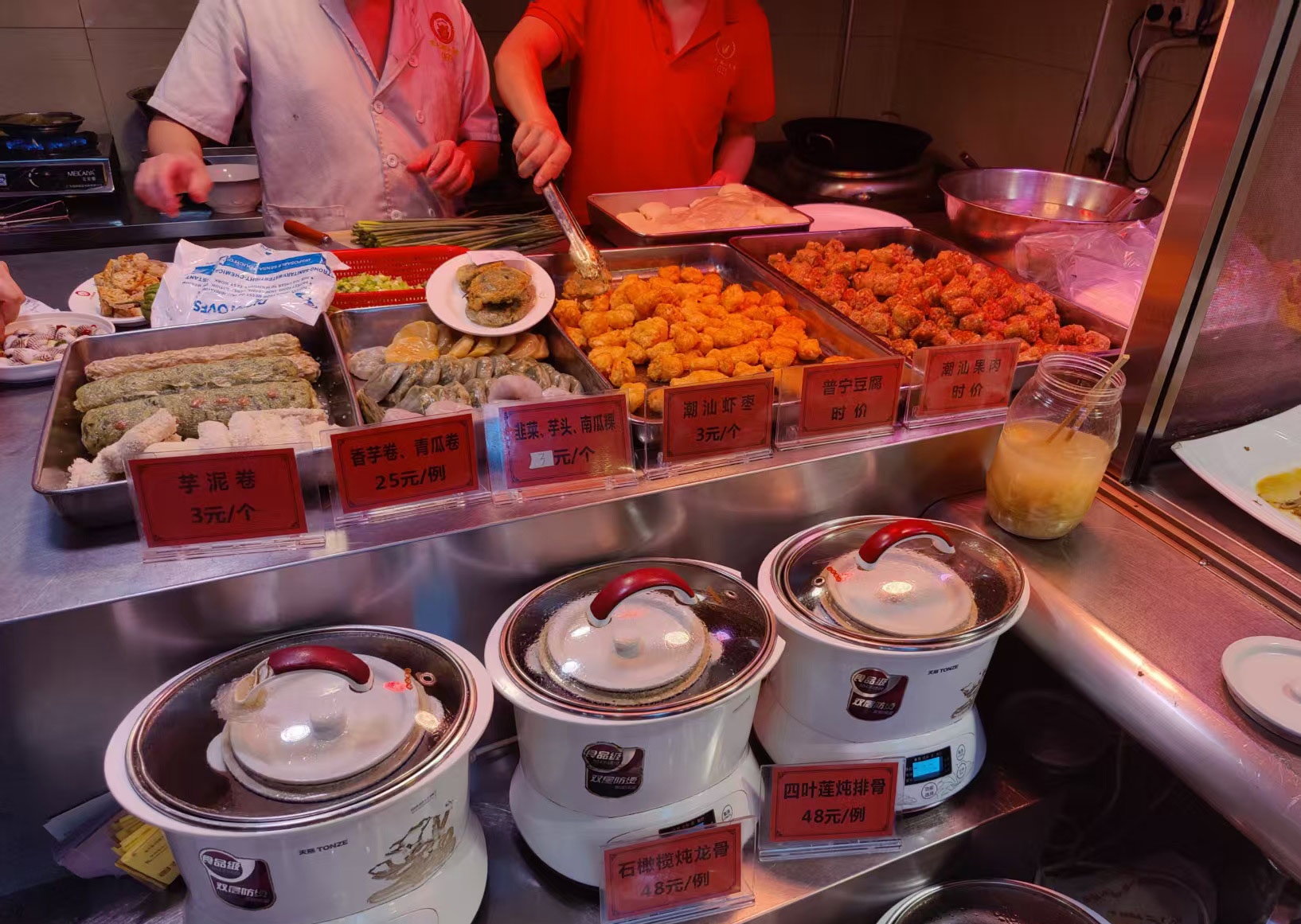
A stall selling Teochew food near Huaqiangbei. Photo: *Sixth Tone*. |
The Teochew community has transformed Shenzhen's cultural landscape. Former rural villages in Shenzhen have become miniature "Teochew villages," home to countless restaurants serving specialized local Teochew cuisine.
Ultimately, this is a modern version of their historical "journey to the southern seas." Still relying on networks of relatives and predecessors, but instead of choosing Bangkok or Singapore, today's young Teochew choose Shenzhen.
 |
Huaqiangbei has now cooled down. The boom in online shopping and traffic congestion have made the market significantly less crowded. Not content to stand still, Teochew merchants quickly ventured into international e-commerce, opening Amazon stores and expanding into selling cosmetics and imported food.
Regardless of market changes, the Teochew within this network are adapting to new industries, maintaining their sharp business tradition wherever they are.
Hong Hanh (According to *Sixth Tone*, *Guangdong News*).