Following the World Cup 2026 final between Spain and Argentina on 19/7, one of the two teams will hoist the trophy designed by sculptor Silvio Gazzaniga over half a century ago.
The Italian artisan crafted the trophy in his Milan workshop, aiming to capture three core emotions of football within a single form: the players' dedication, the fans' overwhelming joy, and the ultimate moment of triumph.
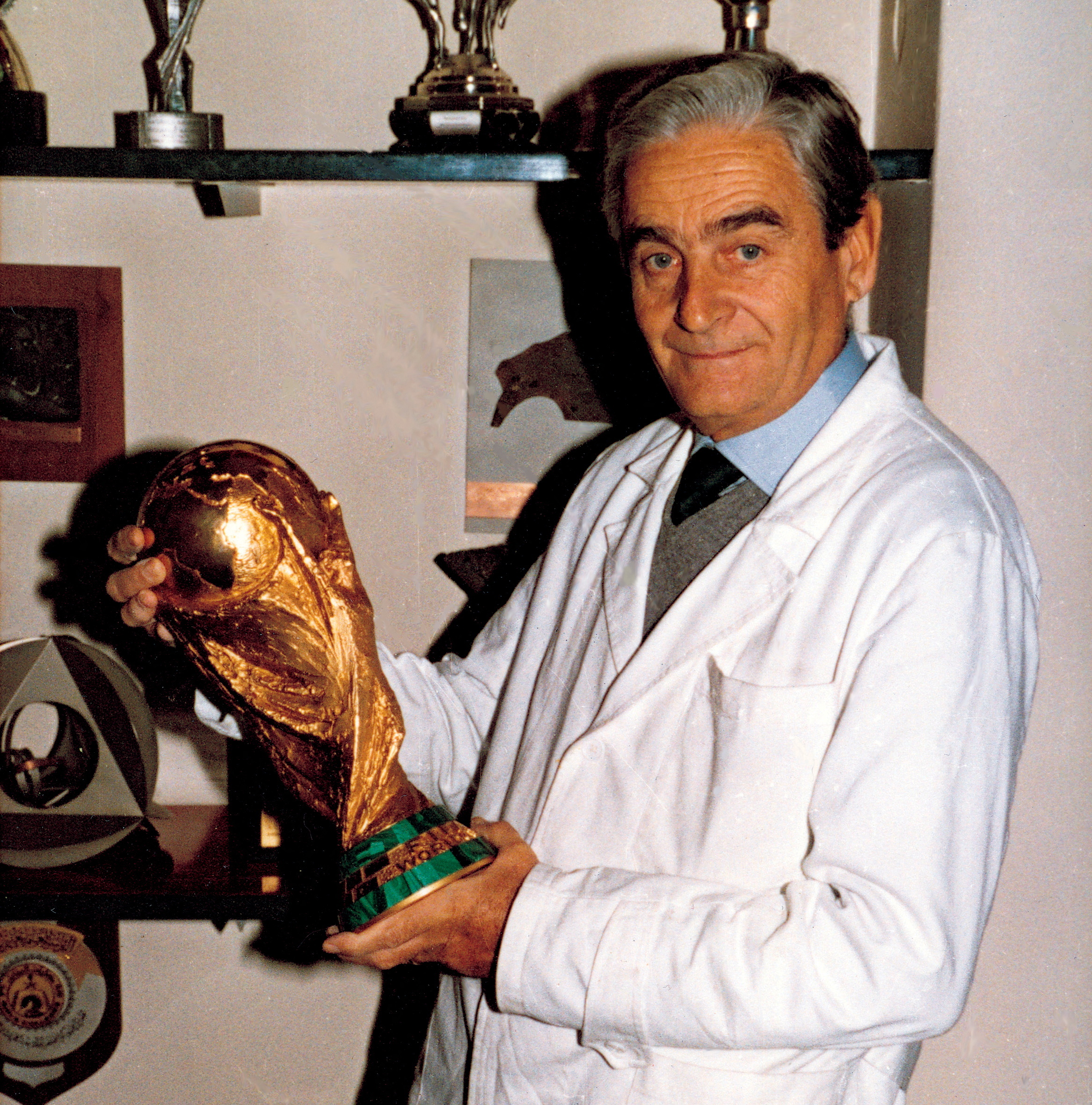 |
Sculptor Silvio Gazzaniga with his creation in his Milan workshop in 1972. Photo: silviogazzaniga.com |
The current FIFA World Cup trophy replaced the Jules Rimet Cup, which debuted at the 1930 tournament. The original cup depicted the Greek goddess of victory, Nike, and was named after the tournament's founder. In 1970, Brazil became the first nation to win the World Cup three times, earning the right to permanently keep the Jules Rimet Cup. This prompted FIFA to launch a competition for a new trophy design.
FIFA received over 50 proposals in the competition. However, only Silvio Gazzaniga submitted a complete model, which allowed the judging panel to clearly visualize both the aesthetic and conceptual aspects of his work.
Silvio Gazzaniga's winning design features two human figures reaching upwards to support a globe. Giorgio, the sculptor's son, explained that his father developed numerous sketches before conceiving the idea of the globe intertwined with a spiral structure, reminiscent of DNA.
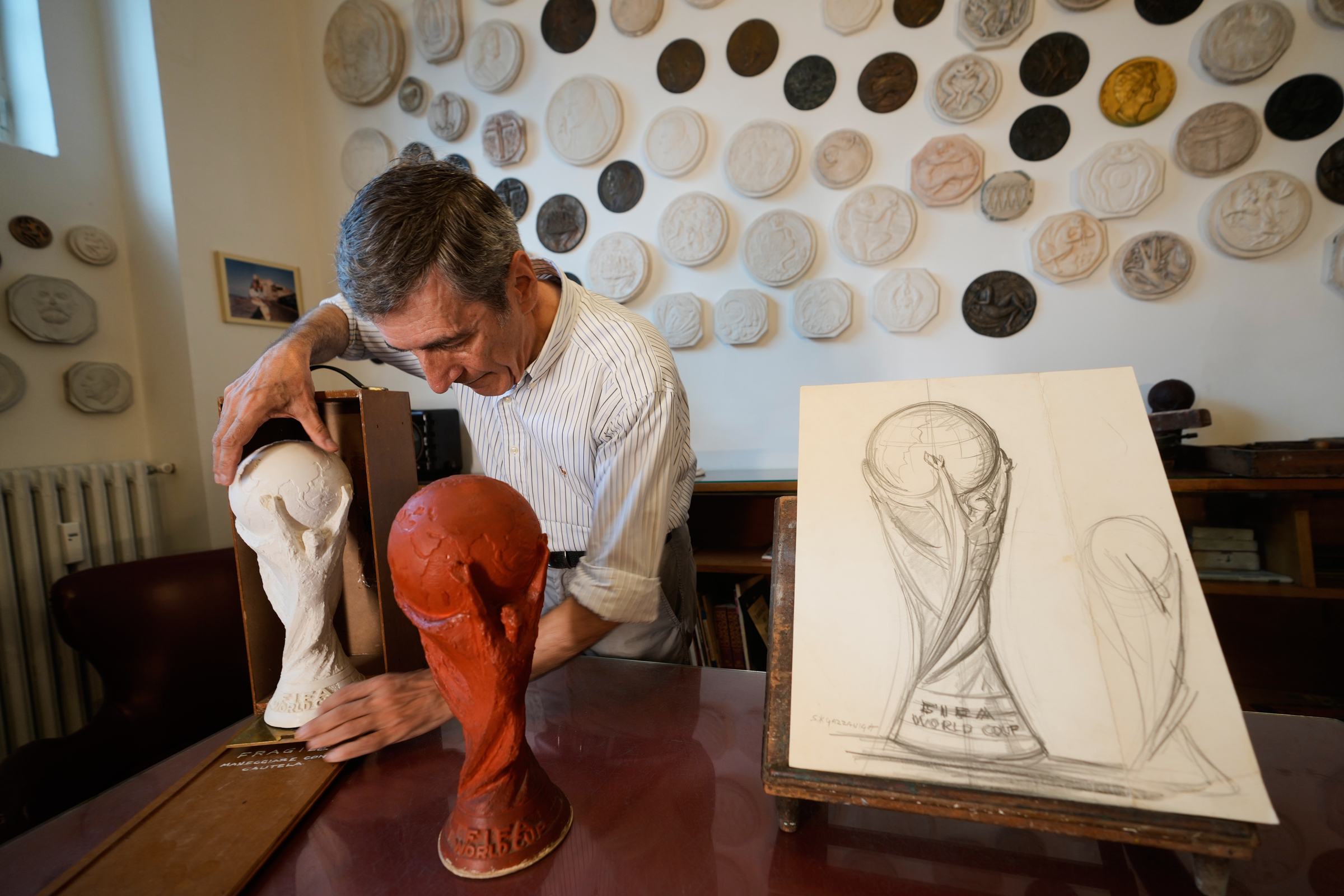 |
Giorgio, son of sculptor Silvio Gazzaniga, presents drawings, molds, and sample engravings of the World Cup trophy in a photo taken on 11/7. Photo: AP |
Giorgio elaborated that the spiral represents players' ascent towards the globe, symbolizing their fighting spirit and sacrifices made to achieve glory. The two arms also serve as a metaphor for the wings of the goddess of victory, simultaneously expressing the fervent jubilation of fans.
The World Cup 2026 marks the 14th occasion this particular trophy, designed by Silvio Gazzaniga, will be presented. FIFA has confirmed its continued use until at least the conclusion of World Cup 2038.
The original trophy stands 36 cm tall and is cast from 18 carat gold. It rests on a base featuring two rings of green malachite stone, which symbolize the football pitch.
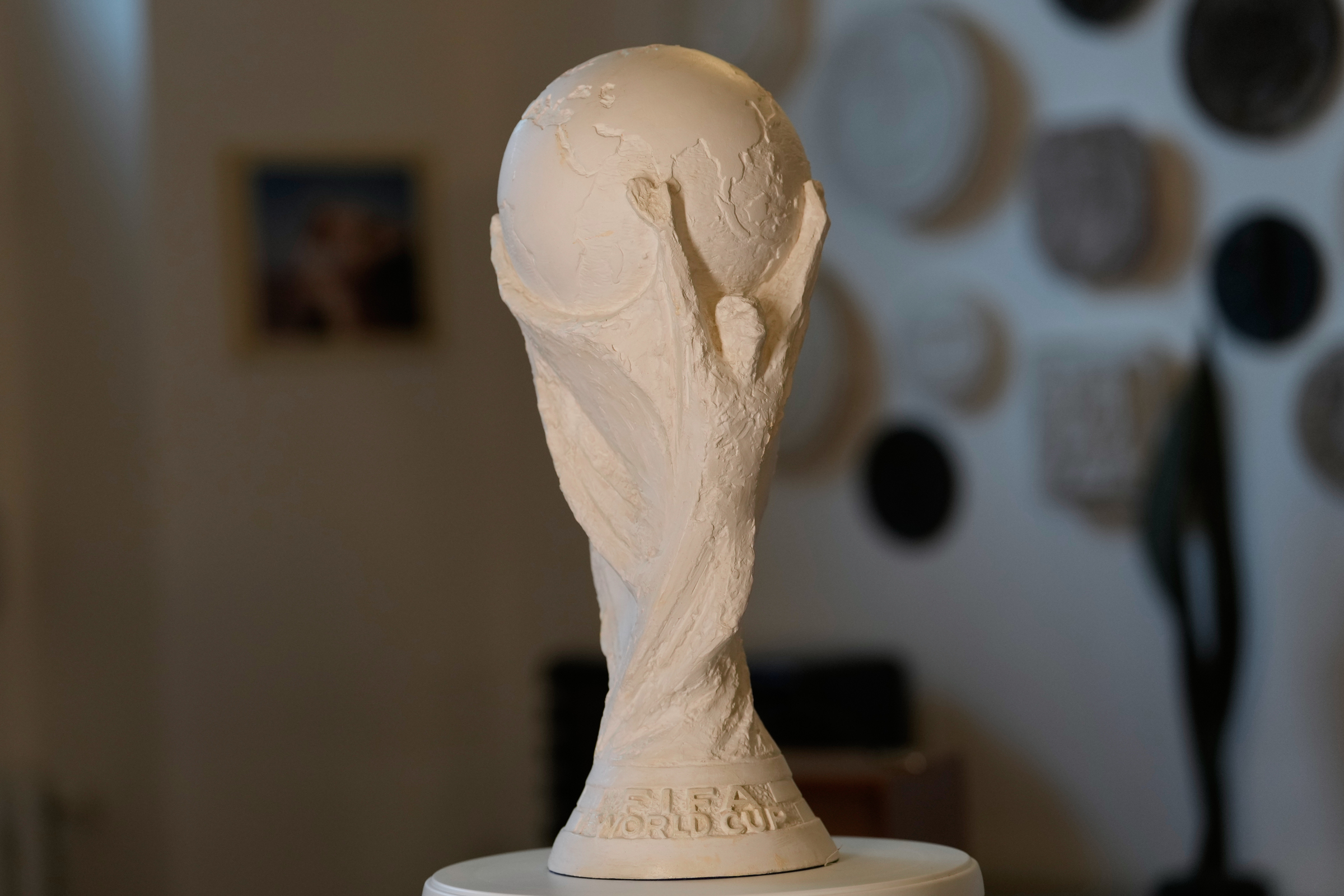 |
The sample engraving of the World Cup trophy that Silvio Gazzaniga submitted to FIFA in the 1970s. Photo: AP |
After each World Cup tournament, the original trophy is returned to FIFA for preservation at its headquarters in Switzerland. The victorious team, in turn, receives a gold-plated replica. FIFA also abolished the previous rule that allowed any team winning the championship three times to permanently retain the original trophy.
Silvio Gazzaniga passed away in 2016 at age 95. Beyond the iconic World Cup trophy, he also created many other prestigious awards, including the UEFA Cup and the European Super Cup. The Gazzaniga family meticulously preserves his original workshop on the outskirts of Milan, complete with his sketches, the prototypes submitted to FIFA, and the wax molds.
Giorgio Gazzaniga fondly recalled watching the 1974 World Cup final between West Germany and the Netherlands with his family, the first time his father's trophy was awarded. "The joy truly erupted when the West German team lifted the trophy in Munich, and the entire stadium exploded with excitement. That was the moment an ordinary object became a symbol," he shared.
Thanh Danh (According to AP)