The three-story green house belonging to the Pyakurel family in Dhunge Bazaar, Nuwakot district, Nepal, has become a symbol of resilience after a devastating flash flood ravaged the area on 26/8. While numerous structures along the Trishuli river collapsed and were swept away by the murky floodwaters, this green house remained intact, protecting the Pyakurel family inside.
Chhatra Bahadur Pyakurel, 67, recounted that on the morning of 26/8, he had just dropped his grandson off at the school bus and returned home when the flood hit. The floodwaters originated from an ice block that collapsed from Mount Langtang Lirung in Nepal, near the border with Tibet. For over an hour, the family could only watch helplessly from their balcony, then the rooftop, as the water rose and grew more aggressive. Lakshmi Pandey, Pyakurel’s daughter-in-law, described the experience: "Water slammed into the house from both sides, and the entire structure began to shake violently. It felt exactly like the terrible earthquake in Nepal in 2015."
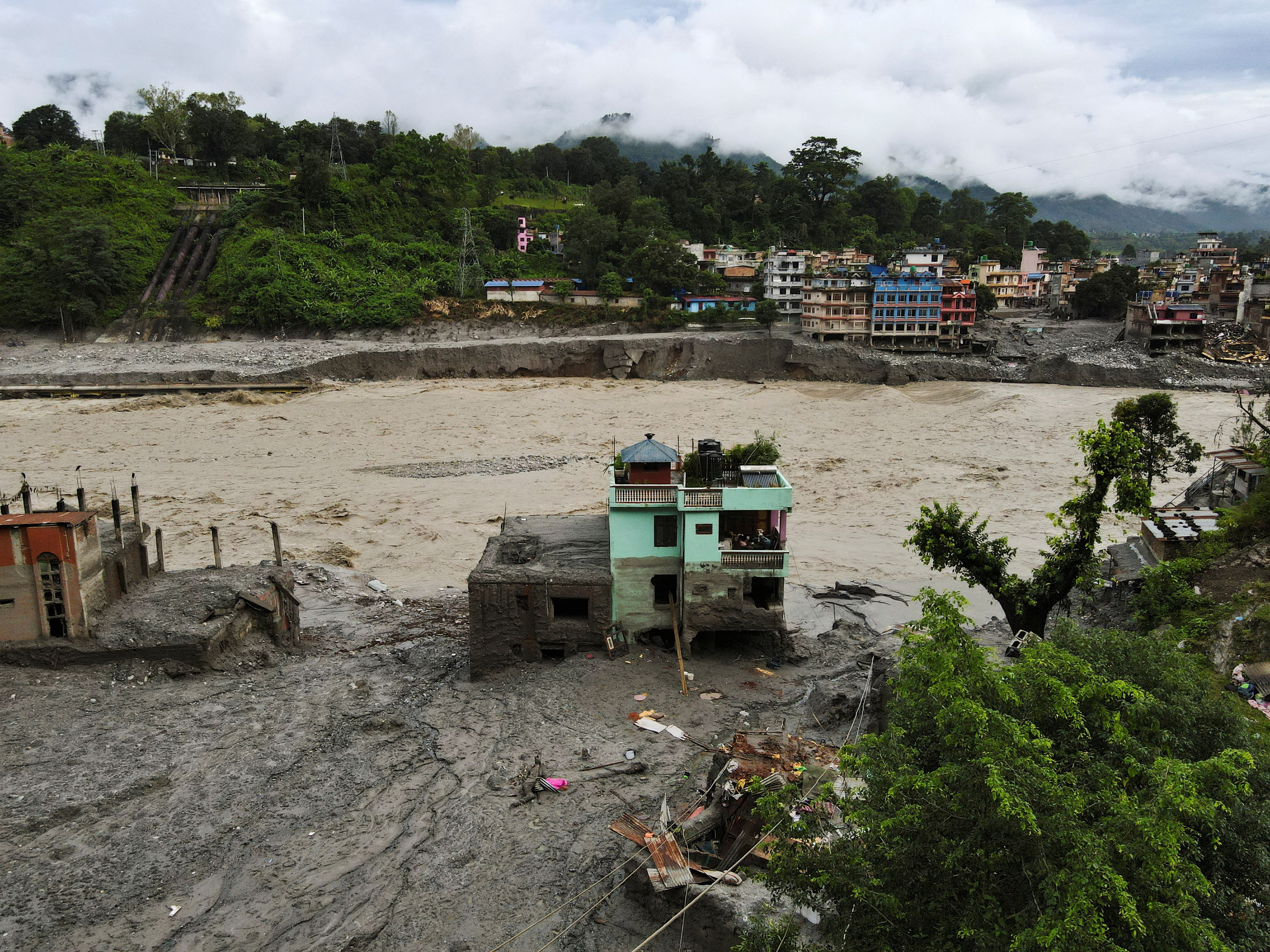 |
The green house remaining after the flood in Nuwakot district, Nepal, on 1/9. Photo: Reuters |
Inside the house were Pyakurel and his wife, their son and daughter-in-law, and a neighbor. As surrounding homes successively crumbled before the water's destructive force, the family believed they had no chance of survival. "We didn't know what would happen or if we would survive," Pyakurel recalled, adding that the family realized they could do nothing but surrender to fate. His only concern was his grandson who had gone to school. "If all of us died, who would take care of him?"
However, the family survived. After the flood receded, the first and second floors of the house were left with little more than supporting pillars. On the third-floor balcony, a washing machine remained with unwashed clothes. The roof, where a water tank, a solar water heater, a small family shrine, and many ornamental plants were located, appeared completely intact.
The house quickly gained fame on social media as images of it standing alone amidst a desolate, mud-covered landscape circulated widely. It has even been marked with its own coordinates on Google Maps as a point of interest. Bishu Mani Rimal, who lives nearly 5 km downstream, also visited the miraculous house. "Who could believe that people in such a situation would survive? I think they had less than one percent chance of survival," he stated. Rimal observed the devastation around him, noting that power generation turbines on the opposite riverbank had vanished, and an entire bustling market shared the same fate. Four houses owned by a large family were also swept away by the flood. "There was one house so new they hadn't even moved in yet," he added.
Various theories have emerged regarding the house's survival. Pyakurel believes the ground floor, built in 1995 when he opened a grocery store, withstood the flood because its pillars were drilled deep into the bedrock. Other suggestions include a mountain ridge protruding directly into the flood's path, which might have helped reduce the water's force as it swept past the house.
Adrian McCallum, head of engineering at the University of Sunshine Coast in Australia, suggested that the water likely flowed beneath the house, similar to traditional Queenslander stilt houses, which would have reduced pressure on the structure. "The key factor is that this green house appears to be built on hard bedrock, with a strong reinforced concrete structure," he explained. McCallum also theorized that a sandbar upstream might have protected the house from the main force of the flood.
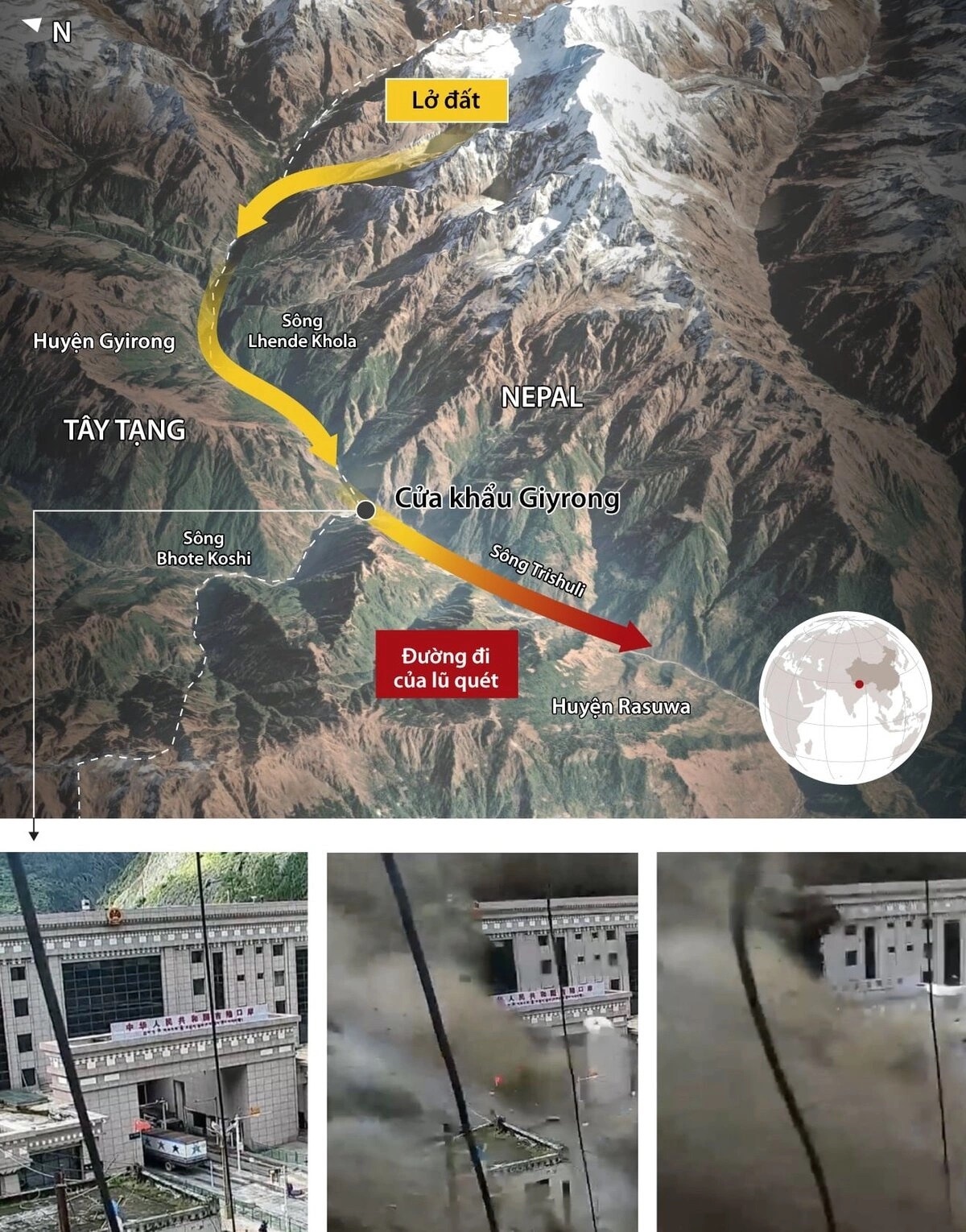 |
The path of the tsunami-like flash flood on the Nepal - China border on 26/8. Graphic: Reuters |
Earlier this week, the Pyakurel family returned to their house to assess the damage. "Everything is lost. Even the most important family documents like identity cards, passports, and land ownership certificates are gone," Pyakurel said. Despite their losses, he expressed gratitude that his grandson was safe, as the school was located on higher ground. The family was reunited the following day. Pyakurel also believes his family was divinely protected during the disaster.
By Thanh Tam, drawing from NY Times, ABC, Reuters