In many affluent US neighborhoods, an increasing number of homes are brightly lit with bare glass windows, resembling "showrooms." Passersby can look directly into living rooms featuring flat-screen TVs, marble kitchen islands, or chandeliers suspended from the ceiling.
Uncurtained windows are becoming a prominent feature in upscale urban areas across the US. This "no-curtain" phenomenon initially gained traction in Brooklyn Heights, a renowned affluent neighborhood in New York. It then gradually spread to younger, high-income residents living in redeveloping urban areas nationwide.
While most Americans still use curtains and value privacy, data suggests that the practice of leaving windows uncovered appears linked to income levels.
A large-scale 2013 study by the US Department of Energy revealed that individuals with annual incomes exceeding 150,000 USD were nearly twice as likely to forgo curtains compared to those earning 20,000-29,000 USD. This clearly indicates a general trend: The wealthier one is, the higher the likelihood of not using curtains.
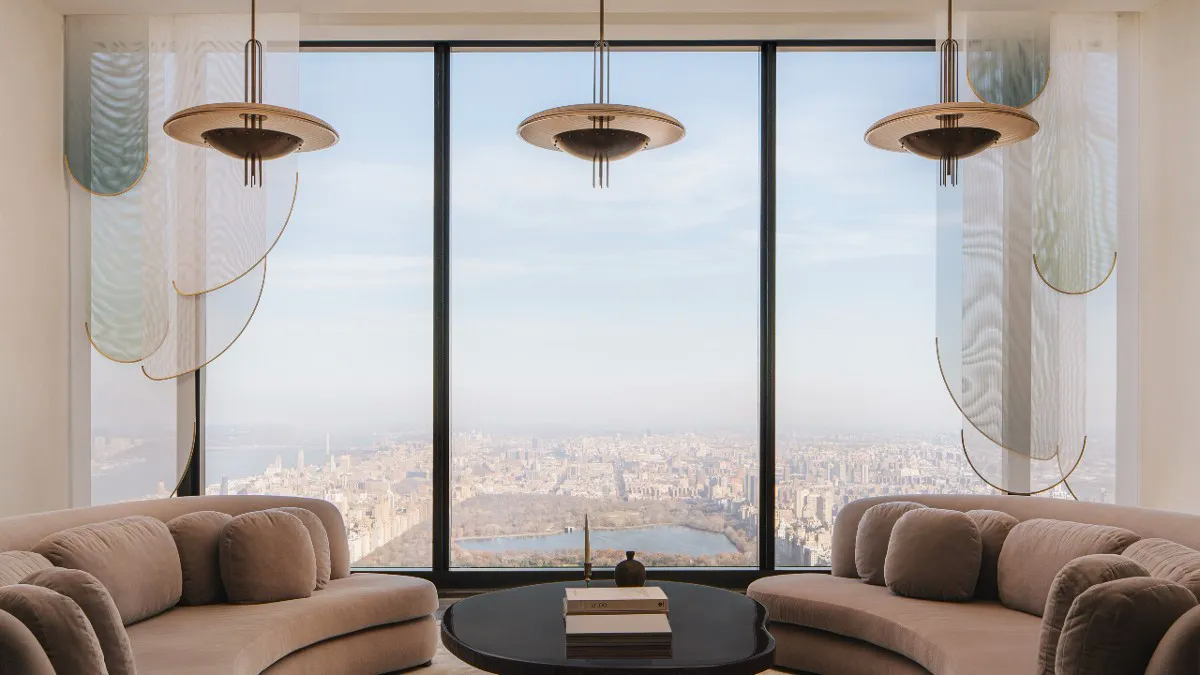 |
A penthouse at Steinway Tower, New York, uses sheer fabric instead of curtains to maintain an unobstructed view of Central Park. Photo: Studio MTX |
One reason relates to living costs. From a utility perspective, uncurtained windows welcome natural light, create an airy feel, and can improve mood. For luxury homes that prioritize light and views, curtains are sometimes seen as an impediment to this goal.
However, bare windows also make occupants easily visible from outside. In summer, this design can increase indoor temperatures, leading to higher air conditioning costs. For many families, especially in densely packed neighborhoods, on crowded streets, or when energy costs are a concern, worries about privacy and electricity bills make them prioritize using curtains.
For the wealthy, however, the "calculation" changes due to different housing conditions. Larger homes often have more rooms and windows, allowing them to choose which windows to leave open for light and which to cover for privacy. They also do not need to worry excessively about heating or cooling costs. They have more options to enjoy natural light while ensuring privacy.
Another factor is a sense of security. In the US, there was a period when common advice was to draw curtains when leaving home to avoid "inviting" thieves to see valuables. In the 1980s, police often warned that forgetting to close curtains could mean "showcasing" assets to criminals, especially in urban areas. In suburban areas, many families still leave windows uncovered, implicitly indicating they feel safer.
However, the habit of bare windows gradually spread to affluent urban areas. In Manhattan, New York, sheer curtains or no curtains became fashionable. Interior designer Thomas Jayne, who works with clients in New York and New Orleans, stated that clients increasingly prefer minimalist styles, sheer curtains, or even no curtains at all.
Wealthy homeowners, capable of affording modern security systems, do not feel the need to close curtains. Allowing outsiders to admire their beautiful home interiors is not only a display of aesthetic taste but also demonstrates the homeowners' confidence in the level of security they enjoy.
Ha Linh (According to The Atlantic)