The period of late 1945 and early 1946 marked the return of millions of US soldiers from World War II. This massive reunion initiated the Baby Boomer phenomenon in the US.
The pioneering generation of this population boom began turning 80 this summer, leaving a significant mark on US society. Notably, the summer of 1946 became a historical milestone as the birth year of three US presidents: Donald Trump (June 14, 1946), George W. Bush (July 6, 1946), and Bill Clinton (August 19, 1946).
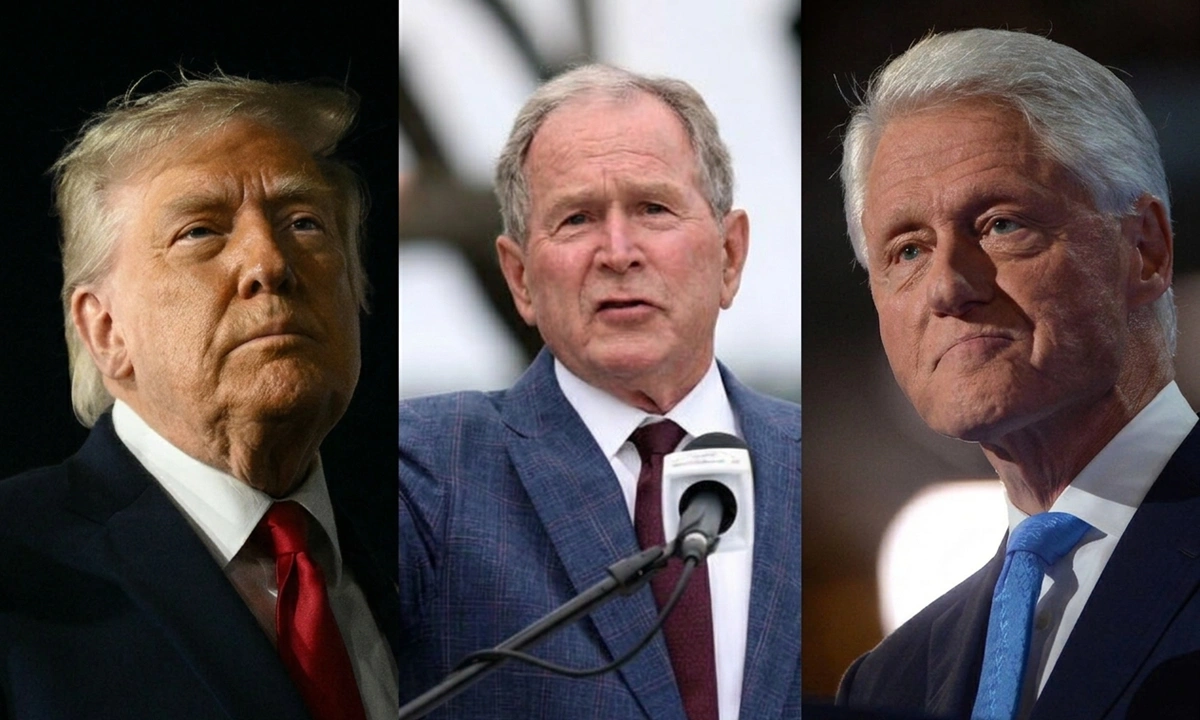 |
From left: US President Donald Trump, former President George W. Bush, and former President Bill Clinton. Photo: AFP |
From left: US President Donald Trump, former President George W. Bush, and former President Bill Clinton. Photo: AFP
Growing up in a society filled with postwar stereotypes, the pioneering Baby Boomer generation yearned to live life on their own terms, according to Joe Klein, a veteran political commentator also born during this period.
They listened to and played rock 'n' roll. They participated in student protests. The high school graduating class of 1964 from this generation also recorded the highest test scores in US history.
Compared to their parents' generation, more of them attended college, and fewer enlisted in the military. All seven presidents born between 1908 and 1924 served in various capacities during World War II.
Donald Trump and Bill Clinton, two of the three presidents born in 1946, never served in the military, while George W. Bush served only in the Air National Guard in Texas.
Despite being born in the same summer and graduating college in 1968, the three presidents born in 1946 had vastly different backgrounds and political trajectories. President Bush represented a long-established elite class in Texas, with a father who was a veteran politician. President Trump came from the newly wealthy circles in New York, influenced by his real estate developer father. Meanwhile, President Clinton grew up in difficult circumstances in Arkansas, never knowing his biological father and experiencing a complicated childhood with his stepfather.
However, all three attended prestigious universities. President Clinton graduated from Georgetown University and Yale Law School. President Bush received a bachelor's degree in history from Yale University in 1968, then earned a master of business administration (MBA) from Harvard Business School in 1975. President Trump, in contrast, earned a bachelor's degree in economics from the Wharton School at the University of Pennsylvania.
According to historian Michael Barone, President Clinton was a political prodigy, with an ability to quickly grasp public policy and its political consequences.
He began his political career early, managing Democratic Congressman George McGovern's campaign in Texas in 1972 and narrowly losing to a Republican Congressman in 1974. In 1976, he was elected attorney general of Arkansas, and by 1979, at age 32, he became the state's governor.
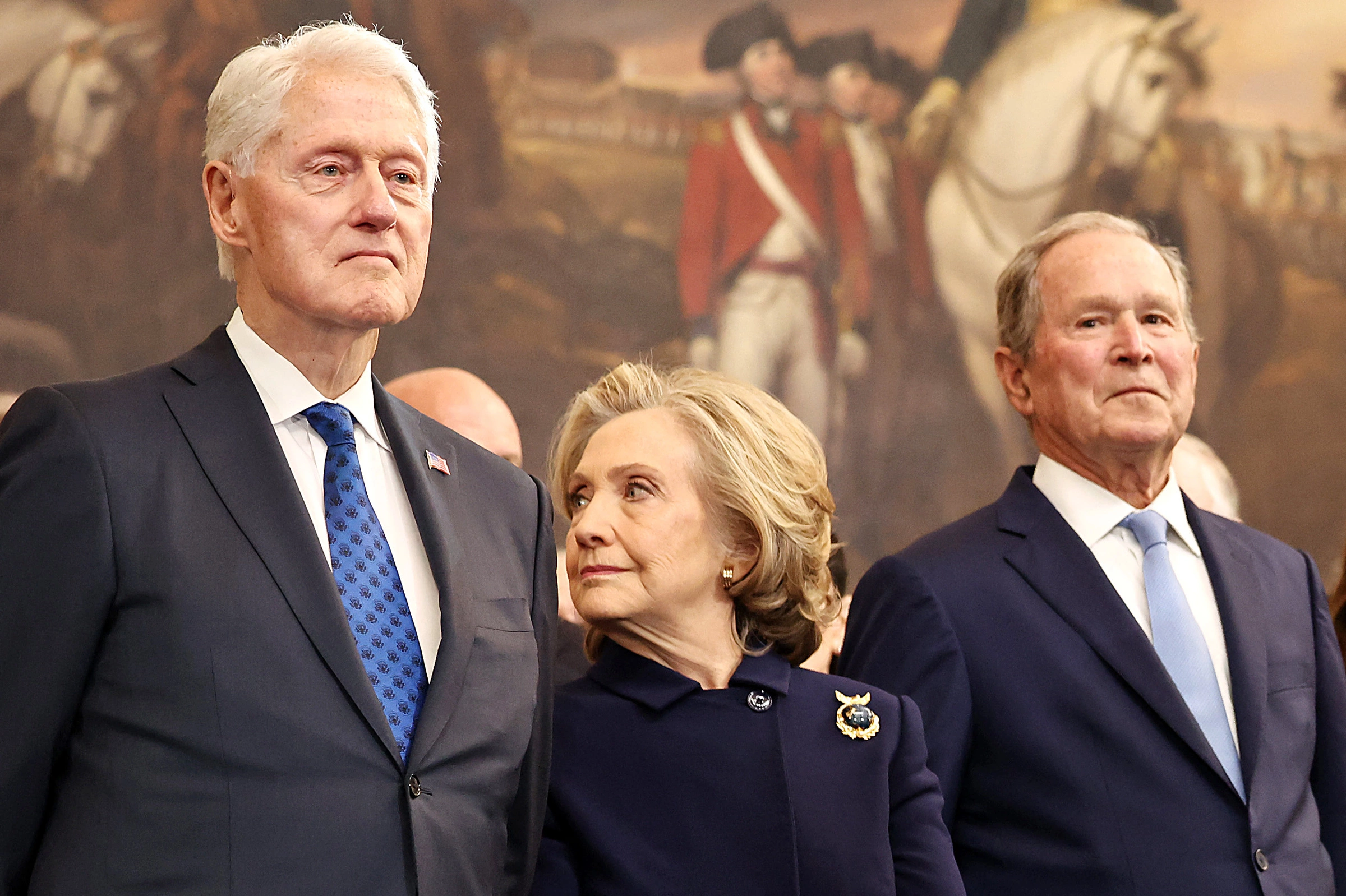 |
From left: Former President Clinton and his wife, and former President Bush, attended President Trump's inauguration in Washington in 1/2025. Photo: AFP |
From left: Former President Clinton and his wife, and former President Bush, attended President Trump's inauguration in Washington in 1/2025. Photo: AFP
"Clinton had considerable luck, and with his outstanding political talent, he seized those opportunities", Barone observed. "Even when his career seemed to be declining, specifically when he was re-elected governor in 1990 with a less than impressive vote share, he still decided to risk running for president against the incumbent, who had started that year with an approval rating of up to 91%."
During his term, President Clinton also faced setbacks and scandals. Yet, he was adaptable and constantly evolving, even rewriting his entire State of the Union address on the way to the Capitol.
President Bush, in some ways, was the complete opposite, according to historian Barone. After his defeat in the 1978 House race, he largely set politics aside. After his father lost to Clinton, he seemed to believe God had chosen him for the presidential path and worked to achieve that goal.
Bush's strength was his steadfastness, but his weakness was inflexibility, Barone noted. He was slow to change course midway, most evident in the Iraq issue and social security reform. When his approval ratings declined from 2006 to 2008, the Republican Party suffered its heaviest losses in 25 years.
Regarding President Trump, many initially believed he could not win when he first ran for the White House in 2016, as he was then a complete "political outsider", known primarily as a businessman and reality television star.
But against all predictions, he defeated Democratic candidate Hillary Clinton, a much more seasoned politician who was a former US Secretary of State and the wife of former President Clinton.
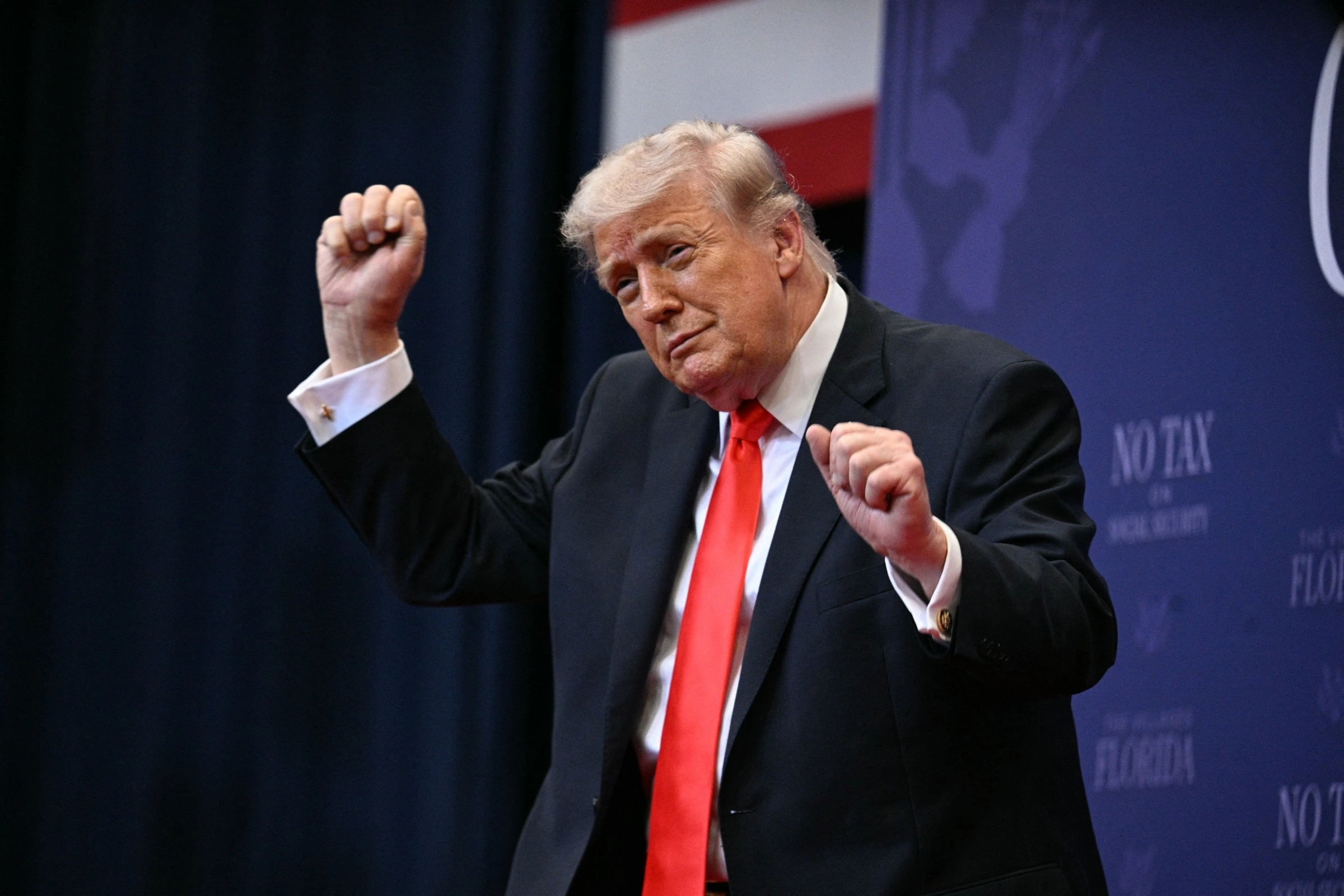 |
President Trump performs his signature dance after concluding a speech on tax and social security in Florida on 1/5. Photo: AFP |
President Trump performs his signature dance after concluding a speech on tax and social security in Florida on 1/5. Photo: AFP
According to the BBC, part of President Trump's appeal to voters was that he did not speak or act like other politicians. His first entry into the White House did not change that. President Trump continued to post on social media at any hour. He also maintained his unpredictable and frank style, which had become his personal trademark.
Despite losing his re-election bid in 2020, he made a strong comeback in the 2024 election, securing an overwhelming victory against Democratic opponent Kamala Harris.
Returning to the White House with an extensive agenda, President Trump immediately implemented his core commitments to restructure the economy, tighten borders, and reform the federal government apparatus, all under the "America First" principle.
However, President Trump's second term continued to be marked by controversial decisions, such as imposing tariffs on numerous countries or initiating a conflict in Iran, which destabilized global markets.
President Trump's strong reform measures generated excitement among his supporters, but they also created considerable anxiety domestically and increased caution from international allies and partners amid a volatile global landscape, political commentator Klein noted.
Vu Hoang (According to BBC, Washington Post, AFP, AP)