These male mosquitoes do not bite humans and carry an intestinal bacterium called Wolbachia. Wolbachia occurs naturally in some mosquito species, and scientists discovered they could leverage this: if infected male mosquitoes mate with uninfected females, the eggs laid will not hatch.
This mosquito-fighting initiative was proposed by Bee Safe Mosquito Control, targeting household customers in the US. The company plans to release 600,000 Aedes aegypti mosquitoes in Washington D.C. by the end of summer.
"Climate change is creating a disaster waiting to happen", said Montgomery, 32, founder of Bee Safe Mosquito Control, on 4/8.
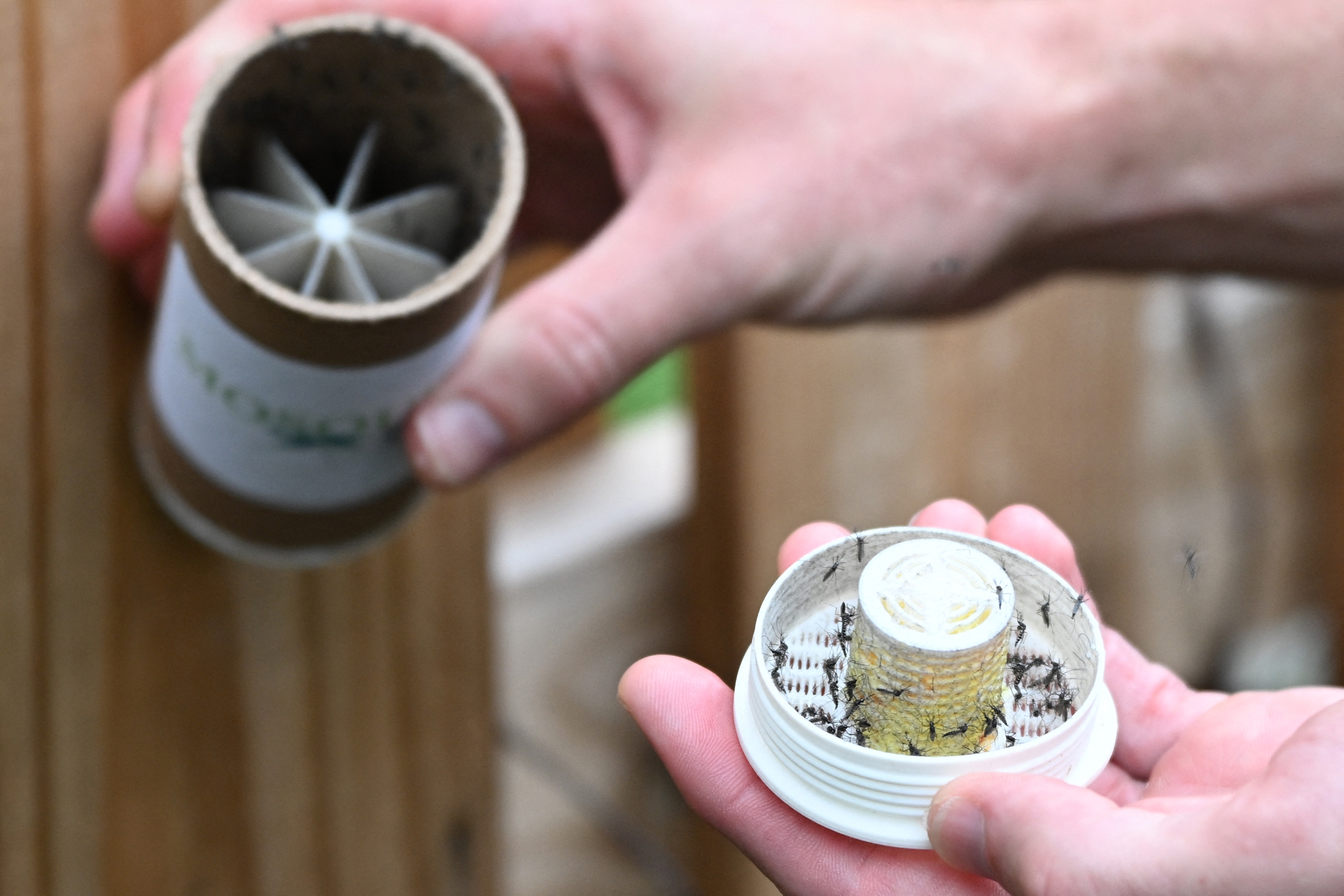 |
Todd Montgomery, owner of Bee Safe Mosquito Control, releasing Aedes aegypti mosquitoes in Silver Spring, Maryland, on 4/8. *Photo: AFP*
Rising temperatures have extended the number of hot, humid days across much of the US, creating favorable conditions for the breeding season of this disease-carrying insect. This mosquito control method targets only the Aedes aegypti mosquito. Though not native, they are the primary culprits in transmitting dengue fever. This concern is more urgent as northern Virginia reported its first locally acquired dengue case last week.
An electrical engineer by training, Montgomery founded the company in 2023 with the goal of eliminating mosquito spraying in residential gardens. "My decision to start the company stemmed from my passion for native plants and my love for pollinators. Seeing people spray pesticides so close to my home motivated me to eliminate that risk", Montgomery shared, adding that he is pursuing a master's degree in entomology.
This is also a major concern for customers. They want to protect their families and pets from common mosquito spray chemicals like bifenthrin, a persistent chemical suspected of causing cancer.
"We have a beautiful garden. I used to plant in May or June, then pretty much leave it until October", said Sandra Marquardt, who had to abandon her garden due to mosquitoes.
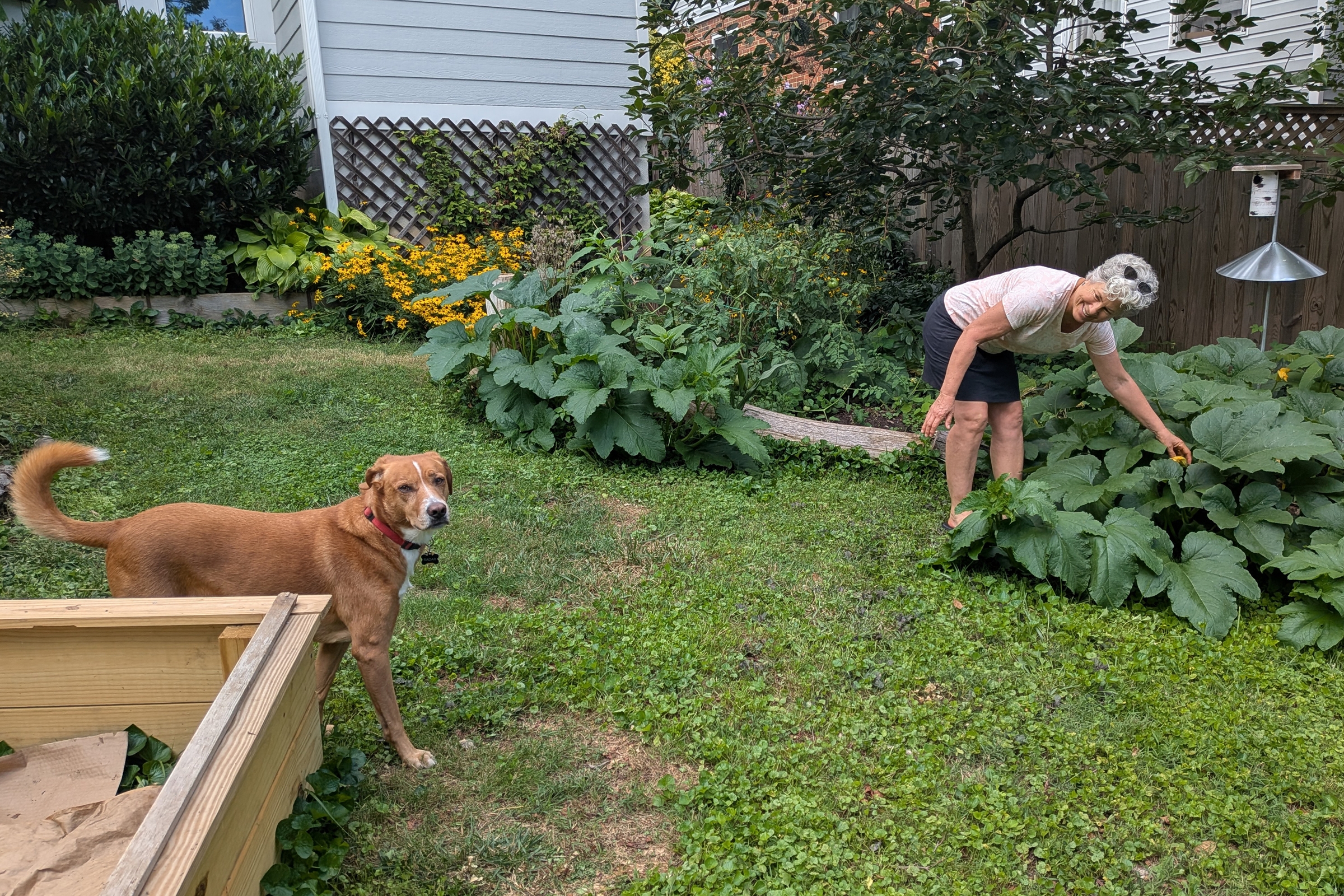 |
Sandra Marquardt, 67, in her home garden in Silver Spring, Maryland, on 5/8. *Photo: AFP*
The 67-year-old breast cancer survivor is currently a sustainable textile consultant and manages a small farmers' market. She does not allow pesticide spraying on her property but admitted to once envying neighbors who did. However, thanks to the Wolbachia intervention, she can now dine on her porch with her husband and garden without being "terrorized" by blood-sucking insects. "It's astonishingly effective", she said.
Twenty-five customers have subscribed to the service, with each household receiving 1,500 mosquitoes weekly for 16 weeks.
Singapore operates the largest-scale program of this type, Project Wolbachia, which began in 2016 and now releases over 10 million mosquitoes weekly. A study in the New England Journal of Medicine showed that this project significantly reduced the Aedes aegypti mosquito population and lowered the risk of dengue fever by over 70%. Beyond small companies, tech giant Google also applied in May for a permit to release 32 million mosquitoes for a similar project in Florida and California.
However, not all of Montgomery's customers have seen immediate results. April Chunko, 44, living in Silver Spring, was wary of toxic chemicals due to raising young children. She "immediately supported" Montgomery's project upon learning about it. "We have a sandbox that our child loves to play in, but it was hard to enjoy that time because the whole family was constantly getting bitten by mosquitoes", she said. "I haven't seen a huge change yet; there's a very dense forest behind my house".
Marcelo Jacobs-Lorena, an emeritus professor at Johns Hopkins University specializing in this field, stated that varying results might be due to local environmental conditions. "Mosquitoes can travel with the wind, so effectiveness largely depends on the surrounding terrain", he said. He added that effectiveness also depends on the scale of intervention, and controlling mosquito populations this way risks becoming a "permanent task".
Professor Jacobs-Lorena favors another approach using Wolbachia called "population replacement". Instead of sterilization to reduce mosquito numbers, his method involves releasing both male and female mosquitoes carrying the bacteria. Under natural mechanisms, Wolbachia bacteria only damage eggs when infected male mosquitoes mate with uninfected female mosquitoes. If the female mosquito also carries the bacteria, the eggs hatch normally and transmit the bacteria to all offspring. Consequently, the Wolbachia-carrying mosquito strain will quickly dominate and completely replace the wild mosquito population. Wolbachia bacteria themselves can block the development of the dengue virus within the mosquito's body, rendering them harmless even if they bite humans, as they can no longer transmit the disease.
 |
Montgomery at his home in Silver Spring, Maryland, on 4/8. *Photo: AFP*
Currently, Montgomery reports that business is thriving. His service is fully booked for the year and is now accepting reservations for 2027. "The ultimate measure of success for us is: are customers satisfied enough with the service to want to return next year? And it seems the answer is yes", he said.
By Hong Hanh (AFP, BBC)