Iranian judicial officials announced on 19/9 that the death sentence was carried out against Hossein Pedaran. He was convicted of supplying information about missile facilities in the central province of Isfahan to Israel's Mossad intelligence agency. The Supreme Court approved Pedaran's death sentence. Officials did not specify when Pedaran was arrested or brought to trial, and Iranian media had not previously reported on the case.
Mizan Online news agency, affiliated with the Iranian judiciary, published a detailed article recounting Pedaran's "confession". In it, Pedaran stated he initially messaged the Central Intelligence Agency (CIA) offering cooperation but received no response. He then contacted Mossad and was answered by "officer Ben" via WhatsApp using a Dutch phone number. Pedaran sent encrypted information about military facilities in Isfahan and personnel working there to Mossad. He used multiple phone numbers registered under other names and was provided with remote-controlled equipment capable of taking secret photographs.
Pedaran received payment in euros, which he found in a box behind a railing near a bridge in Tehran and in a cafe restroom. Iranian officials discovered a notebook containing "top secret" missile-related issues at his home.
Pedaran cut contact with Mossad before hostilities erupted in late february, but later attempted to re-establish communication. A health examination showed Pedaran had no cognitive impairment. The court concluded that the information Pedaran provided contributed to airstrikes that caused many casualties.
 |
Suspect Hossein Pedaran confessed on Iranian television. Photo: Mizan Online |
Following the 12-day war in 6/2025, Iran launched a crackdown on espionage, imprisoning and executing many individuals accused of working for the United States and Israel. In august, the Iranian judiciary announced the execution of two men accused of "providing coordinates of sensitive military and security facilities" to Israel.
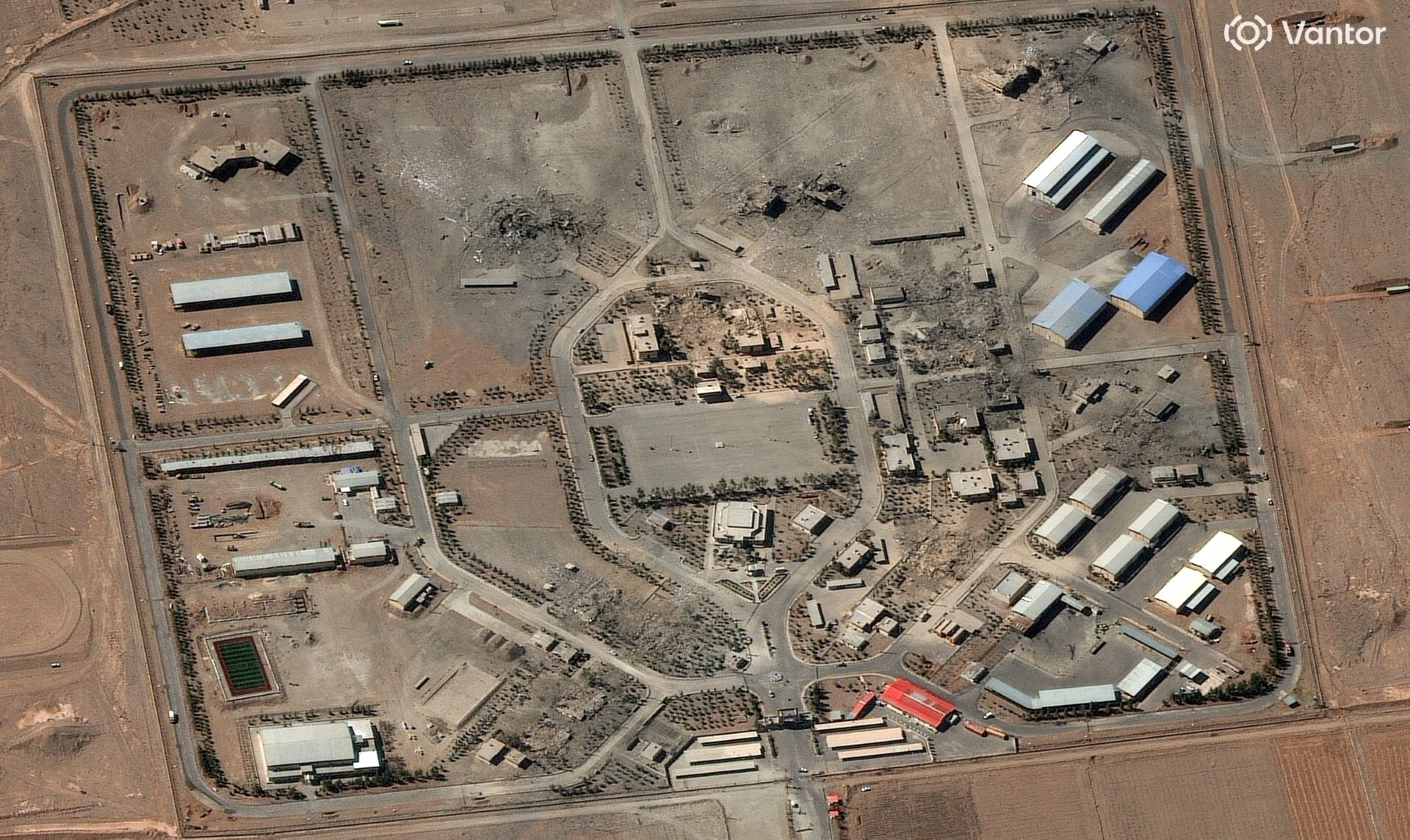 |
Satellite image taken on 8/3 showing damage at a military facility in Isfahan province, central Iran. Photo: AFP |
International experts believe Mossad has built an extensive espionage network in Iran over many decades, recruiting officials, nuclear scientists, and dissidents as informants to provide information and pinpoint targets.
Nhu Tam (According to AFP, Reuters)