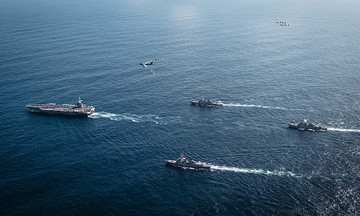
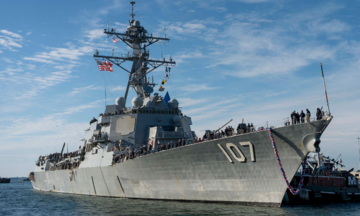
Three cargo ships departed from Jose port, in northeastern Venezuela, heading towards Asia under naval escort from the evening of 16/12 to the morning of 17/12, according to three sources familiar with the matter cited by NY Times. The vessels were transporting urea, petroleum coke, crude oil, and petroleum products destined for the Asian market.
None of the ships were on the US Treasury Department's sanctions list. A US official confirmed that Washington was aware of the information and was considering a course of action.
Venezuelan officials have not yet commented on the information.
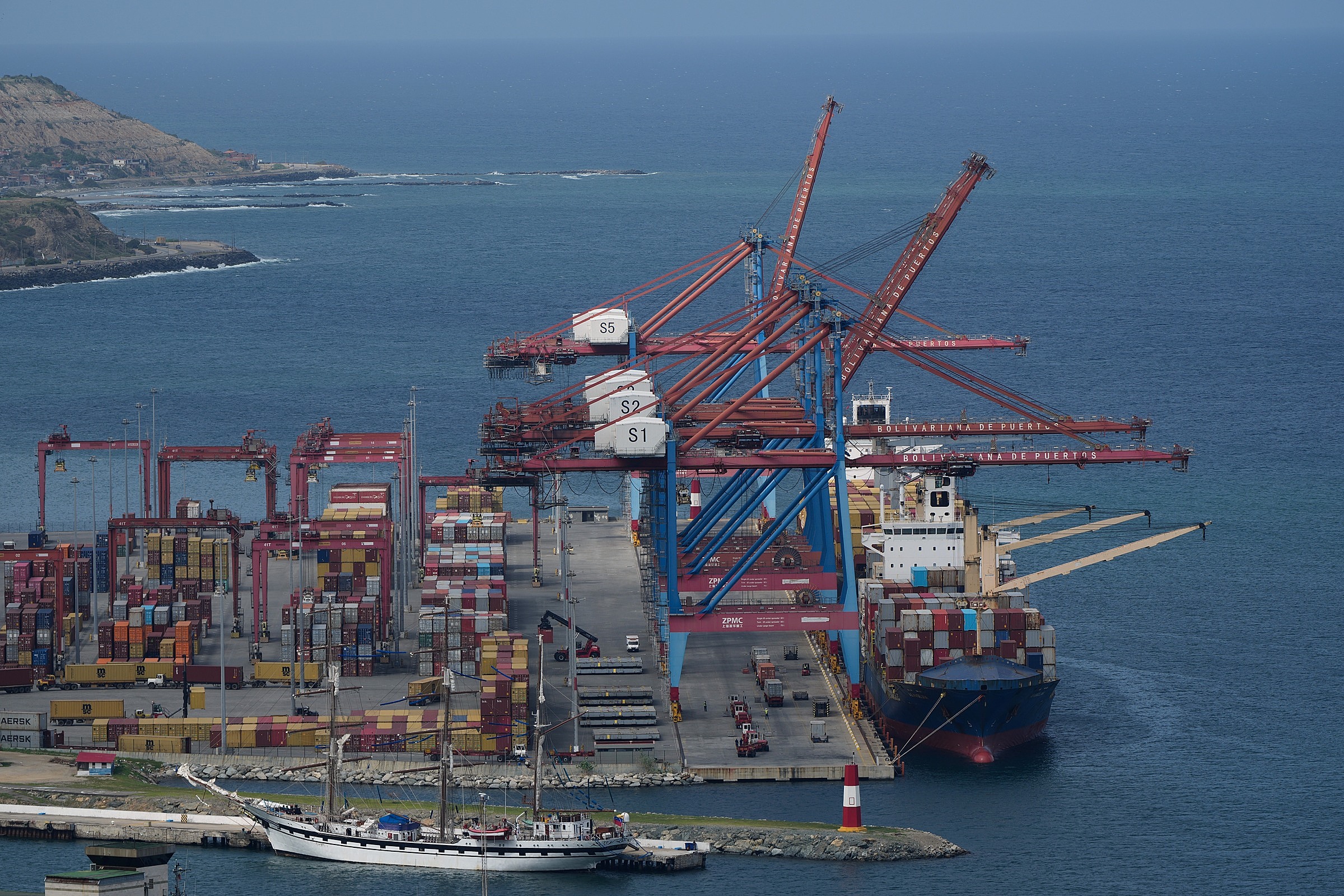 |
A cargo ship docked at a port in La Guaira, Venezuela on 17/12. Photo: AP |
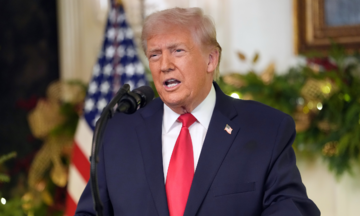
Venezuela's move came after US President Donald Trump ordered a "blockade" on 16/12, targeting all sanctioned oil tankers entering and exiting Venezuela. This decision aimed at Venezuela's primary revenue source, intending to increase pressure on President Nicolas Maduro's government.
The state oil company Petroleos de Venezuela (PDVSA) challenged the US blockade order on 17/12, asserting that its oil exports remained unaffected and that tankers involved in PDVSA operations "continue to move safely."
Samir Madani, co-founder of global oil shipping tracking and analytics platform TankerTrackers, stated that around 40% of Venezuela's crude oil tankers in recent years have been on the US sanctions list. More than 30 such ships were operating in Venezuela earlier this month and were believed to have previously transported oil from the US-sanctioned nation.
Trump's declaration of a "blockade" around Venezuela surprised senior officials at the Pentagon, as a naval force from one nation participating in a blockade would be considered an act of war. However, Trump emphasized that he only intended to prevent US-sanctioned oil tankers.
As of 17/12, the Trump administration had not yet determined whether the US military would lead this effort or if law enforcement agencies and the Coast Guard under the Department of Homeland Security would take the primary role, with the Department of Defense acting in a supporting capacity.
Huyen Le (According to NY Times, AFP, Reuters)