During their talks in New Delhi today, General Secretary, President To Lam and Indian Prime Minister Narendra Modi emphasized that deepening bilateral ties will continue to bring practical benefits to the people of both nations. It will also contribute significantly to achieving each country's development goals.
General Secretary, President To Lam highlighted the substantial untapped potential for expanded cooperation between the two countries, which could yield tangible results for citizens and businesses. He proposed that both sides continue facilitating businesses to strengthen their presence in each other's markets.
Building on this, the two sides agreed to elevate their bilateral relationship to an enhanced comprehensive strategic partnership, guided by the spirit of "shared vision, strategic convergence, and practical cooperation." This marks a new phase of development for bilateral relations.
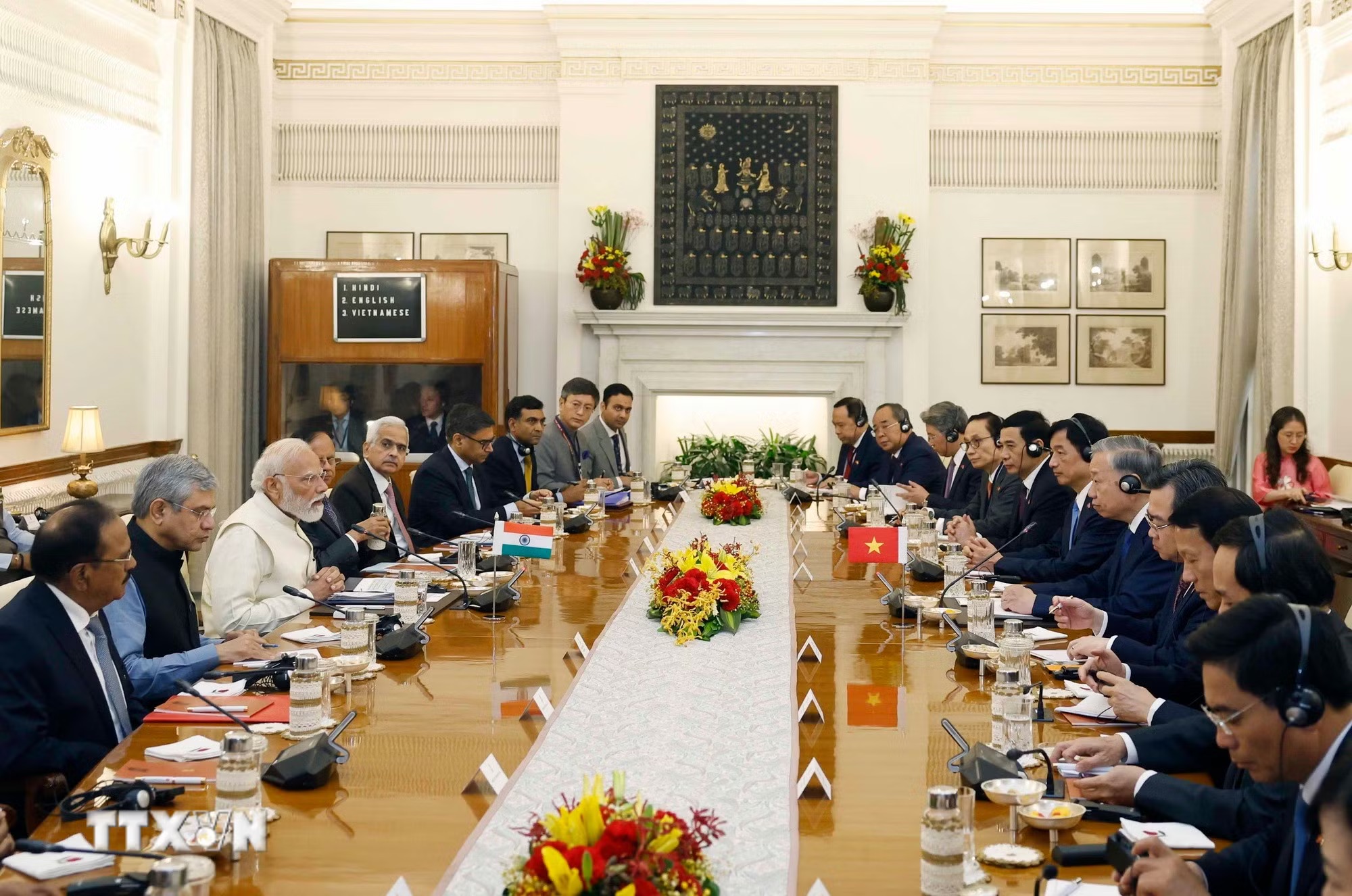 |
General Secretary, President To Lam and Indian Prime Minister Narendra Modi hold talks in New Delhi on May 6. Photo: TTXVN
The two leaders agreed on strategic directions to further deepen cooperation, thereby realizing the enhanced comprehensive strategic partnership.
In political and diplomatic cooperation, both sides agreed to maintain regular high-level exchanges and contacts. They will also strengthen cooperation mechanisms, including the Vietnam - India Joint Commission on Bilateral Cooperation. The two nations aim to establish a 2+2 Diplomatic-Defense Strategic Dialogue mechanism and implement the Vietnam - India Action Program for the 2024-2028 period.
Regarding economic, trade, and investment cooperation, the leaders agreed to create breakthroughs and enhance complementarity based on a win-win approach. This is particularly important for strengthening global supply and value chain linkages. Both sides are working towards a trade turnover target of USD 25 billion by 2030, aiming for balanced and sustainable growth. Bilateral trade reached over USD 16.4 billion in 2025.
The two nations will remove trade barriers to facilitate market access for each other's goods, including agricultural products. They will open markets for Vietnamese durian and Indian grapes, and expedite technical issues to open markets for Vietnamese pomelo and Indian pomegranates. General Secretary, President To Lam requested India to gradually ease regulations related to the Bureau of Indian Standards (BIS) for Vietnamese goods.
Vietnam committed to diversifying supply sources and increasing imports from India for production and export. Both countries will promote the review of the ASEAN - India Trade in Goods Agreement (AITIGA) and enhance joint oil and gas exploration and exploitation activities, including India's participation in new wells, based on Vietnamese and international law, particularly the 1982 United Nations Convention on the Law of the Sea (UNCLOS).
The two sides encourage high-quality two-way investment, creating favorable conditions for large corporations from each country to invest in the other with large-scale, iconic projects. Key sectors include infrastructure, renewable energy, pharmaceuticals, and high technology.
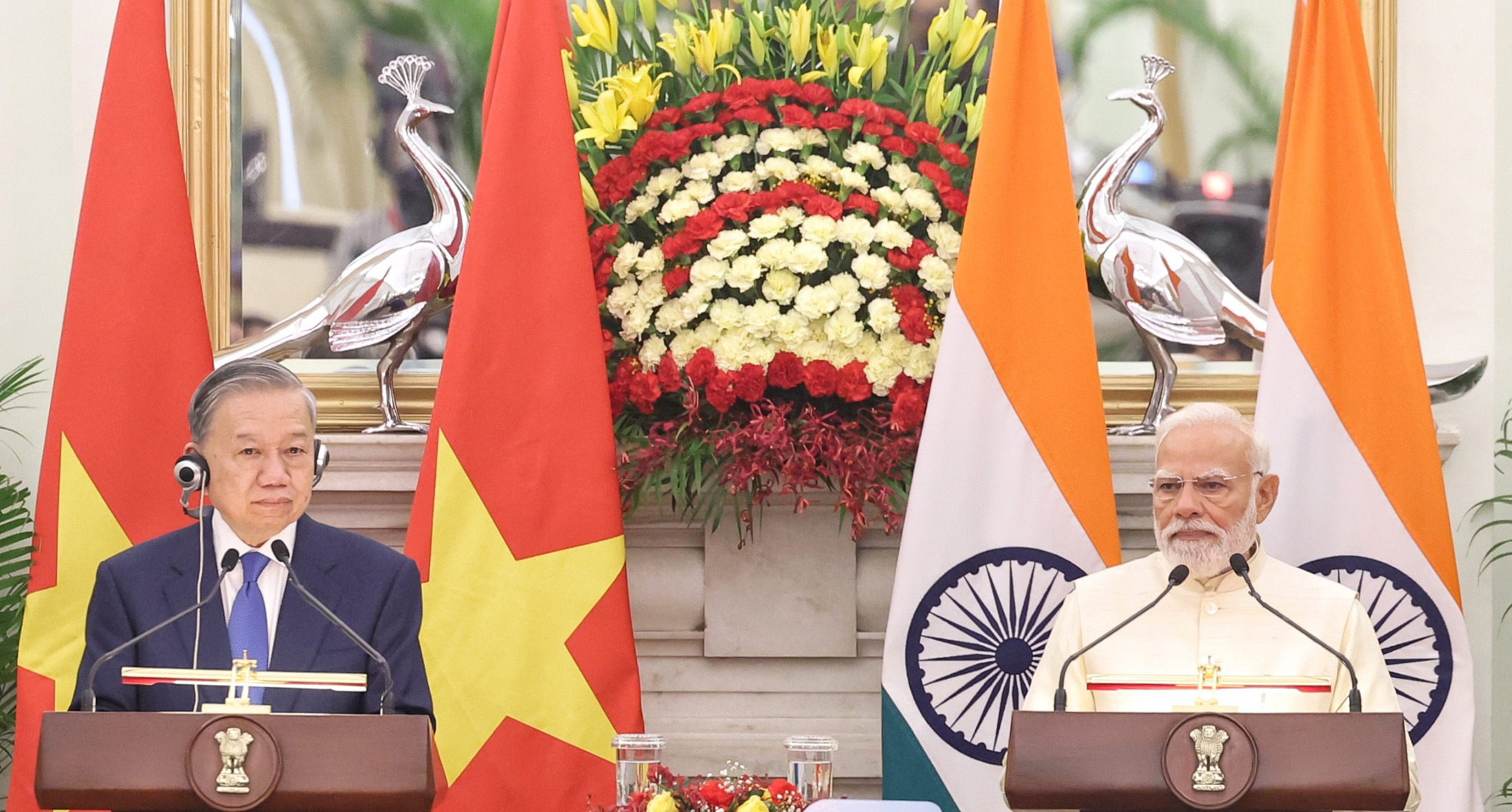 |
General Secretary, President To Lam and Indian Prime Minister Narendra Modi at a press conference after their talks. Photo: Office of the Prime Minister of India
Defense and security cooperation was highlighted as a crucial pillar. Both sides welcomed the stable implementation of India's defense credit lines to Vietnam, which enhance Vietnam's defense capabilities and promote bilateral defense cooperation. The two nations agreed to regularly conduct joint hydrographic surveys off Vietnam's coast, following a survey in May 2025. India will support Vietnam in training defense personnel and establishing an Army Software Park in Nha Trang.
Vietnam and India will also expand cooperation in combating terrorism, high-tech crime, online fraud, and money laundering. India pledged continued support for Vietnam in training and enhancing defense and security capabilities.
Regarding maritime and science-technology cooperation, India invited Vietnam to send an international liaison officer to the Information Fusion Centre - Indian Ocean Region (IFC-IOR) in Gurugram, aiming to enhance maritime domain awareness. Prime Minister Modi welcomed cooperation with Vietnam in building pangasius breeding and farming facilities and facilitating mussel breeding and procurement in India.
The two sides agreed to promote the interoperability of retail payment platforms via QR codes, facilitating tourism and business transactions between the two countries. General Secretary, President To Lam and Prime Minister Modi agreed to leverage science, technology, innovation, and digital transformation as drivers for a new phase of their relationship.
Both nations will boost cooperation in emerging technologies, including digital infrastructure, 6G, artificial intelligence, space technology applications, nuclear technology, marine science, biotechnology, pharmaceuticals, advanced materials, and essential minerals. India appreciated Vietnam's invitation to participate in its nuclear power sector. The two sides agreed to explore suitable models for India to continue supplying Cobalt-60 to Vietnam.
In healthcare, both sides are exploring options for Indian companies to bid on medicine supply contracts for Vietnam's public health facilities starting in 2027. The two countries proposed a Memorandum of Understanding for establishing an Indian traditional medicine (Ayurveda) department in Vietnam.
For education and culture, both sides agreed to strengthen the social foundation of their relationship through enhanced cooperation in culture, tourism, and people-to-people exchanges. They will promote shared cultural, historical, and religious values, and boost air links, logistics, and cooperation between localities, economic, and technology centers of the two countries.
The two sides recognized tourism as a significant driver for people-to-people exchanges and economic growth. They welcomed the signing of a Memorandum of Understanding on tourism cooperation and agreed to encourage sustainable and inclusive two-way tourism development, including cultural and heritage tourism, medical and wellness tourism, and other forms. Prime Minister Modi invited Vietnamese tourists to visit India's Buddhist Circuit. Welcoming increased direct flights between the two countries, both sides encouraged their civil aviation authorities to engage in discussions to further enhance air connectivity.
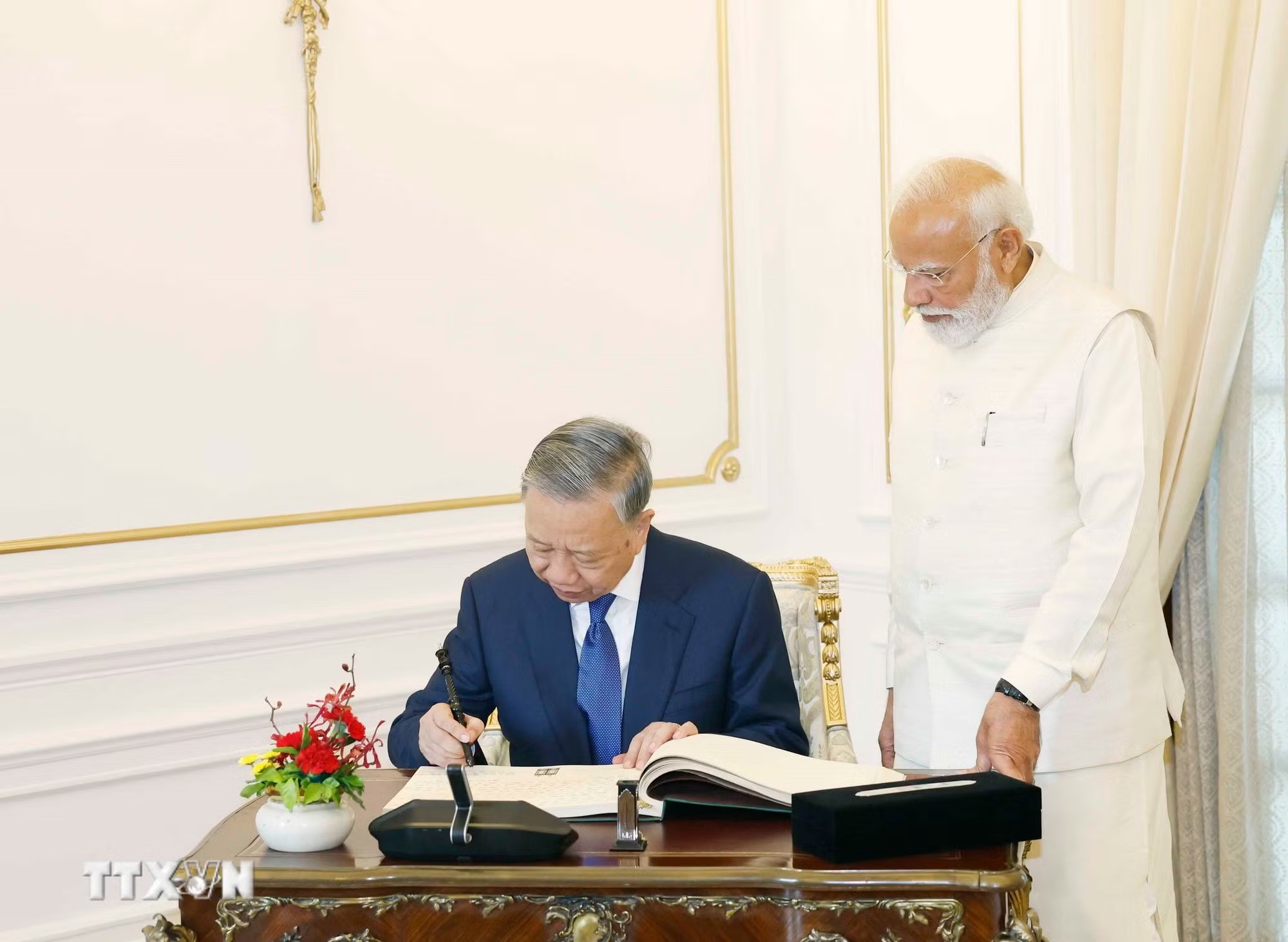 |
General Secretary, President To Lam signs a guestbook. Photo: TTXVN
On regional and international issues, both sides affirmed their commitment to strengthening close coordination and mutual support in multilateral forums, especially the United Nations, ASEAN, and ASEAN-led mechanisms.
Following the talks, General Secretary, President To Lam and Prime Minister Modi witnessed the signing and exchange of several cooperation documents in fields such as science and technology, essential minerals, healthcare, tourism and culture, finance, cybersecurity, local cooperation, and auditing.
Full text of the Vietnam - India Joint Statement
Thanh Tam