On 23/4, Vietnamese Ministry of Foreign Affairs spokesperson Pham Thu Hang stated that Vietnamese authorities have been in continuous contact with Iranian counterparts. These discussions focus on procedures for the safe passage of Vietnamese cargo vessels and their crew through the Strait of Hormuz.
Ms. Hang affirmed that Vietnamese vessels and their crew remain safe in the Strait of Hormuz area.
This situation arose after Iran, on 18/4, re-imposed control over the Strait of Hormuz, reversing its previous announcement of full access for commercial vessels. Concurrently, the US Navy enforced a blockade outside the Gulf of Oman. It warned of seizing any vessel entering or leaving Iranian ports, including those that had paid fees to Tehran.
This dual enforcement created a "double blockade" scenario for commercial vessels operating in the Strait of Hormuz. Tensions remain elevated in this vital shipping lane, despite the US extending a ceasefire on 21/4 to facilitate negotiation efforts.
Following guidance from Iranian authorities, the Ministry of Foreign Affairs is collaborating with the Ministry of Construction and relevant transport companies. They are providing Iran with technical specifications for Vietnamese cargo ships seeking to traverse the Strait of Hormuz.
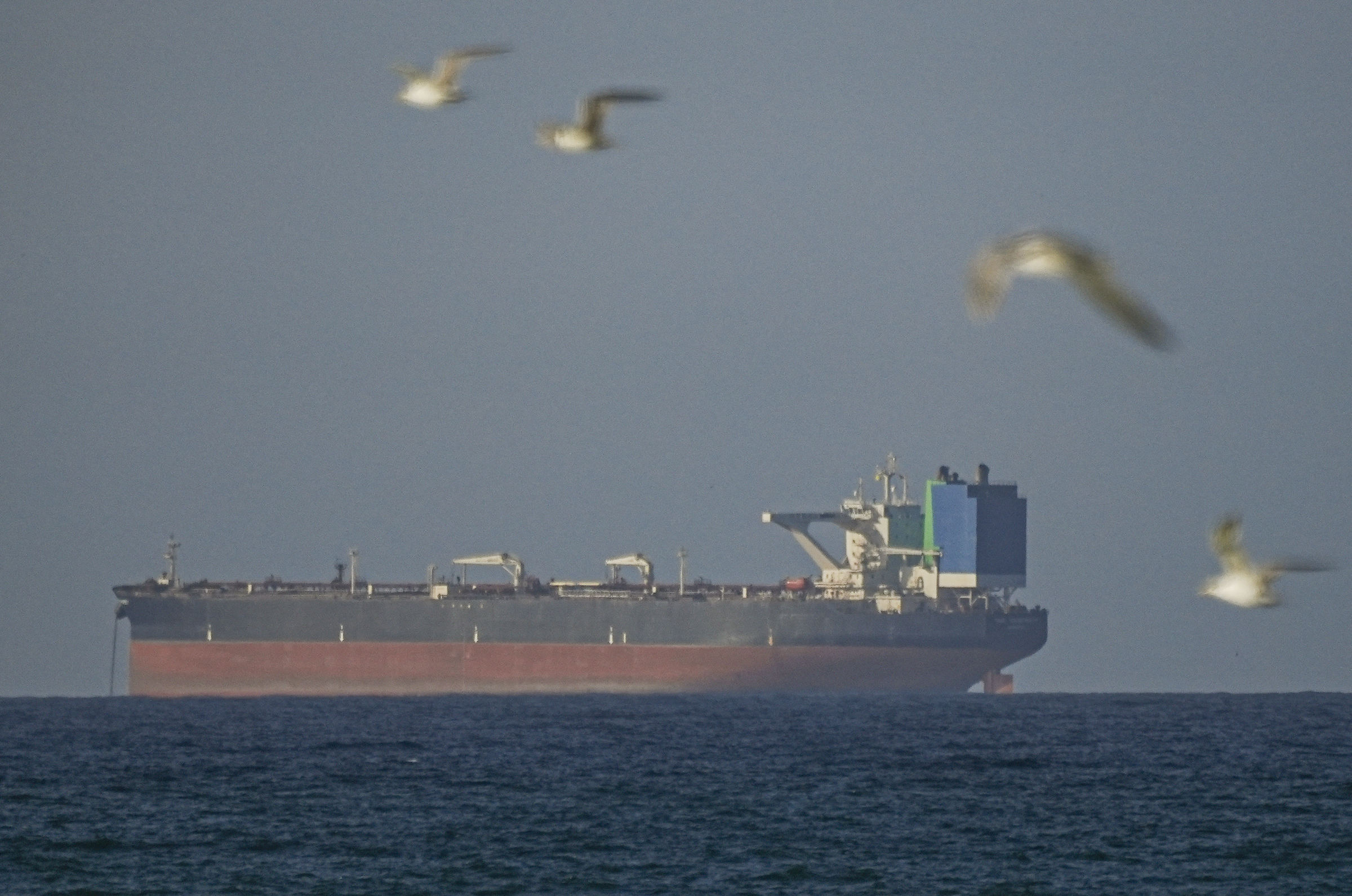 |
A vessel awaits passage through the Strait of Hormuz on 8/4. *AFP*.
The Ministry of Foreign Affairs continues to collaborate with relevant ministries, sectors, and ship-owning companies. This ongoing effort involves working with Iranian authorities to address technical requirements for the safe and timely passage of Vietnamese cargo vessels and crew through the Strait of Hormuz. The ministry is closely monitoring the situation and prepared to implement protective measures if issues arise.
Separately, when questioned about the Israel-Lebanon ceasefire agreement, the spokesperson stated that Vietnam welcomes efforts to promote dialogue and seek diplomatic solutions between the two nations.
Vietnam urges all parties to exercise restraint, adhere to the ceasefire agreement, and resolve disagreements peacefully. This approach, based on respect for national sovereignty, territorial integrity, international law, and the United Nations Charter, aims to achieve lasting peace and stability in the region.
The 10-day ceasefire between Israel and Lebanon became effective on 17/4, following their first high-level meeting in decades.
Ngoc Anh