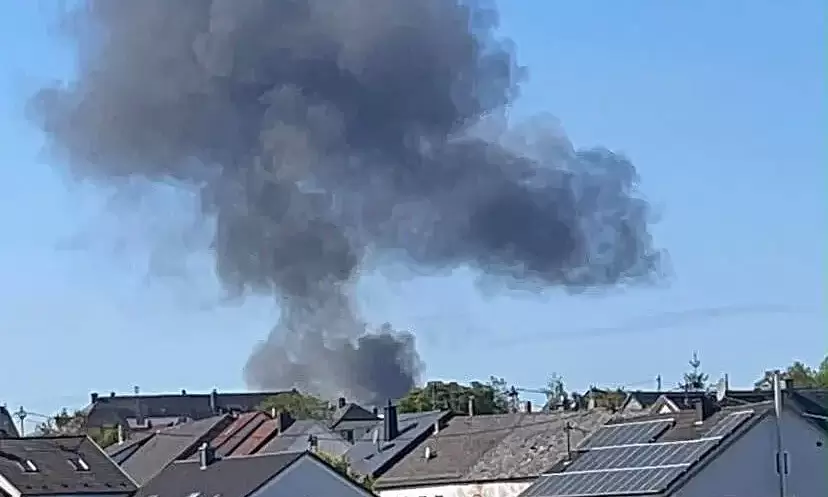
In July, at least 9 logistics centers and warehouses belonging to the Wildberries group were hit by Ukrainian drone attacks. Wildberries warehouses in the Ryazan region, Tambov, Moscow, and St. Petersburg were repeatedly targeted, leading to significant fires and estimated damages amounting to billions of USD.
According to analysts, these new targets indicate that Kyiv is broadening its strategy to inflict economic damage on Russia, moving beyond energy infrastructure, oil refineries, and fuel depots.
Wildberries was founded in 2004 by Tatyana Kim, now Russia's richest woman billionaire. Starting as an online clothing retailer, the company has grown into the largest e-commerce platform in the country and several neighboring nations. Known as "Russia's Amazon," the group currently processes about one-half of the total e-commerce sales in the country.
Wildberries operates over 200 logistics centers with a total area of approximately 5.2 million square meters and continues to expand into Belarus, Kazakhstan, and Crimea. Millions of products, ranging from electronics, food, cosmetics, and clothing to household goods, are sold through hundreds of thousands of sellers on the platform. This scale makes the company's warehousing system a particularly crucial link in the Russian economy.
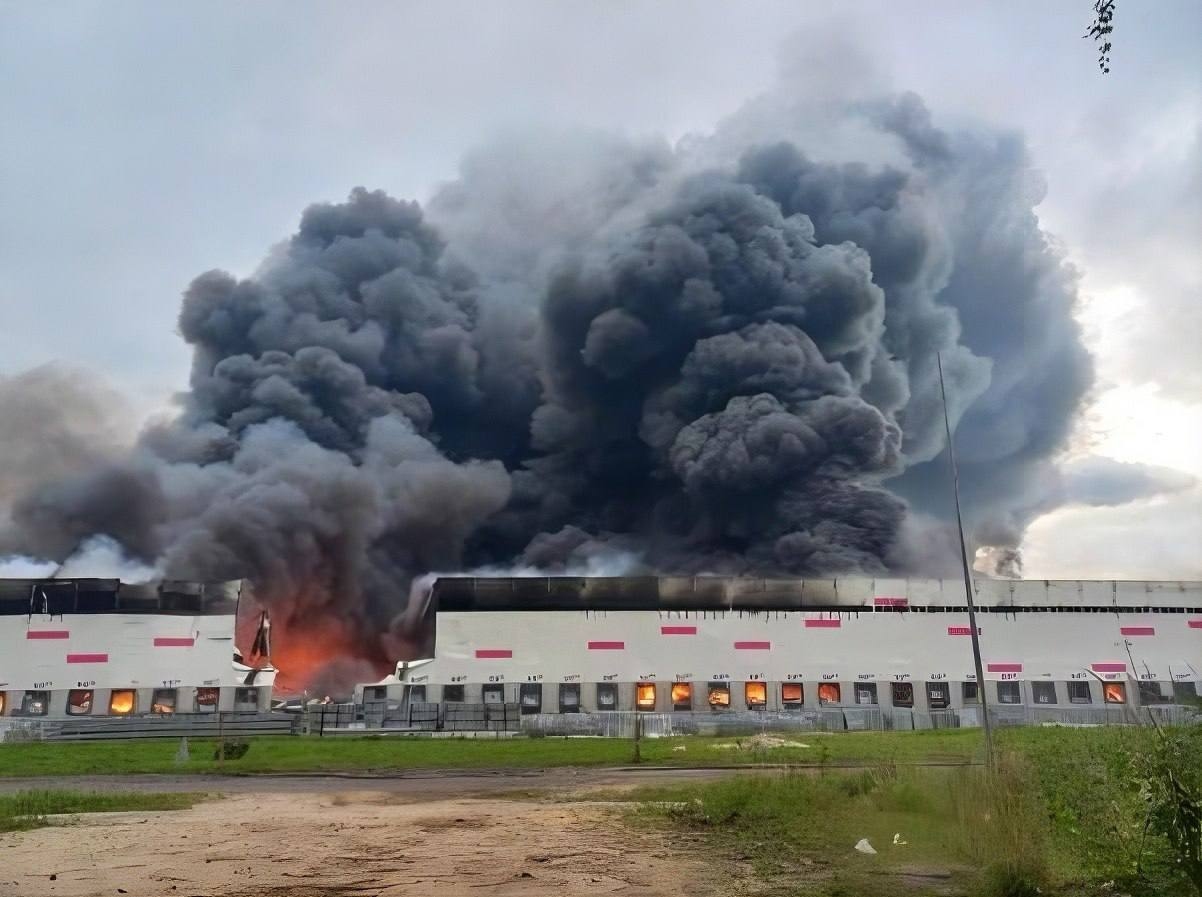 |
Wildberries warehouse in Ryazan province attacked on 29/7. Photo: Reuters
According to statements from Ukrainian officials, Wildberries warehouses have become targets for both economic and military reasons.
Supplying military supplies
President Volodymyr Zelensky stated that the attacked Wildberries warehouses were linked to supplying UAV components, navigation equipment, and other technical parts to the Russian military. The Wildberries website lists many products that can be used for military purposes, such as bulletproof vests, helmets, radios, and other dual-use equipment, alongside millions of regular consumer items.
Analysts suggest that the Russian military's procurement policy primarily focuses on weapons and ammunition, while many units or soldiers independently purchase items like uniforms, generators, UAVs, communication equipment, and vehicles through e-commerce platforms.
 |
Tatyana Kim, founder of Wildberries. Photo: Moskva News Agency
According to expert Peter Dickinson of the Atlantic Council, Wildberries previously featured a section called "Everything for the Special Military Operation," offering nearly 250,000 products for military use or wartime application. He believes Ukraine aims to sever this supply to limit Russia's military resupply capabilities.
Russia has completely rejected these accusations. Kremlin spokesperson Dmitry Peskov affirmed that Wildberries does not serve the military and accused Ukraine of deliberately attacking civilian targets.
Economic motives
However, the primary motivation for Kyiv to strike Wildberries' infrastructure is likely to inflict economic damage on Russia.
Unlike attacks on oil refineries, targeting Wildberries directly impacts commercial activity and millions of businesses dependent on the platform.
E-commerce currently accounts for about 26% of total retail sales in Russia, and Wildberries alone handles nearly one-half of this transaction volume. Together with its competitor Ozon, the two platforms generate economic activity equivalent to approximately 8.5% of Russia's GDP. About 4 million jobs, representing over 5% of Russia's workforce, depend directly or indirectly on these two companies.
Earlier this year, the Russian government also acquired a 5% stake in Wildberries, highlighting the company's growing role in national economic strategy.
Ukrainian UAVs repeatedly crashed into a Wildberries warehouse in St. Petersburg on 24/7. Video: X/Woofer
According to expert Sergei Semko of Data Insight, fires at Wildberries warehouses in the Moscow and Tambov regions alone caused approximately 2.9 billion USD in goods damage. Other assessments suggest that about 10% of Wildberries' logistics capacity was destroyed in July alone.
Russian fashion designer Viktoria Terekhova reported that she had just moved nearly her entire summer children's clothing collection to a Wildberries warehouse in Elektrostal when the facility was attacked. Terekhova lost about 12,000 products, representing 45% of her company's total inventory. Previously, about 4,000 other products were also destroyed at Wildberries centers in the south.
Oleg Kondratyev, co-founder of the Russian fashion brand Airbase, stated that goods worth about 5 million ruble (over 62,700 USD) at a Wildberries warehouse were incinerated in the attacks. His business is currently unable to repay bank loans due to stalled sales via Wildberries.
Ties to state-owned banks
Denys Shtilerman, co-founder and design director of Ukrainian weapons manufacturer Fire Point, believes Wildberries is also targeted due to its ties with the state-owned VTB bank.
He described Wildberries as "Russia's largest borrower" and suggested that if the company were to collapse, many banks would also suffer severe impacts.
The Russian group is reportedly indebted by about 1.3 trillion ruble (over 16.3 billion USD). Approximately one-third of this debt is owed to Sberbank, Russia's largest bank.
Economist Konstantin Sonin noted that if Wildberries has to pay significant compensation to businesses, the Russian government might provide support through preferential loans via Sberbank. This would cause Sberbank to incur losses from these loans, compelling the Central Bank of Russia to intervene and increasing inflationary pressure on the economy.
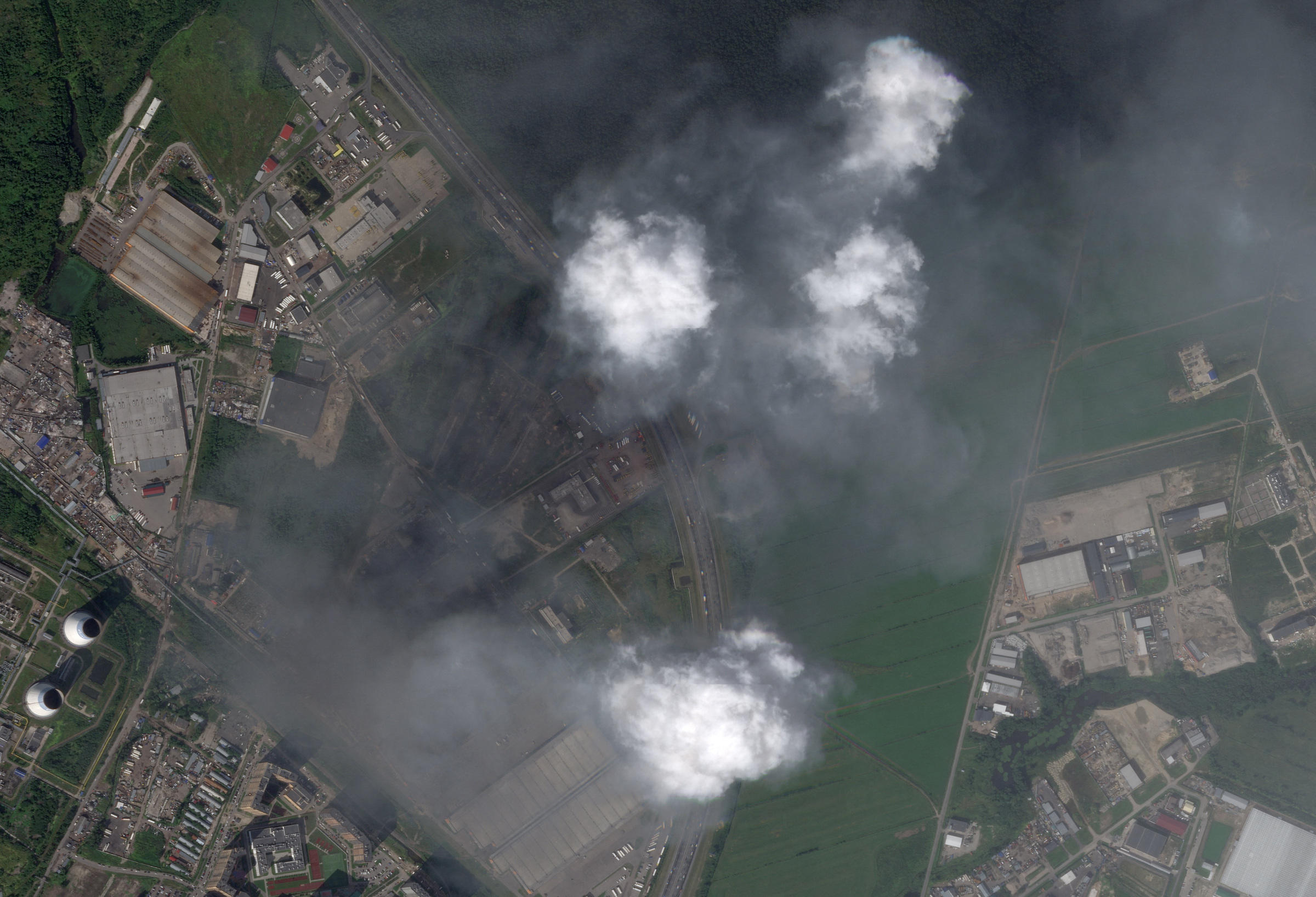 |
Satellite image from 24/7 shows smoke rising from a Wildberries warehouse in St. Petersburg after a series of attacks. Photo: Reuters
The shift to attacking Wildberries indicates that Kyiv aims to exert direct pressure on Russian businesses and citizens, making them more acutely feel the "cost of war" and creating leverage to force Moscow back to the negotiating table, or at least reduce the intensity of attacks on Ukrainian cities, according to Sonin.
Nevertheless, researcher Natalya Kovaleva of the UK-based Chatham House institute believes it is too early to assess the effectiveness of this strategy.
Russian businesses and the economy have consistently adapted to various shocks over the past four years, ranging from Western sanctions disrupting supply chains, increased taxes narrowing profits, Internet disruptions, and the recent fuel crisis driving up transport costs.
Russian President Vladimir Putin affirmed on 22/7 that the economy and key sectors "remain stable despite external efforts to destabilize the fuel, energy, and other economic sectors."
Thanh Danh (Based on CBC, Independent, TVP, CNBC)