Officials in Tembilahan town, Riau province, Indonesia, announced on 7/8 that they had captured a wild monkey the previous night, ending a series of attacks that began in late July.
A group of long-tailed macaques appeared in residential areas over the past month. Since then, officials recorded at least 19 monkey attacks on people, involving 18 victims, with one person attacked two times. Most incidents occurred when victims were alone, and the animal tended to target children and the elderly.
The attacks occurred in various locations, from streets to doorsteps, and even inside homes. Some victims required up to 14 stitches and rabies vaccinations. Local authorities covered all treatment costs, vaccinations, and victim health monitoring.
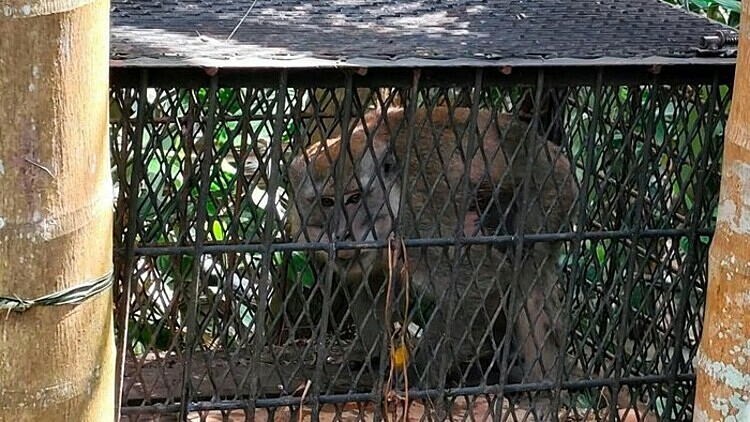 |
The wild monkey captured in Tembilahan town, believed to be responsible for 19 attacks in the area. *Photo: Detik* |
To capture the animal, rescue teams coordinated with police, military, and the Indonesia Natural Resources Conservation Agency. They set traps in areas where attacks frequently occurred, and the monkey was caught after about 6 hours.
The animal was then transferred to Pekanbaru city, the capital of Riau province, for the Natural Resources Conservation Agency to conduct blood tests, monitor its health, and check for pathogens.
Tembilahan authorities requested about 40 schools to switch to online learning for three days, due to concerns that other similarly aggressive monkeys might still be present. Ari Syuria, a local leader, urged residents to remain vigilant. Schools will reopen early next week if the situation is deemed safe.
Human-wildlife conflict is common in Indonesia, especially in areas where rainforests are shrinking due to conversion into oil palm plantations. This degradation affects the habitats of many species, including monkeys, elephants, and tigers.