The Springs Fire ignited east of Moreno Valley, Riverside county, California, around 11 a.m. on 3/4. By that evening, it had spread across approximately 1,680 hectares.
Moreno Valley, home to about 200,000 residents and located approximately 100 km east of Los Angeles, saw the fire spread rapidly. Riverside county authorities issued mandatory evacuation orders for thousands in Moreno Valley, while other areas remained on evacuation alert.
Deirdre Vickers, an officer with the Riverside county Sheriff's Department, confirmed they are assisting with road closures in Hemet and Moreno Valley. Gilman Springs Road, from Alessandro to Bridge Street, is currently blocked.
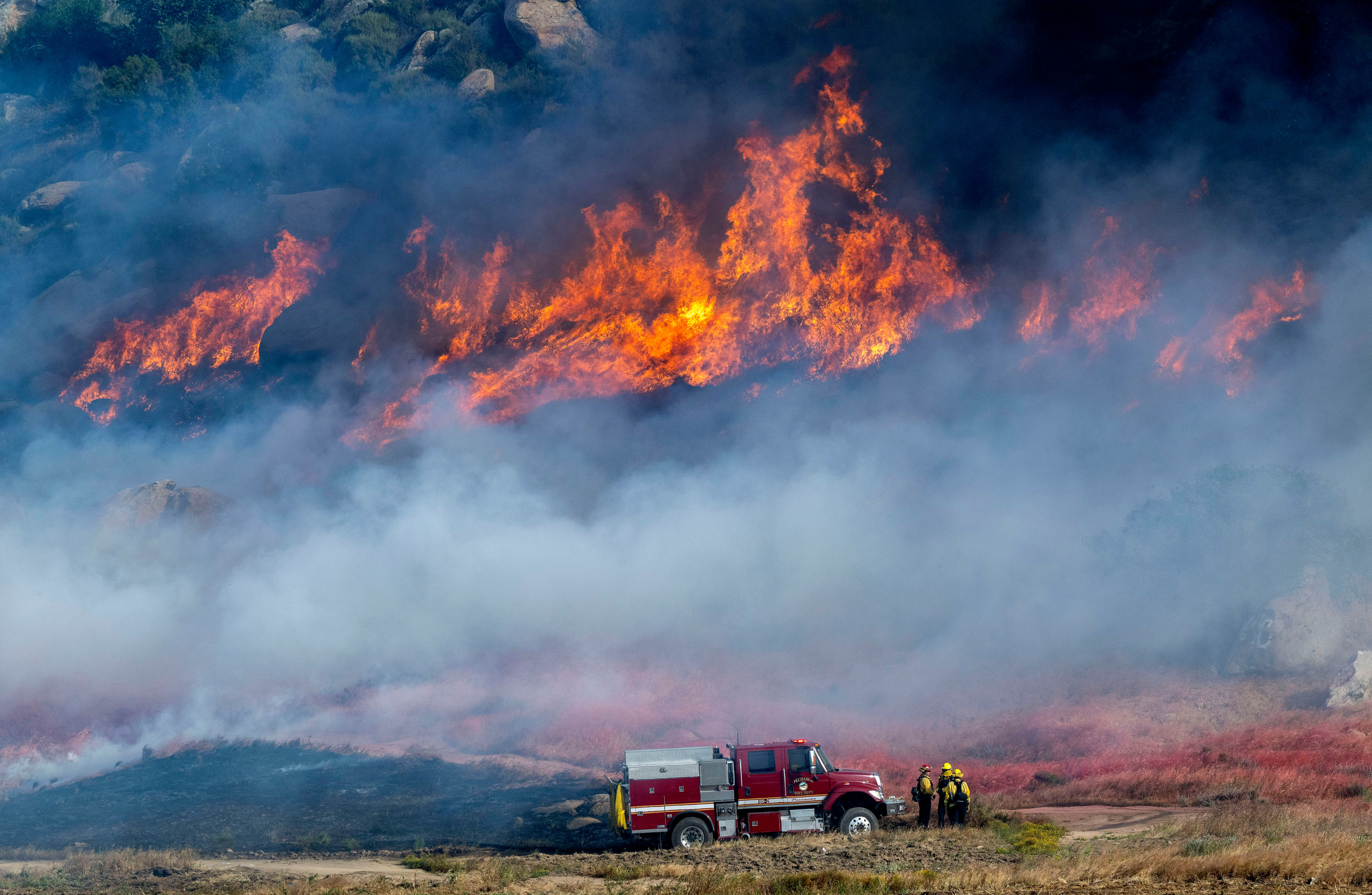 |
Firefighters observe the Springs wildfire in Moreno Valley, California on 3/4. *AP*
The fire erupted in an area rich with flammable materials, requiring a coordinated response from multiple firefighting agencies. Firefighters deployed two firefighting planes, 23 fire engines, two helicopters, and two bulldozers, and requested additional resources. By 4 p.m., crews had contained only 5% of the blaze.
Alex Izaguirre, spokesperson for the California Department of Forestry and Fire Protection (Cal Fire) Riverside county, stated, "Wind is the biggest challenging factor right now."
In Los Angeles county, the Crown Fire ignited on the morning of 3/4, spreading across approximately 113 hectares of forest near Acton. However, crews brought the situation under control by that evening.
Authorities initially issued mandatory evacuation orders for areas south of Escondido Canyon Road, east of Big Springs, north of Hughes Canyon and Hubbard, and west of Crown Valley. While the mandatory orders were later lifted, evacuation warnings remained in effect for Soledad Canyon and Crown Valley.
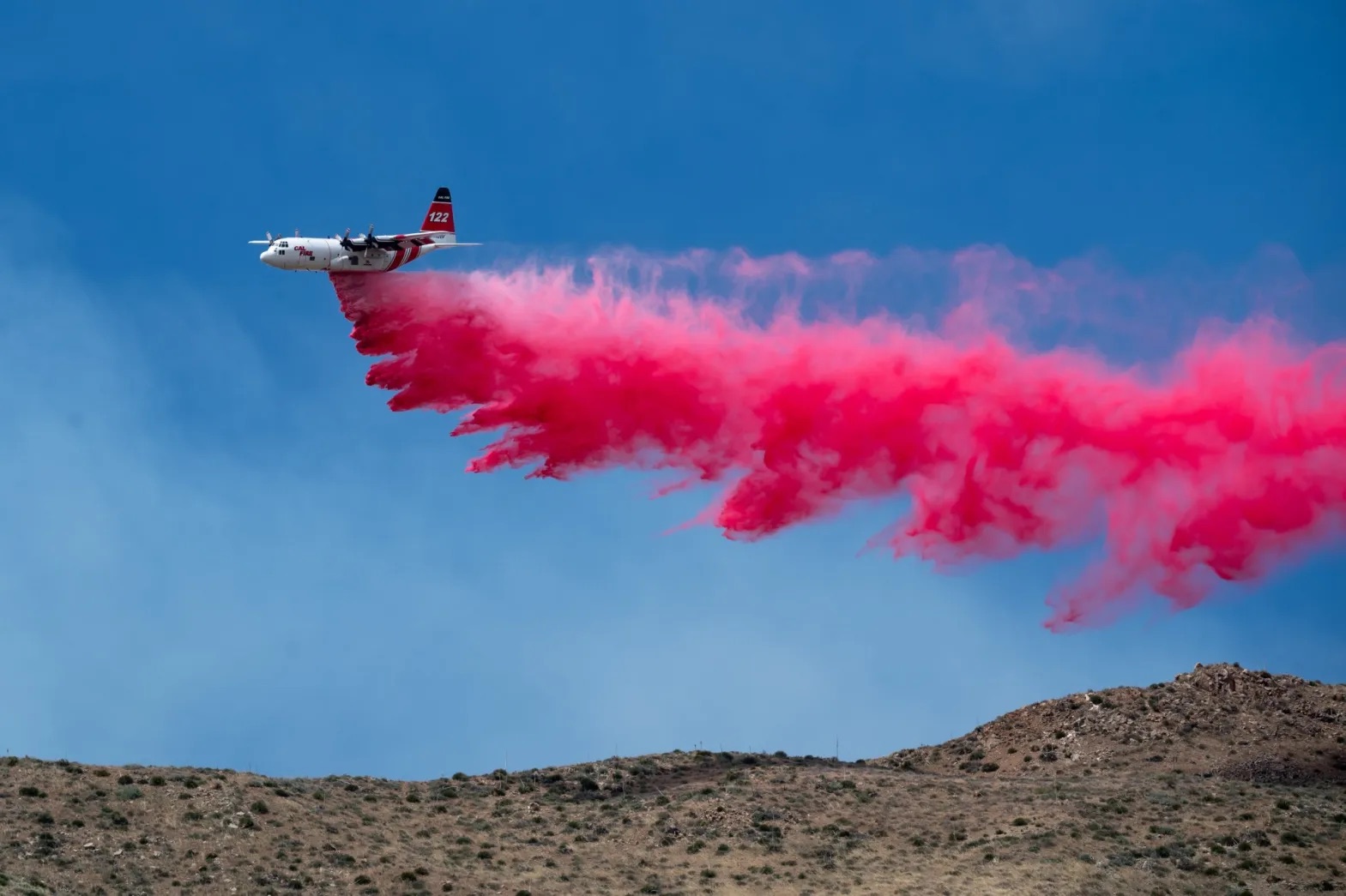 |
A firefighting plane drops Phos-Chek fire retardant on a fire near Acton, California on 3/4. *Los Angeles Daily News*
These incidents mark the first two significant wildfires of spring, following a winter characterized by heavy rainfall and unusually high temperatures across the USA.
According to Kyle Wheeler, a meteorologist with the San Diego office of the US National Weather Service, strong Santa Ana winds, gusting between 48-64 km/h, contributed to the rapid spread of the fires. Wheeler explained, "Strong winds cause fires to erupt quickly and become the first wildfires of the season."
Minh Hanh (Source: LA Times, AP)