An "automatic tidal lane" refers to a road lane capable of automatically changing its direction of travel, controlled by robots. This system adjusts traffic flow by shifting a barrier, a process that takes approximately 40 seconds to complete.
Video: XuZhenqing
This innovative technology was first implemented in China. In 4/2024, the automated lane division robot was introduced in Suzhou. By 11/2024, the system began trial operations on a road in Zhejiang, and in 12/2024, the smart lane appeared in Xiamen, Fujian province.
Subsequent deployments included Wuxi, Jiangsu province; Hefei high-tech zone, Anhui province; and Changsha, Hunan province. The system is expected to be operational in Kunshan, Jiangsu province, by late 2025.
The movable barrier, approximately 50 meters long, is positioned in the middle of the road. It comprises more than ten robots equipped with solar charging panels, enabling them to generate their own power.
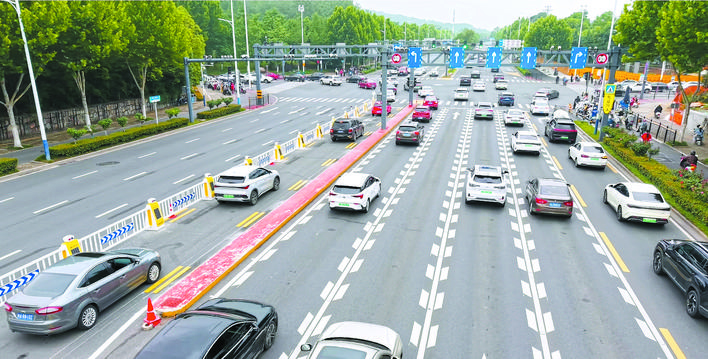 |
The barrier (far left) shifts into an opposing lane, creating an additional lane for the direction with more vehicles. Photo: Anhui News.
The system dynamically adjusts the lane direction based on real-time traffic volume. This means that if one direction experiences heavier traffic, the robots will move the barrier to incorporate a lane from the opposing direction.
Lanes utilizing this system are marked on the road surface with "tidal lane" signage and related indicators. During the initial operational phase, traffic police will deploy personnel to guide and help residents adapt to the new traffic model.
My Anh (according to Sohu)