Honda has reported its worst financial results since listing on the stock market in 1957, underscoring the risks for a traditional automaker betting heavily on electric vehicles (EVs) amid weaker-than-expected demand.
On 14/5, Toshihiro Mibe, CEO of Japan's second-largest automaker, announced that Honda would scrap its target for EVs to account for 20% of new car sales by 2030. The company also abandoned its goal of fully transitioning to EVs or fuel cell vehicles by 2040, according to Reuters.
Mibe also stated that Honda would indefinitely suspend its 11 billion USD EV project in Canada, which was planned as the company's largest investment ever in the country for EV and battery production.
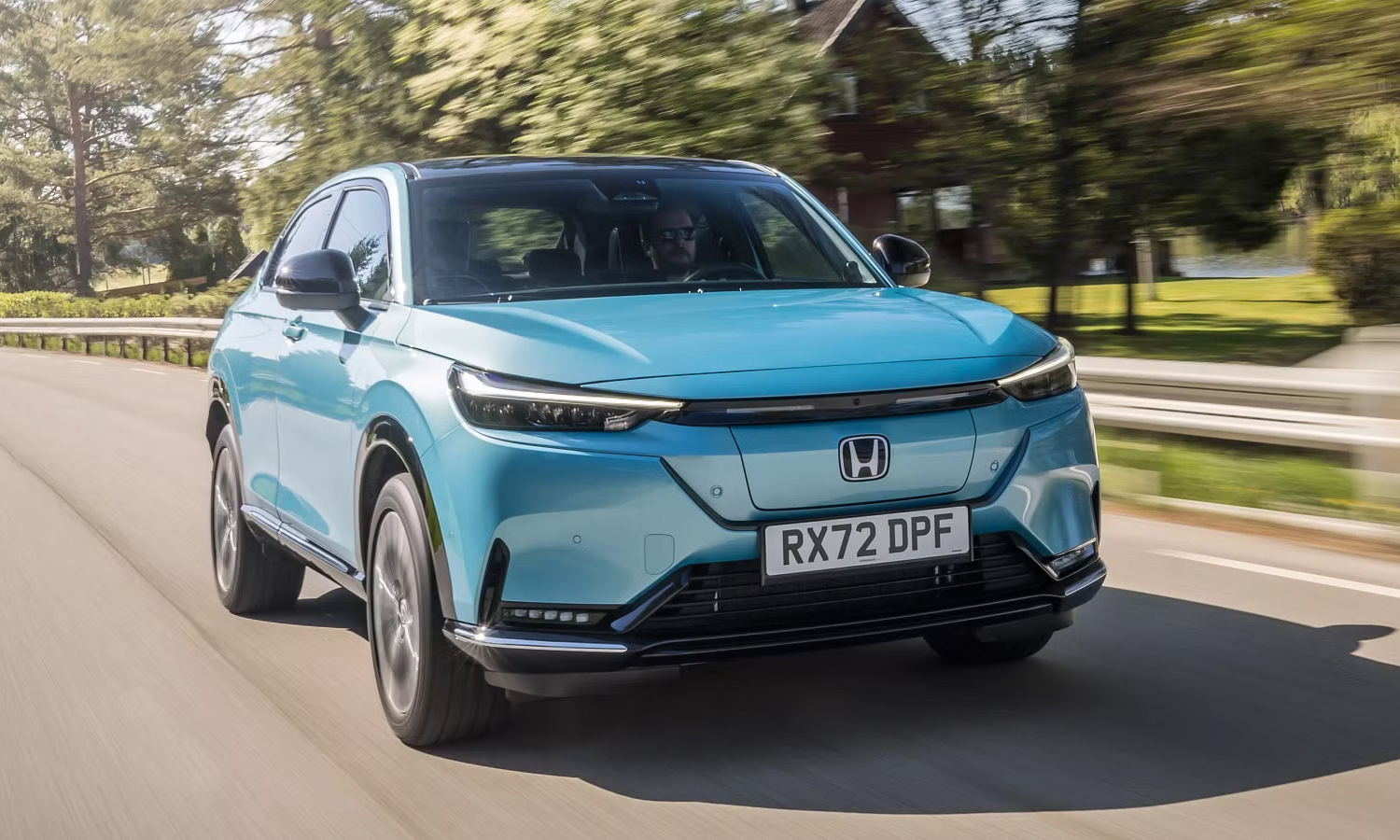 |
The Honda e:Ny1 electric vehicle, dubbed the electric HR-V. Photo: Honda |
Honda's shares reached a two-month high before closing up 3,8% on 14/5, following the company's pledge to return at least 800 billion yen to shareholders over three years. The annual dividend for both the new and past fiscal years was maintained at 70 yen per share.
This commitment highlights Honda's reliance on its profitable motorcycle business to generate cash and support shareholder returns, while its automotive segment lags in scale and performance.
James Hong, head of mobility research at Macquarie, noted that some of the company's strategic steps, such as increasing domestic component use from Trung Quoc, are "nothing new".
Honda recorded a total operating loss of 414,3 billion yen (2,63 billion USD) for the fiscal year ending in March. This contrasts with an average estimate of a 315,6 billion yen loss from an LSEG survey of 22 analysts and a 1,2 trillion yen profit a year earlier.
The company reported 1,45 trillion yen in EV-related losses for the fiscal year ending in March and anticipates an additional 500 billion yen in costs for the current fiscal year.
Despite these setbacks, Honda expects to return to profitability this year, forecasting a 500 billion yen profit driven by cost-cutting measures and its lucrative motorcycle division.
This means that while the automotive business burns through cash to navigate the EV transition, Honda's motorcycle segment is shouldering the entire company. According to Nikkei Asia, Honda expects motorcycles to restore operating profits in the coming fiscal year. Not sports cars. Not electric crossovers. Not autonomous driving technology. But motorcycles.
"The motorcycle business will expand production capacity in India and aim for record sales of 22,8 million units," Honda stated in its earnings report.
Strong sales in India and Brazil helped the motorcycle business achieve record sales and operating profits for the fiscal year ending in March. This performance mitigated the impact of the EV business's devaluation and declining car sales in key markets, including Trung Quoc.
Beyond India and Brazil, in Indonesia, Vietnam, Thailand, and the Philippines, motorcycles are not just for enthusiasts; they are daily transportation. Millions rely on them for commuting, transporting goods, and coping with high fuel prices and congested cities.
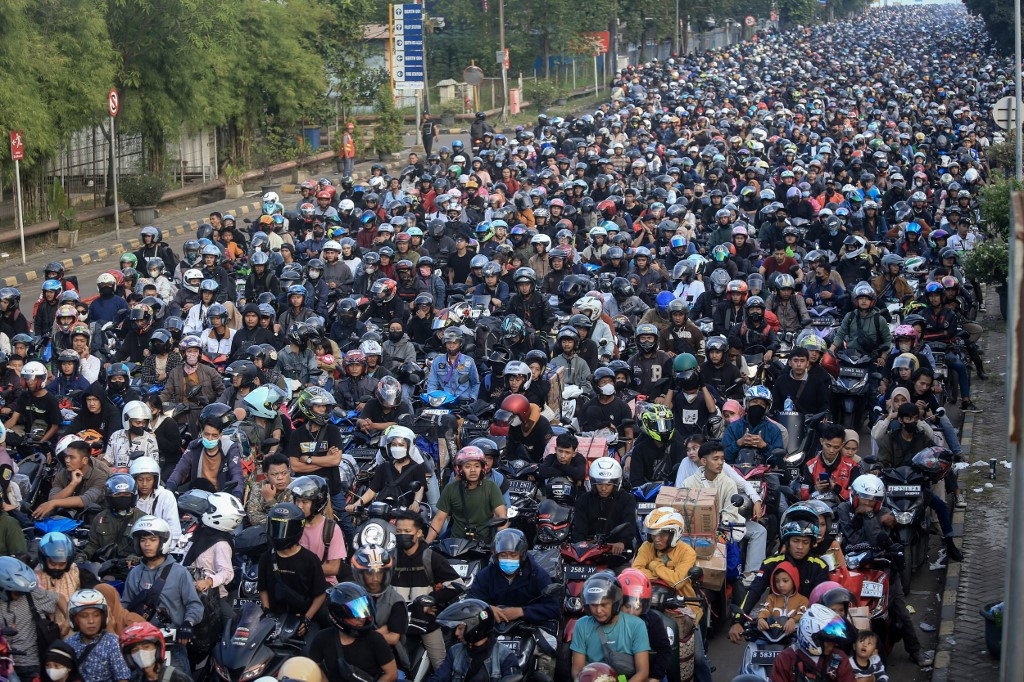 |
Motorcyclists wait to board a ferry to cross the Sunda Strait, at Ciwandan port in Banten, 7/4/2024. Photo: AFP |
While the automotive industry debates charging infrastructure and battery supply chains, Honda's motorcycle division continues to produce affordable gasoline-powered vehicles that people actually buy in large numbers. Unlike electric cars, motorcycles are relatively inexpensive to develop.
A daily commuter motorcycle does not require large battery packs, expensive software ecosystems, advanced driver assistance hardware, or multi-billion dollar platform investments. A small-displacement motorcycle can still be profitable simply due to sales volume. Honda has spent decades perfecting that formula. This is why this story is more significant than just one bad fiscal year. It is increasingly clear that motorcycles are no longer a secondary business for Honda. In a way, they are becoming a safety net.
There is also an irony. Honda spent years positioning itself as a future-oriented mobility company with aggressive electrification plans. Meanwhile, one of its most reliable sources of profit still comes from millions of simple internal combustion engine motorcycles circulating through Asian cities every day.
However, Hong noted that Honda's motorcycle business also faces margin pressure due to the transition to EVs in some key markets like India and Vietnam. "They only have a limited window to act," he said.
My Anh