Earlier this year, the Japanese brand launched the e:NS2 electric model, a product developed in collaboration with Dongfeng, its joint venture partner in China. Upon its introduction to Japan, the vehicle was rebranded as the Insight and debuted for domestic customers on 17/4.
The selling price in Japan is set at 5,5 million yen (34,500 USD). A government subsidy for electric vehicles of 1,3 million yen (8,100 USD) reduces the actual price to 4,2 million yen (26,350 USD). However, with electric vehicles accounting for less than 2% of new car sales in Japan, Honda does not have high expectations. In fact, the company only plans to sell 3,000 units nationwide.
According to Carview's assessment, the price is competitive. Rather than simply being "brought from China to the Japanese market because there's nothing else to sell", this is an ambitious model, with an initial intention to introduce 3,000 vehicles, and if successful, the company will continue in this direction.
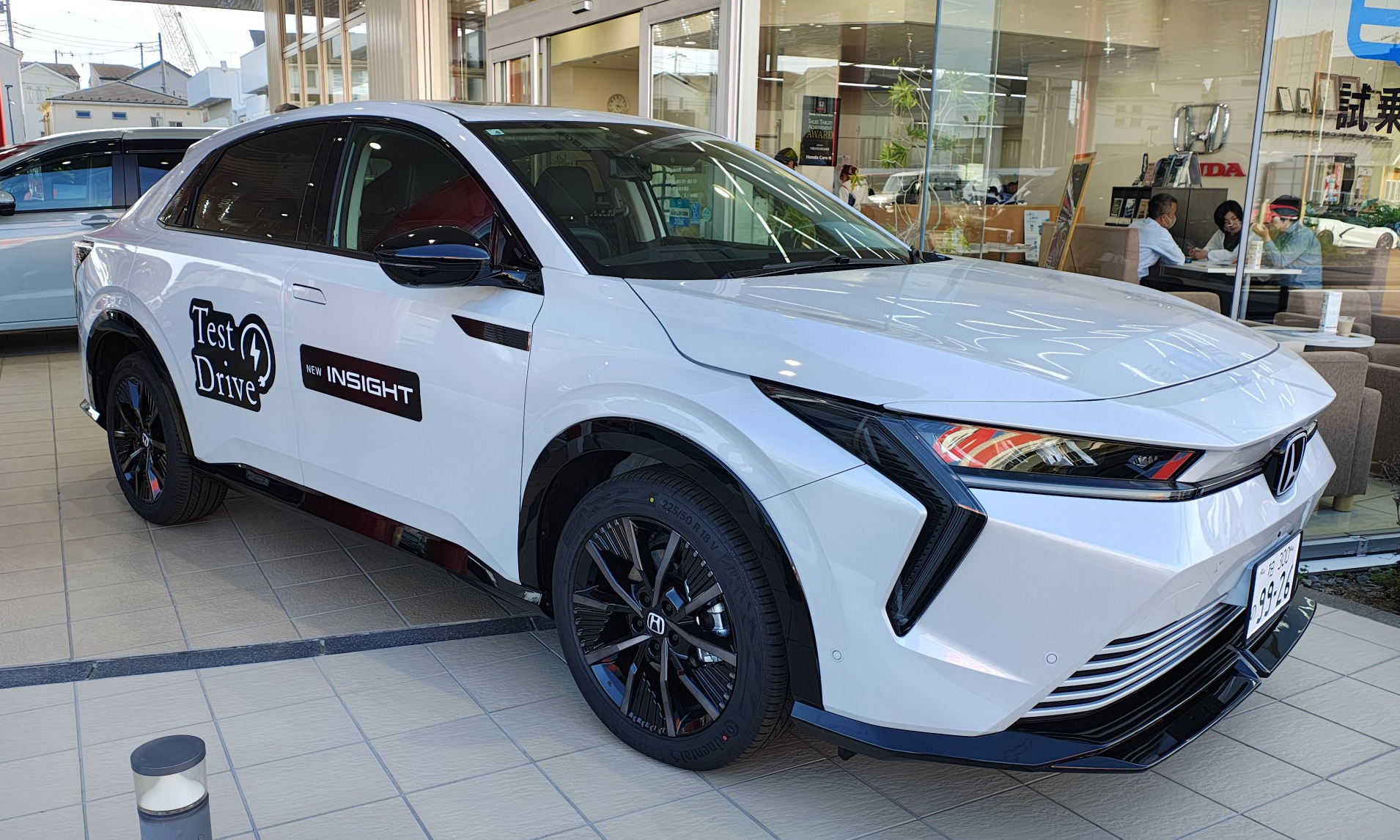 |
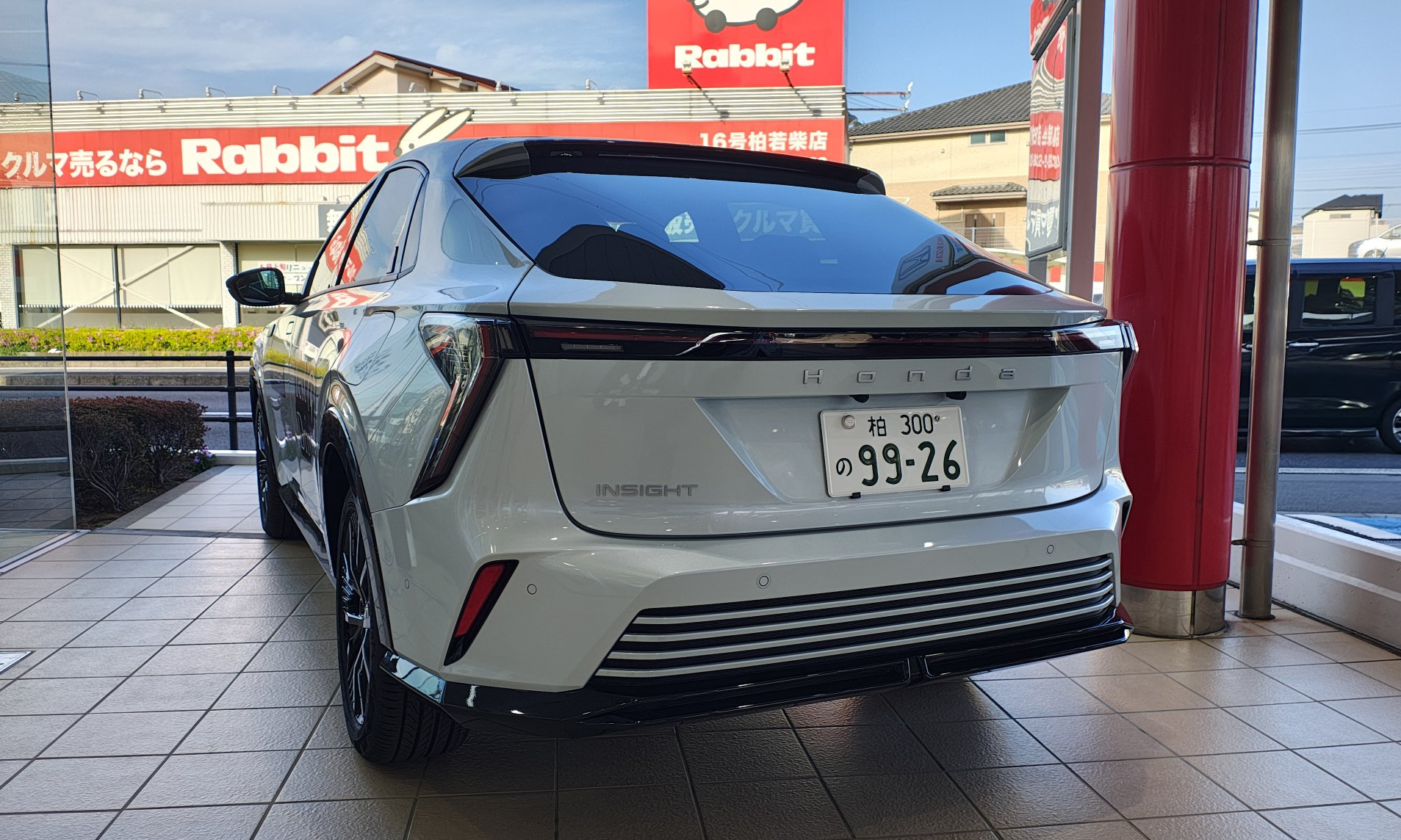
The Honda Insight electric vehicle at a dealership in Japan. *Photo: Twoyug*
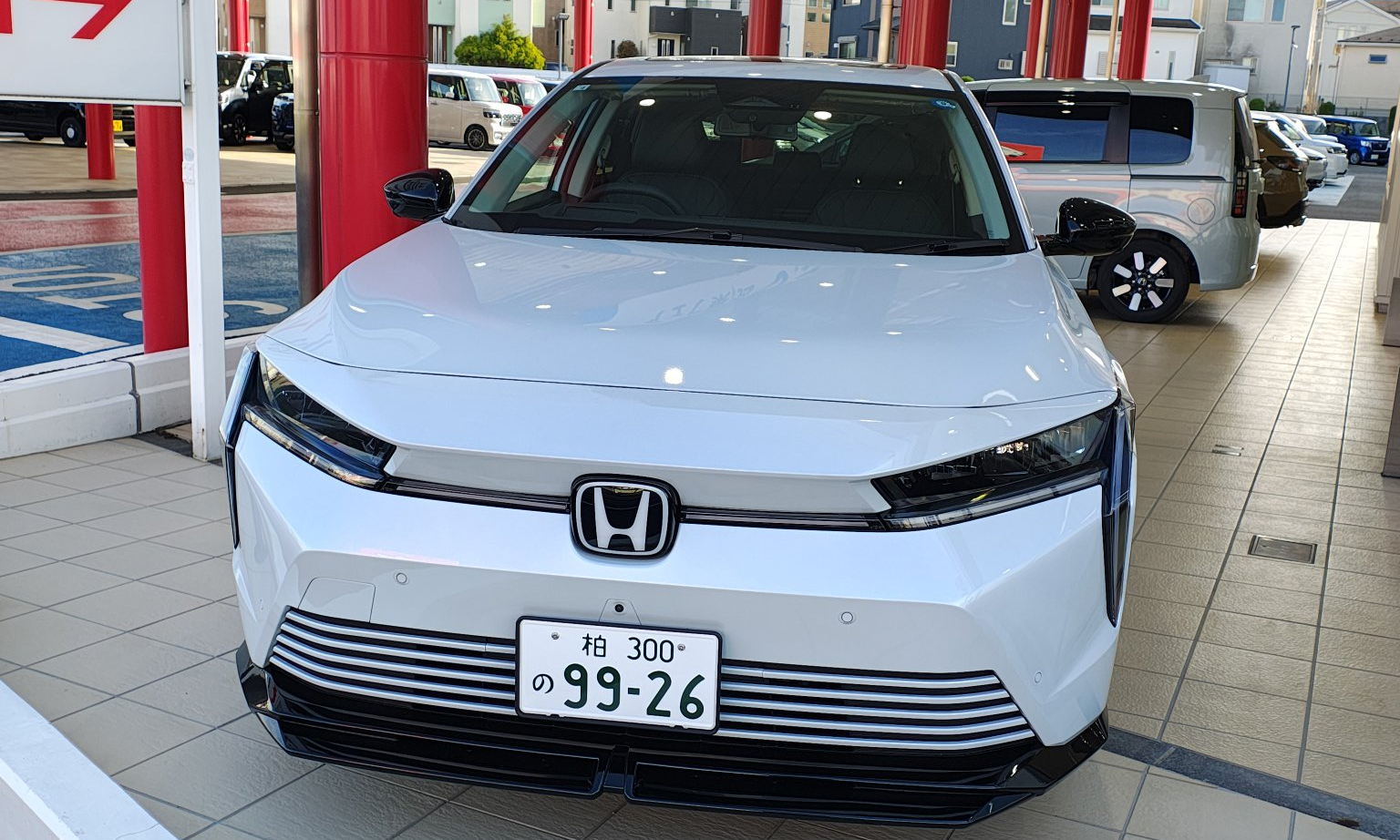 |
The Insight is named e:NS2 in China.
 |
The electric motor on the front axle produces 201 horsepower and 310 Nm of torque.
Many Japanese consumers may feel nostalgic for the Insight, a nameplate that has existed for 27 years since its debut in 1999. The first generation Insight was a revolutionary two-door, two-seater vehicle, appearing as Honda's first mass-produced hybrid car.
It launched with a unique design, thoroughly refined aerodynamic performance, and a long, sleek body that emphasized fuel efficiency, leaving a strong impression on automotive enthusiasts at the time. At its announcement in 9/1999, it achieved the world's best fuel economy for a mass-produced car. It was an advanced vehicle, almost like a concept car for racing.
Subsequently, the second and third generations transitioned to a sedan body style, with the third generation concluding in 2019. Since then, the Insight name disappeared from Japan.
Now, however, it is revived as the fourth generation, an "electric crossover". Furthermore, it has been reborn as a practical vehicle with 5 seats and generous storage space.
Its true identity is the e:NS2 series for the Chinese market. With a length of 4,788 mm, a width of 1,838 mm, a height of 1,570 mm, a wheelbase of 2,735 mm, a power output of 201 horsepower, 310 Nm of torque, and a battery capacity of 68,8 kWh, all these specifications are identical to the e:NS2.
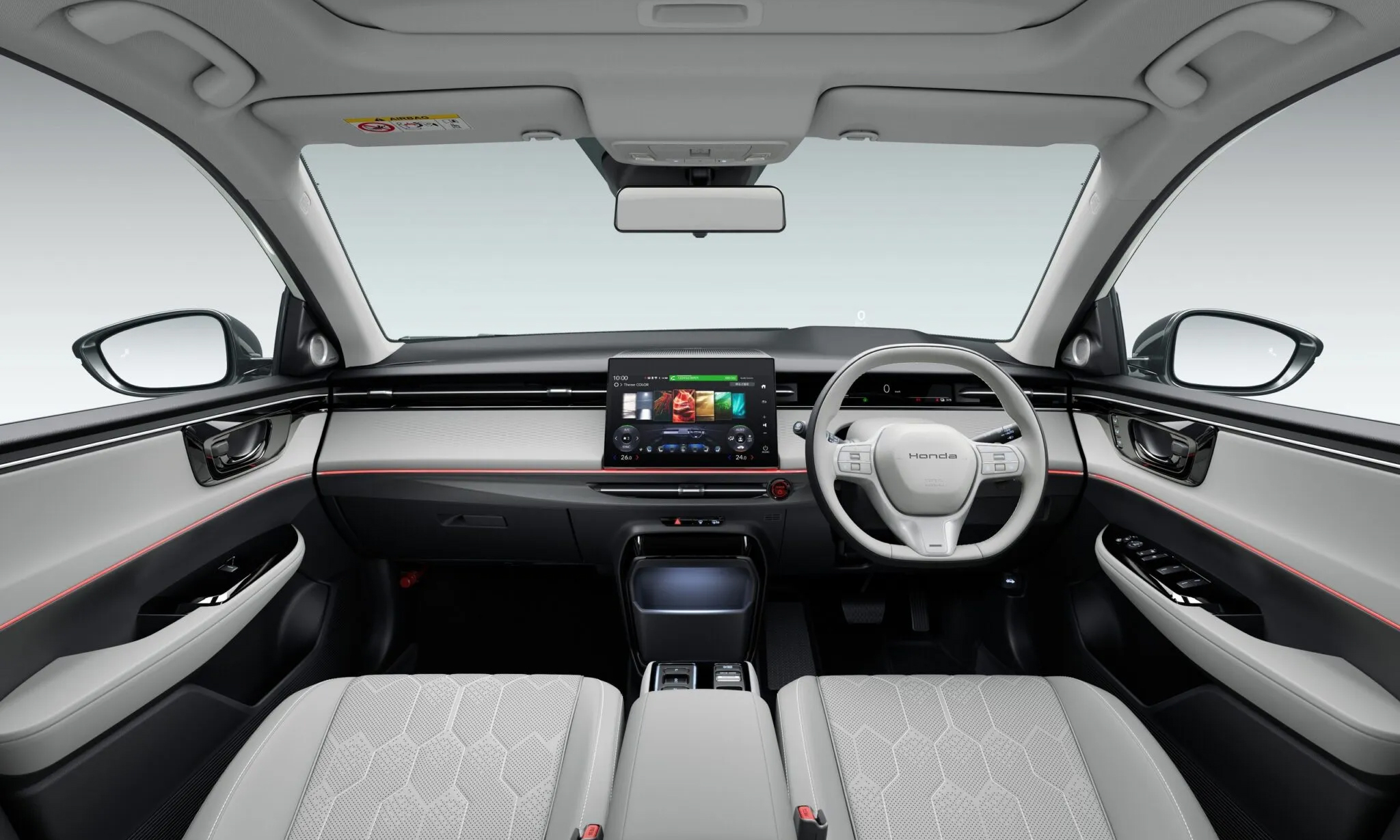 |
Sporty steering wheel. *Photo: Honda*
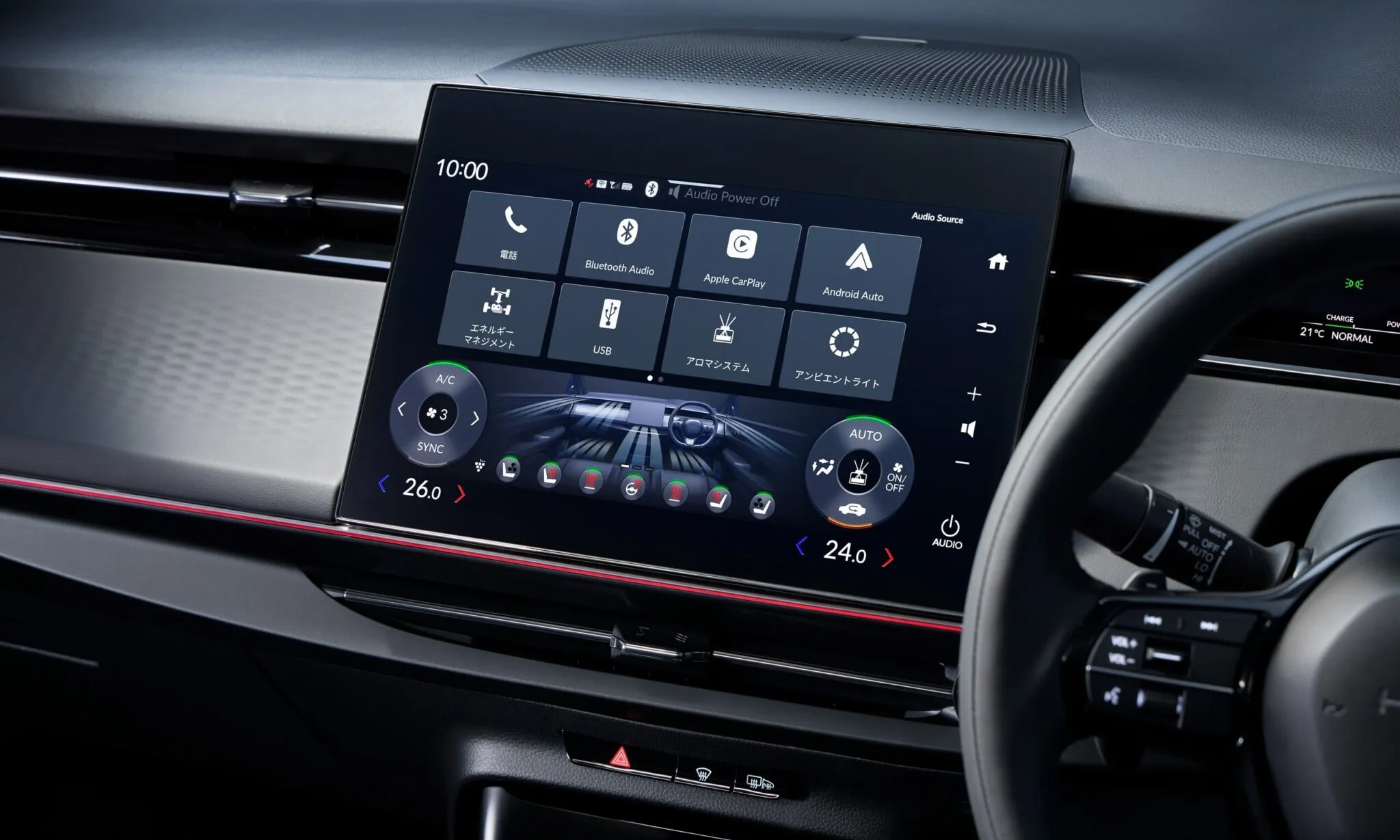 |
12,8-inch infotainment touchscreen, supporting wireless Apple CarPlay/Android Auto.
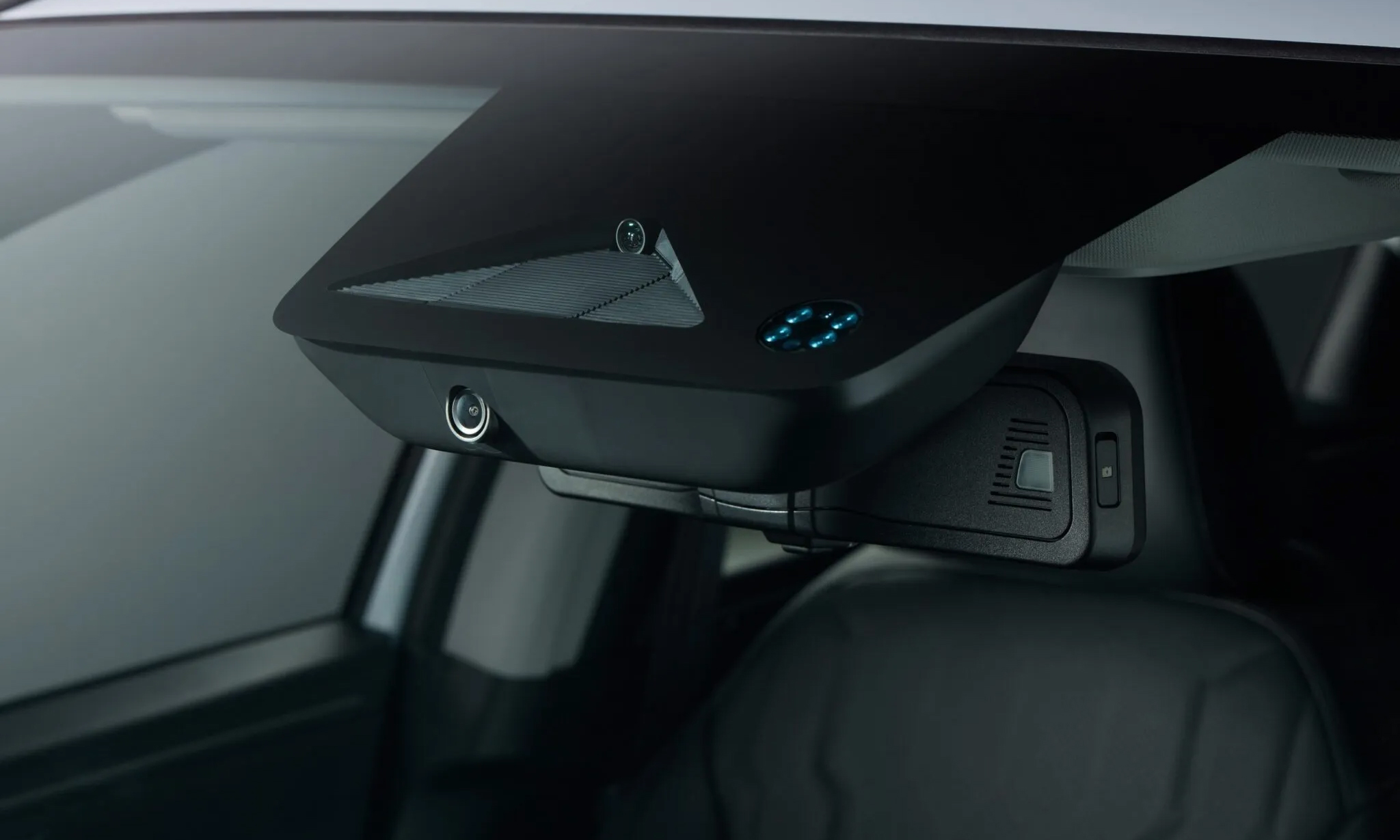 |
Rearview mirror with integrated central camera.
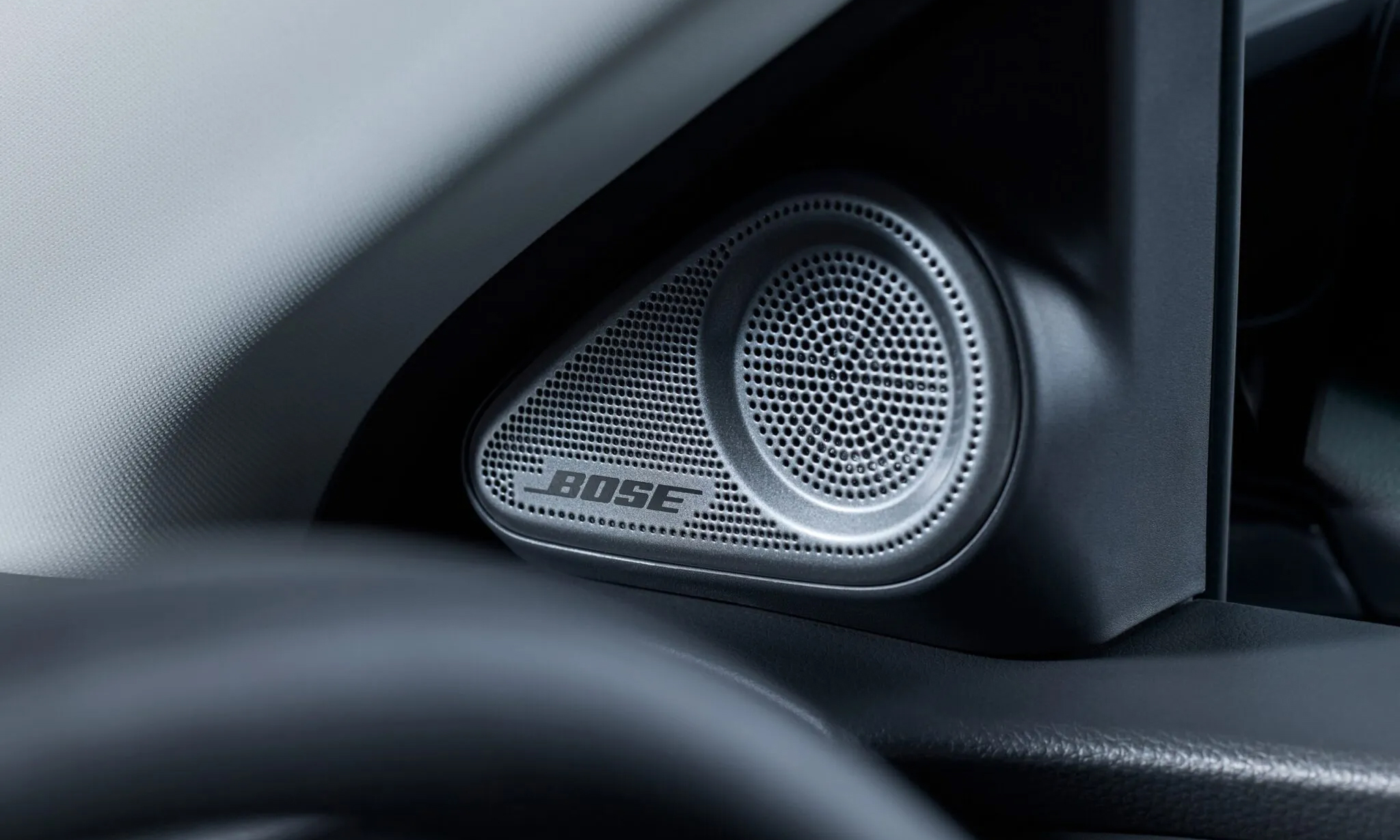 |
12-speaker Bose sound system.
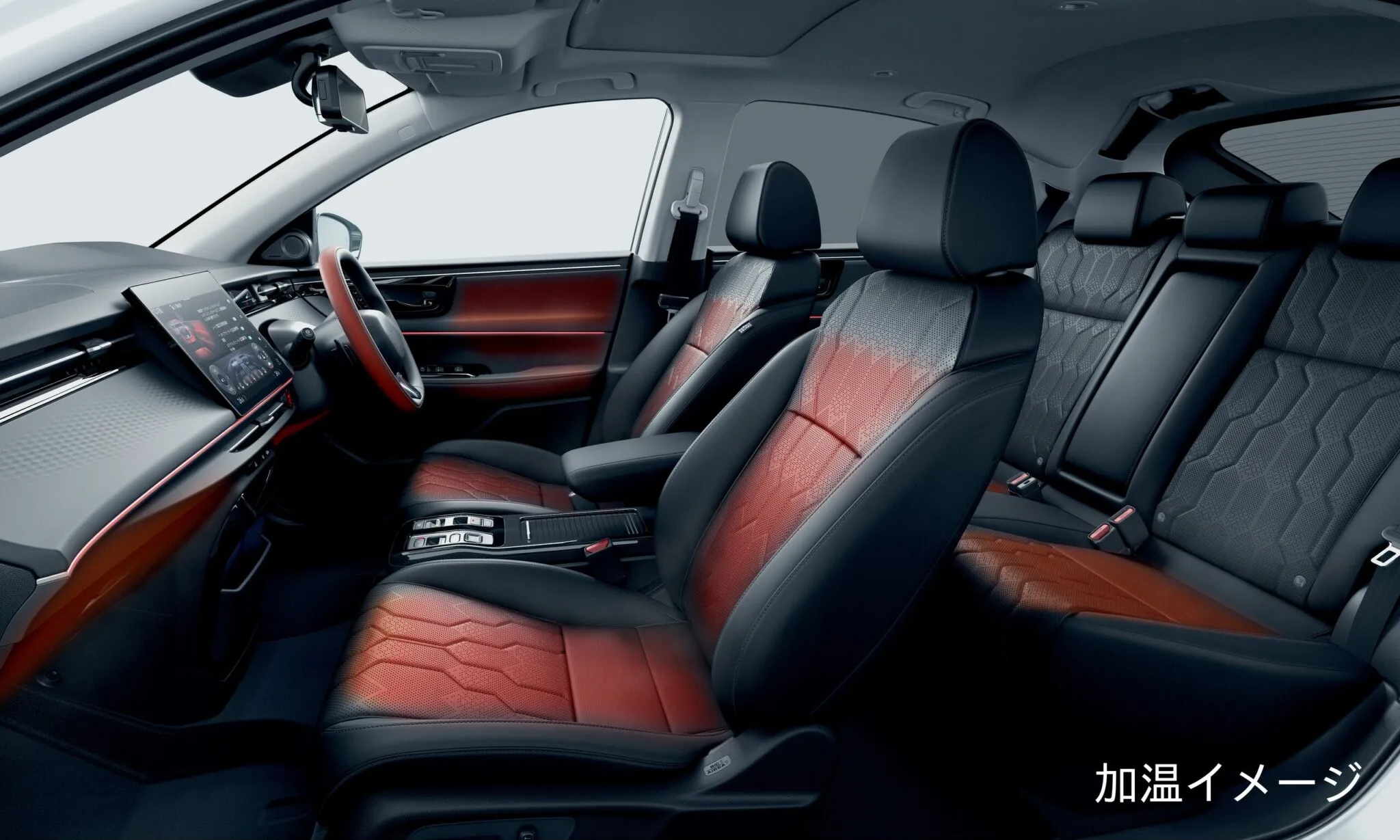 |
Heated seats.
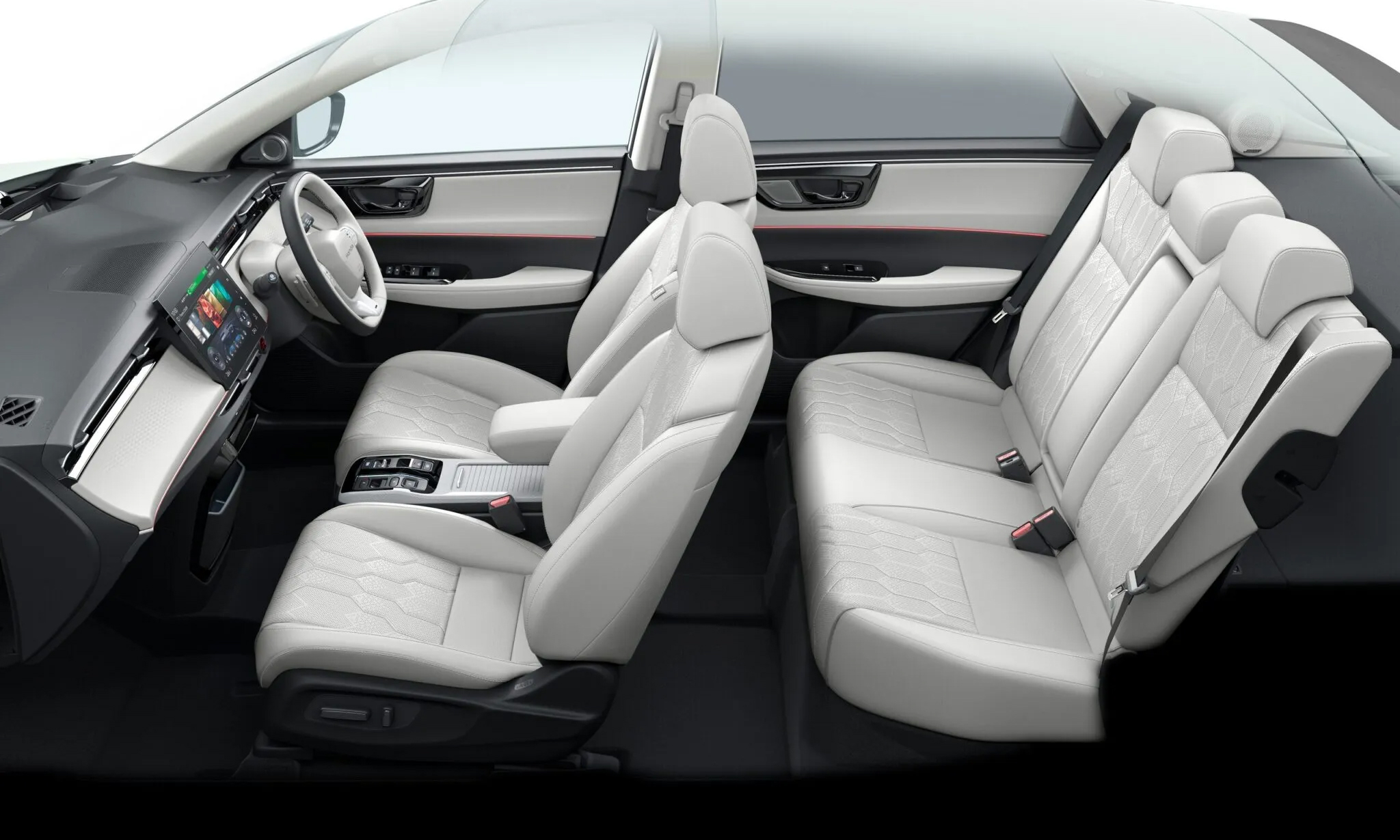 |
5-seat configuration.
Considering its specifications and images, some might find it too large for Japanese roads. The Insight is 88 mm longer than the CR-V (4,700 mm), but its overall height is 110 mm lower than the CR-V. Its width is almost identical to the ZR-V (1,840 mm). The minimum ground clearance is 190 mm, a typical figure for high-riding vehicles, comparable to the Harrier and ZR-V. The tires are also large, at 225/50R18.
The rear seats feature a reclining function, enhancing comfort for long journeys. The luggage compartment is spacious. The rear seats can be folded down in a 60/40 split. The Insight is considered highly practical, easily meeting the demands of weekend trips with large luggage.
Considering its features, the price becomes more understandable. It includes a premium sound system with 12 Bose speakers, an essential oil diffuser (with 6 selectable essential oil cartridges), an intelligent heating system (heating elements integrated into the seats, steering wheel, door panels, and dashboard), LED interior lighting, a 12,8-inch screen, and a rearview mirror with an integrated central camera.
The Insight offers four driving modes: Normal, Sport, Econ, and Snow. In Sport mode, an active sound control system enhances the sensation of acceleration, a feature designed to maintain driving enjoyment in an electric vehicle.
The vehicle supports fast charging in about 40 minutes (targeting 10-80%) and external AC power supply up to 1,500 W.
Whether the new Insight will succeed, and how quickly the 3,000 units allocated for Japan will sell out, remains to be seen. Beyond Japan, the e:NS2 has launched in the Thailand market under the name e:N2 and is expected to reach customers before 30/4, priced at over 44,000 USD.
My Anh