E85 gasoline has long been a common fuel in markets like Brazil and the US, particularly among high-performance car enthusiasts and vehicles capable of using varying ethanol blends. Compared to traditional gasoline, E85 is often cheaper in some markets, boasts a higher octane rating, and is seen as a solution to reduce reliance on fossil fuels. However, this fuel also presents specific requirements for engines, fuel systems, and refueling infrastructure.
E85 is a blend typically consisting of 85% bioethanol and the remainder being mineral gasoline. In the US, the actual ethanol percentage in E85 is not fixed at 85%, but ranges from 51-83%. This variation is due to the properties of pure ethanol, which contains less energy than gasoline, making cold starts difficult in chilly weather without preheating the intake air, increasing cranking speed, or blending in more gasoline depending on climate conditions. Therefore, in regions with cold winters, E85 usually contains a higher proportion of gasoline.
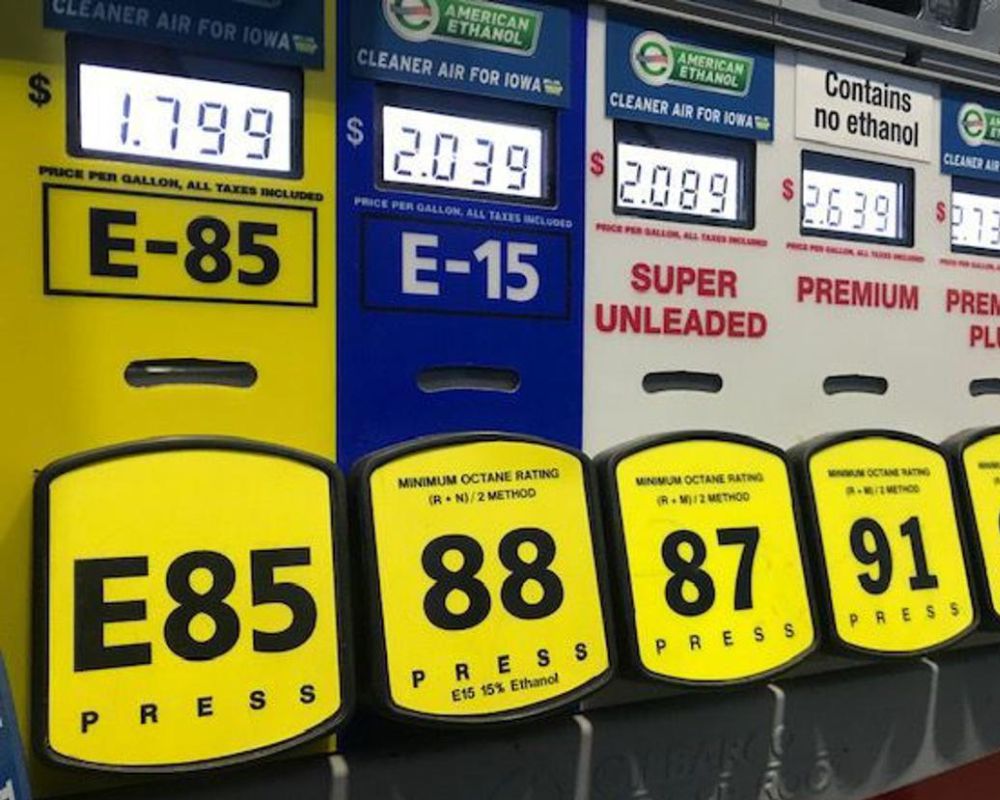 |
Tru xang co tuy chon xang E85 tai My. Anh: Eflexfuel
Ethanol has a higher octane rating than traditional gasoline, which helps engines resist knocking when operating at high compression or with high turbo boost. Conversely, this fuel contains less energy per liter, leading to higher fuel consumption to generate the same power output.
These characteristics necessitate recalibrating conventional gasoline engines for stable operation with high-ethanol fuels. Fuel injection systems, ignition timing, and many components within the fuel line must be modified to better suit ethanol's combustion properties. This led to the emergence of the "flex fuel" concept, referring to vehicles that can automatically adapt to various ethanol blend ratios.
What is flex fuel?
Flex fuel (or flexible-fuel vehicle: FFV) refers to vehicles capable of running on regular gasoline, E85, or any blend of the two fuels. These vehicles became common in Brazil in the early 2000s, then spread to the US with many truck and SUV models from Ford, General Motors, and Stellantis. In Brazil, sugarcane ethanol is cheap and abundant, so most new cars sold today support flex fuel. Meanwhile, the US views E85 as a way to utilize domestic agricultural products, reduce reliance on imported oil, and create additional outlets for its corn-based ethanol production industry.
Brazil is currently the largest flex fuel vehicle market globally, while the US ranks second. However, the actual use of E85 remains limited due to underdeveloped refueling infrastructure, and many US car owners are even unaware that their vehicles support E85. Flex fuel vehicles are particularly popular in the US Midwest, a key corn-growing region. The US government has also used flex fuel vehicles in its official fleets for years to promote domestic ethanol consumption.
How can a car use gasoline with up to 85% ethanol?
Conventional gasoline engines are not always fully compatible with E85. To use this fuel, users typically modify the fuel injection and engine control systems.
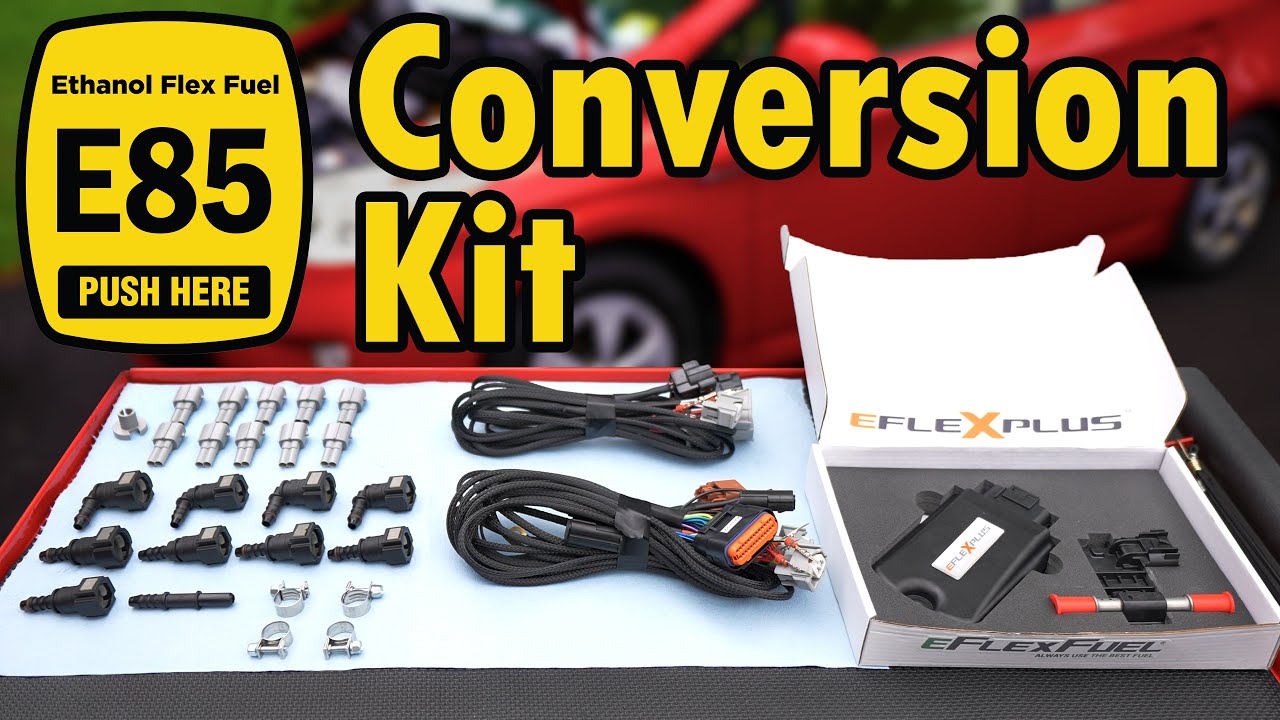 |
Mot bo chuyen doi (conversion kit) giup xe xang thong thuong co the van hanh bang nhien lieu E85, gom cam bien ethanol, bo dieu khien trung tam, day dien va cac dau noi he thong nhien lieu nham dieu chinh luong phun xang phu hop voi ty le ethanol cao. Anh: ChrisFix
Custom garages in the US often install ethanol sensors to measure the fuel blend in the tank, then send this data to the engine control unit (ECU) to automatically adjust fuel injection and ignition timing. Because ethanol requires a larger fuel volume for optimal combustion, many vehicles need upgrades to higher-flow fuel injectors and a stronger fuel pump. Some high-performance models also fine-tune their turbos or remap their ECU to take advantage of E85's superior anti-knock properties.
Advantages and disadvantages of E85 gasoline
With an octane rating of approximately 100-105 RON, E85 allows turbocharged engines to operate at higher boost pressures with less knocking. Many turbocharged cars can gain tens of horsepower after converting to E85 and remapping their ECU without extensive engine hardware modifications. In the US, many garages consider E85 an affordable alternative to specialized racing fuel, which is considerably more expensive. This is why E85 is particularly popular among high-performance car enthusiasts.
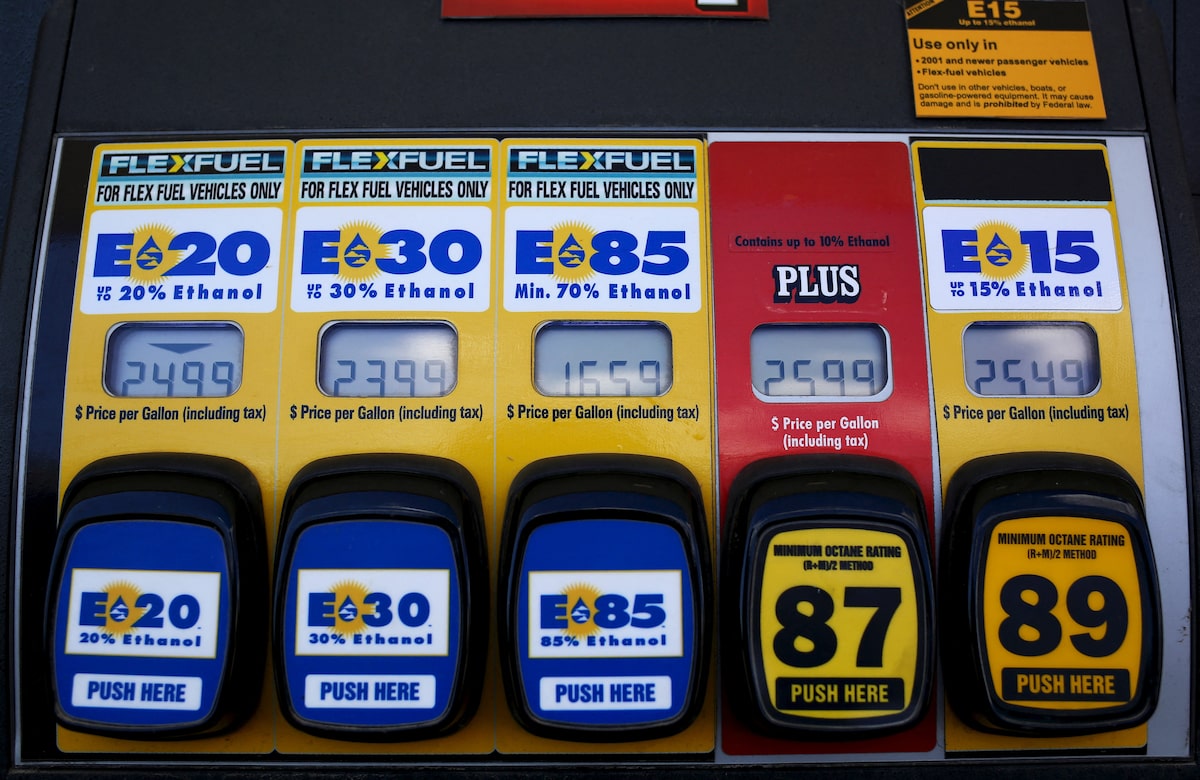 |
Tru bom xang voi cac loai nhien lieu ty le ethanol khac nhau tai My. Anh: Reuters
However, E85 also has several drawbacks. Due to its lower energy density compared to gasoline, vehicles typically experience about 20-30% higher fuel consumption. If the price of E85 is not significantly lower than traditional gasoline, the economic benefits become negligible. Ethanol is also more hygroscopic, which can negatively affect rubber gaskets, fuel pumps, or fuel lines in older vehicles not designed for this fuel. Some improperly converted cars may experience cold start difficulties, engine warning lights, or overly lean combustion mixtures.
Beyond technical issues, refueling infrastructure presents a major barrier. E85 is currently prevalent primarily in Brazil and a few US states, while many Asian markets have almost no dedicated E85 fueling stations. This makes the use of flex fuel vehicles impractical in countries outside the US or Brazil, especially for general users who frequently travel long distances.
Ho Tan