In many nations, driver training extends beyond vehicle control skills and traffic laws. Students also undergo lessons on attitude, behavior, and community responsibility, collectively known as driving culture. This approach fosters more orderly traffic, reduces conflicts, and enhances safety for everyone. Japan and Germany, two pioneers in the automotive industry, exemplify effective driver behavior education.
Japan: a dedicated module for traffic attitude and ethics
Japan is frequently cited for its exemplary traffic culture. Driver training centers there not only teach vehicle operation but also prioritize cultivating proper attitudes towards the community. Specifically, their driver training programs typically divide into two clear sections: vehicle control skills and driving attitude and ethics. The attitude component occupies a significant portion of the curriculum, featuring separate theoretical classes and practical exercises using simulators.
In these driving culture classes, students learn even the smallest behaviors: slowing down when pedestrians cross, refraining from honking to rush others, and carefully checking before opening car doors. Detailed instructions are also provided for driving and parking in residential areas, such as maintaining low acceleration to reduce noise and avoid disturbing residents.
 |
Beyond this, risk prediction is another important part of driver training. Students watch videos simulating real-life scenarios: children running into the street, vehicles changing direction unexpectedly, car doors opening without observation, and elderly people walking slowly. At each scene, the video pauses, prompting students to answer questions like, "What do I see?", "What could happen next?", and "What should I do to prevent risk?".
Courtesy is also directly assessed during practical lessons. Upon approaching an intersection, students must slow down early, even if they have the right of way. If they encounter a pedestrian hesitating at the roadside, they must stop completely and signal for the pedestrian to cross first. Driving too close to the curb, braking abruptly, or creating excessive noise are considered impolite and can lead to point deductions during the driving test.
Germany: instilling discipline and traffic awareness from an early age
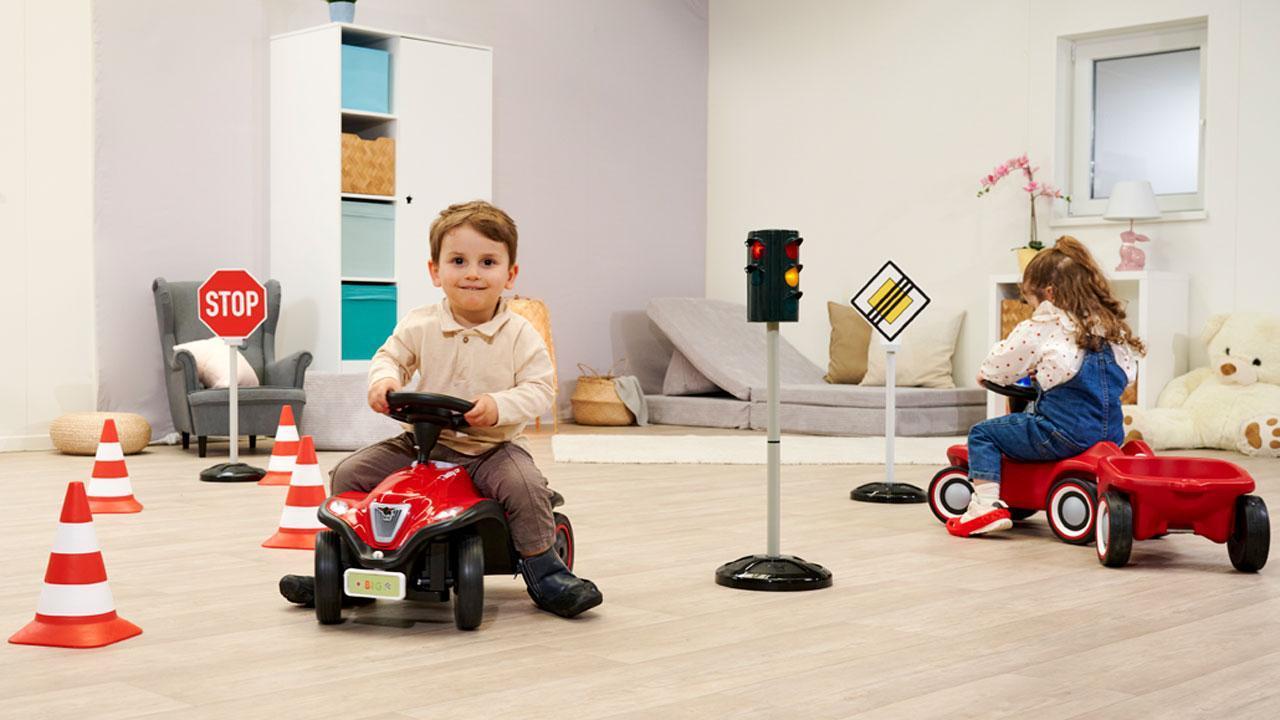
Germany stands out for its emphasis on discipline and responsibility in driving. Driving culture in Germany is part of the "Verkehrserziehung" program, which translates to traffic awareness education. Germans are introduced to this content from childhood, and it is reinforced when they study for their driver's license. Initially, children learn traffic safety concepts through games, models, and simple practical activities like crossing the street and recognizing traffic signals. The goal is to help children develop correct reflexes early on.
 |
In elementary school, the program becomes more structured. Students learn rules for walking, cycling, and moving through residential areas. By the end of primary school, children must pass a bicycle skills test, a vital component of German traffic education. From around 15 years old, teenagers can practice driving cars in simulated road environments. Here, they learn basic vehicle control, braking, steering, maintaining distance, and must be accompanied by someone with at least three years of experience. This model allows teenagers to gain driving exposure in a safe environment before formal training begins.
Alongside formal training, Germany maintains widespread public awareness campaigns. These campaigns remind citizens about civilized behavior in traffic, such as maintaining distance from smaller vehicles, avoiding unnecessary honking, refraining from flashing lights to pressure others, and respecting pedestrians' right of way. These efforts contribute to making traffic safety a societal habit.
Ho Tan